


Lupe García: “Collaboration between industry and technology centres is essential for turning research into practical solutions with a real impact on the sector”
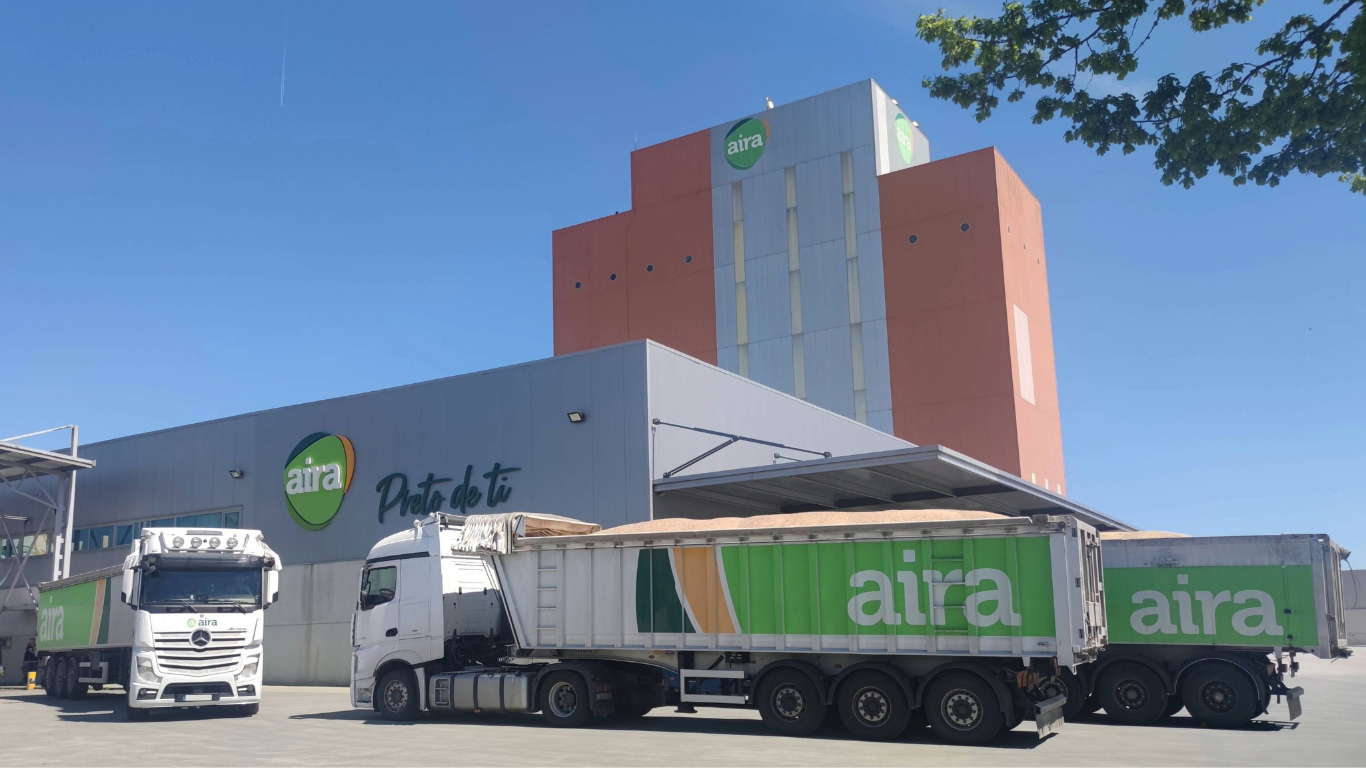
How can the agri-food sector advance towards more sustainable, efficient and future-ready models? At CETIM, we collaborate with industry to drive new solutions in areas such as sustainability, the bioeconomy and digital transformation. We discussed these topics with Lupe García, Head of Projects and Sustainability at AIRA, the Galician cooperative that operates the largest dairy cattle feed mill in Spain.
- AIRA was founded in 2005 and, in 2017, merged with five other cooperatives to create one of the largest first-tier cooperatives in Spain. What value does AIRA provide to its members?
AIRA was founded with a very clear objective: to strengthen the farms and businesses of our members. The cooperative provides security, stability and a wide range of services that help improve the profitability of their livestock and agricultural operations. Our scale allows us to access competitively priced inputs, offer highly specialised technical advice, support milk and meat marketing, and undertake investments that would be extremely difficult to achieve individually. In short, we support farmers in their day-to-day activities so that they can become more competitive, efficient and sustainable in the long term.
- The cooperative operates the largest dairy cattle feed mill in Spain. What does this leadership position mean, and how did you achieve this milestone?
Having one of the largest dairy cattle feed mills in Spain is both a great responsibility and an opportunity to continue delivering value to our members. Operating a modern, highly automated facility enables us to develop feed formulations tailored to the needs of each farm and respond quickly to market changes. This achievement is the result of years of cooperative integration, continuous investment and a strong commitment to professionalisation and continuous improvement.
- Sustainability, commitment to rural communities and animal welfare are among your core values. What measures are you promoting in these areas?
We work to help our farms become more efficient, reduce resource consumption and emissions, and improve profitability at the same time. We achieve this through technical, nutritional and agronomic advice, innovation in animal nutrition, continuous improvement of production processes, and services that contribute to both animal welfare and farmers’ quality of life. In addition, as a cooperative, we reinvest in the local area, helping to retain population, create employment and keep rural Galicia vibrant and economically active.
- You have made major investments in industrial modernisation and infrastructure improvements. What role does innovation play in your sector?
Innovation has become essential to ensuring the competitiveness of the livestock and agricultural sector. Today’s challenges are very different from those of a few years ago: climate change, new regulatory requirements, digitalisation and resource efficiency, among others. Addressing them requires innovation.
At AIRA, we view innovation as a tool for transforming knowledge into practical solutions that improve productivity, reduce costs, enhance sustainability and create new opportunities for our member farms. For this reason, in recent years we have made significant investments not only in industrial modernisation but also in programmes and tools that help improve the competitiveness of our member businesses.
- In this context, you are participating alongside CETIM in projects such as OMIPERBIO and AURORA. What impact do you think these initiatives will have on the market?
Projects such as OMIPERBIO and AURORA perfectly represent the direction the sector should be taking. In OMIPERBIO, we are working on the development of new functional bioingredients obtained from agro-industrial by-products to improve animal nutrition, health and welfare, while contributing to more efficient and sustainable production systems. In AURORA, we are taking a further step towards precision and sustainable agriculture by investigating the development of bio-based biopesticides, the valorisation of agri-food waste streams, and new digital tools for the early detection of crop diseases.
These types of initiatives allow us to anticipate future challenges, generate applied knowledge and transfer innovative solutions to both livestock farms and the agricultural sector.
- What does participation in these R&D projects alongside a technology centre such as CETIM bring to AIRA?
Participating in R&D projects with a technology centre such as CETIM gives us access to scientific and technological knowledge that can subsequently be translated into practical solutions for our farms and operational processes.
In addition, our collaboration with CETIM is very close, with constant and highly effective communication between teams. This facilitates project development, helps resolve challenges as they arise and supports the achievement of project objectives.
We firmly believe that collaboration between industry and technology centres is essential for transforming research into useful solutions that deliver a real impact on the sector.
- Let us now discuss the current and future challenges facing the livestock and agricultural sector. What do you consider to be the greatest challenge, and what measures is AIRA implementing to address it?
The sector faces multiple challenges. Alongside climate change, there is the volatility of international markets, labour shortages and generational renewal issues, increasing bureaucracy, rising production costs, land-use planning challenges and the investments required to modernise farms.
At AIRA, we address these challenges through an integrated approach based on technical advice, innovation, digitalisation and investments in processing and marketing. We participate in R&D projects, promote sustainability initiatives and work closely with our members to implement solutions that improve efficiency, reduce environmental impact and strengthen the competitiveness of their operations.
Our strategy is focused on providing stability and added value to member farms, ensuring their long-term viability.
|
IN DETAIL AIRA was established in 2005 to unite the efforts and commitment of Galician farmers and livestock producers. The agri-food cooperative produces milk and manufactures animal feed through sustainable and innovative practices, while maintaining a strong commitment to rural communities, animal welfare and people. Today, AIRA operates the largest dairy cattle feed mill in Spain, supporting rural Galicia and the excellence of Galician dairy and agricultural products, while providing a comprehensive range of services to all its members. |