


CETIM achieves more than 90% purity in the selective recovery of critical metals from electric vehicles
The RELOAD project comes to an end with successful results, having transformed waste from batteries, electric motors and electronic components into new materials, and contributing to a more resilient automotive industry with a lower environmental impact.
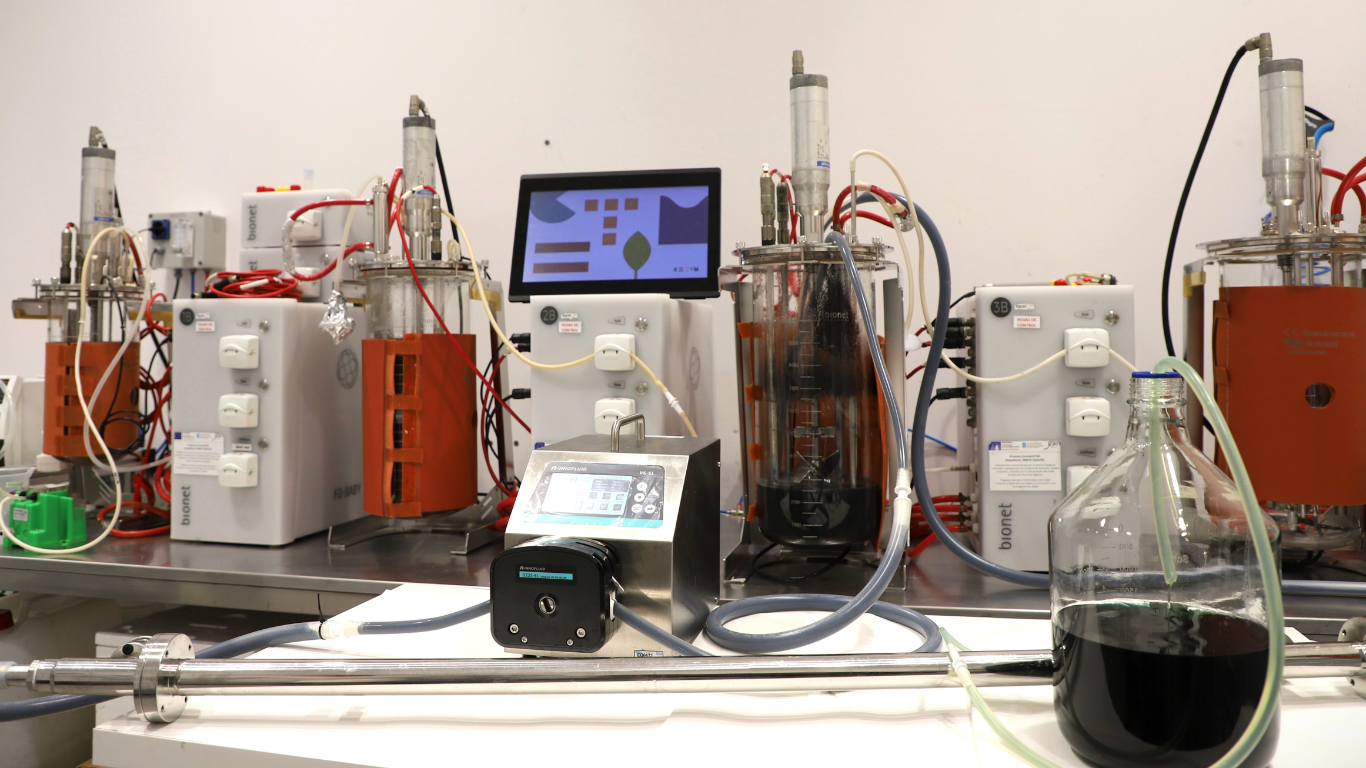
Bioleaching process developed at CETIM for RELOAD project.
Europe’s dependence on third countries for the supply of strategic raw materials, together with the need to manage end-of-life batteries and components sustainably, poses significant challenges for the automotive industry. The scarcity of critical resources, price volatility and supply chain vulnerabilities reinforce the need to develop circular solutions that can drive electric mobility.
At CETIM, we are researching selective metal recovery processes using biohydrometallurgical and electrochemical technologies, and have succeeded in valorising raw materials of interest found in lithium-ion batteries, electric motors and electronic components. We are also developing digital tools designed to identify the location and quantity of the metals under study, generating a digital map that facilitates their recovery, reuse and subsequent reincorporation into new production processes.
We have applied this scientific and technological expertise in RELOAD, a project launched within the Future: Fast Forward cluster and led by SEAT within the Electric Vehicle PERTE, which is now coming to an end having demonstrated the potential of combining microorganisms and electrochemical technologies to recover critical metals from end-of-life electric vehicles. The results obtained point towards a closed-loop recycling model, in which the recovered materials can be reintroduced into the manufacture of new products, such as batteries.
The project was led by ENSO, a company in which CETIM holds a stake, and involved a business consortium made up of SEAT, S.A., Balidea, Técnicas Reunidas and Asai Industrial. CETIM provided the scientific coordination of the initiative, which also benefited from the collaboration of the University of Zaragoza and CSIC-CENIM.
Main results of RELOAD: from battery waste to new cathodes
In RELOAD, we have developed an indirect bioleaching process using the fungus Aspergillus niger to recover nickel, cobalt, manganese, lithium and copper from the black mass of recycled batteries. In our tests we have achieved solubilisation rates above 60%, and its validation in 10-litre bioreactors demonstrates its potential for industrial scale-up.
Using electrochemical and adsorption processes, we have obtained high-purity compounds: nickel oxalates (97.7% Ni+Co), cobalt (94.1% Co+Mn) and copper (99.4% Cu), as well as a lithium-enriched liquid stream. We use these materials to manufacture NMC622 cathode precursors, whose electrochemical tests have confirmed competitive performance, moving towards closed-loop recycling.
In addition, we have researched electroleaching technologies to recover neodymium from permanent magnets, achieving purities of between 60% and 100%, depending on the operating conditions. Furthermore, bioleaching with acidogenic bacteria has achieved neodymium solubilisation rates of 80%, along with the mobilisation of cobalt and dysprosium. The use of ionic liquids has made it possible to recover more than 90% of the neodymium present in the bioleachate, supporting its valorisation for new technological applications.
As regards the bioreactor bioleaching processes developed by CETIM, we have achieved copper solubilisation rates above 95% from electronic boards of electric vehicle power modules. In addition, research into biosorption and ionic liquids to recover silver from bioleachates shows potential for obtaining purer, more concentrated metal streams.
Towards more sustainable, circular and competitive electromobility
The identification of parts of interest, their disassembly, the pre-treatment of materials and the application of advanced recycling technologies have made it possible to explore new ways of recovering metals and reusing them in the manufacture of new products. Likewise, research into ecodesign and traceability lays the foundations for developing components designed from the outset to facilitate their recovery, recyclability and valorisation at the end of their useful life.
In this way, RELOAD helps to reduce dependence on imported raw materials, fostering greater strategic autonomy for the European automotive sector, and promotes a more circular and sustainable industrial model, based on the valorisation of waste and the reintegration of high-value materials into the production chain. This reduces the environmental footprint associated with resource extraction and minimises the risks arising from the economic and geopolitical tensions that affect the supply of critical raw materials.
RELOAD is funded by the Ministerio de Industria, Comercio y Turismo under the Recovery, Transformation and Resilience Plan, financed by the European Union through Next Generation EU funds.
