


Adrián Capelán: “It is at this frontier, between engineering and applied science, that the advances that keep Spain at the forefront of renewable energy are emerging”
The renewable energy sector has become a key pillar of the global energy transition towards a more sustainable and emission-free model. This sector is also facing several challenges, and today we learn how Norvento is seeking solutions to these challenges through R&D projects, such as R3POWER, which they are leading with the scientific support of CETIM. Below, Adrián Capelán, Director of Technology at Norvento TECHnPower, tells us about Norvento’s main keys to differentiation in this market.
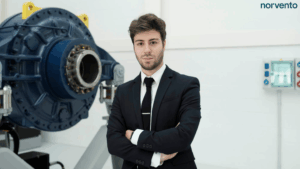
Adrián Capelán, Director of Technology at Norvento TECHnPower.
- In an increasingly globalised energy industry, what is the key to Norvento’s differentiation?
Norvento’s differentiation, with our Norvento TECHnPower technology brand at the forefront, stems from a combination that, in my opinion, is unique: a solid and profound technological vision, in-house manufacturing in Spain and a comprehensive product-system approach that ranges from wind turbines to power electronics and microgrids. This means that we do not just sell machines, but develop complete, industrialisable and verifiable energy solutions that are capable of operating in complex conditions and adaptable to different international markets.
Our leadership is based on three fundamental pillars. The first is our own innovation and cutting-edge, differential technology. At Norvento TECHnPower, we design and manufacture our own technology for the generation, conversion and storage of renewable energy: nED wind turbines, nXL and nGM converters, and nBESS storage systems. All of these form part of an integrated energy ecosystem that allows us to offer a comprehensive response to the major challenges of the energy transition, from ensuring grid stability to the massive integration of renewables and the management of hybrid systems.
The second pillar is our industrial capacity, which is based in Spain but has an international reach. Keeping production in our country allows us to have total control over quality, traceability and delivery times, as well as strengthening the national industrial chain. This proximity to production gives us an agility and adaptability that many large international competitors cannot match.
Finally, we are committed to circular solutions that focus on the entire life cycle. We design products that facilitate the repowering of existing wind farms, the reuse of infrastructure and the reduction of environmental impact. Prime examples of this are the new wind turbine that we will be presenting in the coming months, focused on repowering and the distributed wind market ( ), together with the nXL family of utility-scale converters that we have just launched on the market, as both combine robustness, compactness and efficiency, allowing us to compete in international markets without compromising on sustainability and innovation.
In short, Norvento TECHnPower stands out because it builds its own technology, integrates solutions systemically and acts as a catalyst for industrial innovation, transforming the energy transition into an opportunity to lead the way in energy generation, storage and smart management at an international level.
- What do you think are the current challenges for renewable energies and how are you addressing them at Norvento?
The renewable energy sector is currently facing highly complex challenges, both technical and strategic. The growing penetration of clean sources has reduced the inertia of traditional electricity grids, causing voltage and frequency fluctuations that complicate the stability of the system, especially in environments with distributed generation or microgrids. Added to this is the management of intermittency, the repowering of farms nearing the end of their useful life, industrial circularity and the need to reduce the total cost of ownership through more efficient designs and predictive maintenance.
At Norvento TECHnPower, we address all these challenges with a comprehensive approach that combines generation, conversion and storage. This approach allows us to develop coherent solutions throughout the entire energy value chain, from production to management and use of energy.
In generation, we work with our family of nED wind turbines, designed for repowering and the distributed wind market. In the coming months, we will be presenting a new model, part of our new nED1000 series, which incorporates modular architecture and advanced control systems. Thanks to this, this new machine will enable the modernisation of existing infrastructure without dismantling towers or foundations, reducing costs and intervention times and optimising production.
Power electronics, led by our new nXL converters, are at the heart of our solutions. These multipurpose converters can operate in both grid-following and grid-forming modes, providing virtual inertia and advanced grid services, including black start. This turns renewable plants into active nodes that stabilise voltage and frequency, even in weak grids or industrial microgrids.
nBESS storage systems complete this architecture by absorbing surpluses, smoothing production ramps and ensuring continuity of supply when integrated with nXLs. And, across the board, we promote circularity and eco-design through projects such as R3POWER, which develop recyclable materials and recovery processes that extend the useful life of components and close the industrial cycle in a responsible manner.
Overall, Norvento TECHnPower addresses energy challenges not only through isolated technological innovation, but through integrated energy ecosystems, where generation, storage and control interact with each other, creating efficient and reliable systems that are ready to lead the energy transition.
- Your headquarters in Lugo is a zero-energy building, disconnected from the electricity and gas grids and powered entirely by renewable energy. How have you managed to become self-sufficient and how have technologies influenced this process?
The Norvento Enerxía Innovation Centre (CIne) is a practical example of our vision of an autonomous energy system. We have designed a hybrid microgrid that combines various renewable energy sources: from a photovoltaic plant to one of our nED100 medium-power wind turbines, with a combination of approximately 1 MWh of battery storage, biomass, and water and geothermal management systems. These technologies are integrated and coordinated by smart converters and battery management systems (BMS), allowing us to operate off-grid and maintain R&D activity.
In addition, we are building our new production centre, Norvento Enerxía Factory Zero (neFO), in the As Gándaras Business Park in Lugo, very close to our headquarters, which will not only replicate the lessons learned at CIne, but take them a step further. This plant will be self-sufficient and carbon neutral, generating and storing its own energy using the technologies produced in its own facilities. One of neFO’s key innovations is its direct current (DC) microgrid, which optimises the interconnection of renewable energy sources, storage and charging systems, reducing losses and improving overall system efficiency. This advanced infrastructure will serve as a living laboratory to test and refine our technological solutions before their large-scale implementation.
- Norvento is leading the R3POWER project. What impact do you think this initiative will have on the energy market? And what impact does leading this type of initiative have on Norvento?
R3POWER is a technical, economic and social lever that seeks to transform the way wind repowering is approached. From a technical point of view, the project aims to raise the level of maturity (TRL) of different recycling chains (mechanical, thermochemical, chemical and biological), validate recovery routes and develop eco-designed, repairable and recyclable blades and resins.
Economically speaking, we estimate that there is a significant market for circular repowering in Spain, with a direct impact on job creation and the strengthening of local industry. From a social perspective, R3POWER will promote repowering projects that reactivate technical activity in rural areas, generating sustainable development opportunities.
One of the biggest challenges facing the sector is the revamping of existing wind farms. Renovating old facilities involves adapting to existing structures and foundations, making equipment compatible and minimising environmental impact. Having products designed specifically for this purpose, such as our future nED1000 series wind turbine, will allow us to take advantage of existing infrastructure, reduce costs and installation times, and maximise the efficiency of wind farms, turning revamping into an opportunity to modernise generation with state-of-the-art technology in a sustainable way.
Leading R3POWER allows us to strengthen our technological definition capabilities, incorporate circular solutions into repowering designs, and generate patentable knowledge. In short, it transforms R&D into a replicable competitive advantage that drives new products, processes, and markets for the energy industry.
- R3POWER and other projects have been collaborating with CETIM for several years now. What do these types of collaborations with technology centres, and specifically with CETIM, bring to the table?
Collaborations with technology centres such as CETIM are a natural extension of our understanding of innovation: turning knowledge into industry. In projects such as R3POWER, this synergy takes shape in a very tangible way. CETIM contributes its scientific expertise in materials testing, recycling processes and validation of recovery routes, while Norvento brings its industrial experience and product technology to the consortium, represented by our new wind turbine.
This new machine is a clear example of how we conceive applied innovation: a modular, efficient turbine designed for repowering existing wind farms; a direct response to the revamping challenge facing the sector. Its flexible architecture allows it to take advantage of existing infrastructure (towers, foundations, cabling), reducing the environmental and economic impact of technological renewal.
CETIM, with its knowledge of advanced characterisation and material recyclability, allows us to experimentally verify the durability, reparability and traceability of the machine’s key components, ensuring that the innovation not only meets technical standards, but also criteria of circularity and sustainability.
Thus, the union between technology promoter and scientific centre makes development a two-way street: Norvento TECHnPower transforms research into industrial products, and CETIM raises the technological base of the process, accelerating maturity (TRL) and reducing implementation risk. It is at this frontier, between engineering and applied science, that the advances that keep Spain at the forefront of renewable energy are emerging.
- What do you think are the future challenges for renewable energies and how will you tackle them at Norvento?
The renewable energy sector is entering a new phase in which it is no longer enough to generate clean energy: it is about redefining the energy infrastructure on a global scale. The major challenges today include repowering, the stability of the electricity system, massive energy management and industrial circularity.
In the renewable generation sector, Europe is facing the end of life of a large part of its wind farm, which requires solutions capable of upgrading it without dismantling what already exists. This is the context for our new nED1000 series of wind turbines, the first model of which, as I mentioned, we will be presenting shortly, is specifically designed for repowering. Its modular architecture and compatibility with existing infrastructure reduce installation costs and times, improve performance and minimise environmental impact.
The stability of the electrical system is another key challenge. With the disappearance of large synchronous generators, the inertia of the system must be rebuilt from electronics. Our nXL power electronics converters enable renewable plants to become active nodes, capable of forming networks, providing virtual inertia and maintaining supply quality even under demanding conditions.
Added to this is the role of storage, which is essential for balancing the intermittency of renewable sources. With our line of nBESS battery storage systems, we promote modular and scalable systems that, integrated with nXL, optimise active and reactive power management and facilitate intelligent grid control.
Finally, with initiatives such as R3POWER, we are moving towards full circularity, developing recyclable materials and recovery processes that close the life cycle of equipment. At Norvento TECHnPower, we understand all these technologies as parts of the same energy ecosystem: autonomous and well prepared to lead the new era of energy.
- How can technological innovation contribute to addressing these challenges?
Technological innovation is what allows us to transform the challenges of the sector into concrete opportunities. At Norvento TECHnPower, we understand it as a systemic process: it is not about developing isolated products, but about making different technologies work together to create more efficient and adaptable systems. In the new energy scenario, technology becomes the language that makes it possible for renewable sources to coordinate and function in a balanced way.
In wind power generation, this new model in the nED1000 series is designed for the repowering of wind farms. Its modular architecture allows existing towers, foundations and cabling to be used, reducing costs and installation times and increasing efficiency. This makes revamping an opportunity to modernise farms with advanced technology and a lower environmental impact.
In power electronics, the nXL family acts as the core of the system. These are high-power-density bidirectional converters that can operate in grid-following and grid-forming modes. In this way, they stabilise frequency and voltage, manage transients and offer network services such as virtual inertia or black start. Their versatility allows them to be used in photovoltaic plants, hybrid systems, storage, electric mobility, electrolysers, catenaries or data centres, operating reliably even in demanding environments.
In storage, nBESS solutions, integrated with nXL, cover everything from rural microgrids to high-power installations. Their modular design allows for the electrification of isolated environments, the optimisation of industrial self-consumption and the balancing of the electricity grid, ensuring continuity of supply.
Innovation is also reflected in our commitment to sustainability. Through the R3POWER project, we develop recyclable materials, repairable components and recovery processes that reduce the environmental impact throughout the entire life cycle of the equipment.
With all this, Norvento TECHnPower offers integrated solutions that combine generation, storage and control, driving a more efficient and future-proof energy transition.
|
IN DETAIL Norvento is a renewable energy company that develops and operates large power plants, provides advanced energy solutions for self-consumption to industrial customers worldwide, and designs and manufactures cutting-edge technological products for energy generation, management and storage under its Norvento TECHnPower brand. Based in Lugo (Galicia), it has more than four decades of experience in developing projects and products based on a philosophy of innovation, quality, design and sustainability. Thanks to its experience, the company is facing the challenges of the future energy sector, which will be 100% renewable, with the aim of continuing to offer the best solutions for its customers and the communities with which it works. Thanks to this commitment to generating renewable energy and developing advanced technologies for a decarbonised world, Norvento creates industrial activity and generates quality employment in Galicia. |