


Ramón Pericet Cámara: “Working with CETIM allows us to incorporate cutting-edge methodologies and enrich our R&D capabilities”
One of the solutions we develop at CETIM is the recovery of complex plastic waste. An example of this is the ECLIPSE project, which has just been completed with successful results and which we have coordinated together with Técnicas Reunidas to obtain key technologies for the separation, recycling and recovery of complex plastic waste of high value for the automotive sector. Today we talk to Ramón Pericet Cámara, R&D Manager – Environment at Técnicas Reunidas, to learn more about this and other projects underway at the company, specifically at its José Lladó Technological Centre.
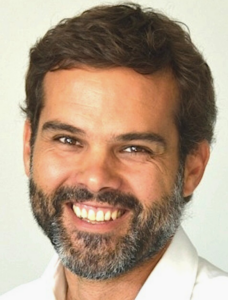
Ramón Pericet Cámara, R&D Manager – Environment at Técnicas Reunidas.
- Almost from the very beginning of Técnicas Reunidas, you have made a clear commitment to R&D, with the creation of the Research and Development Division specialising in 1971. What does R&D mean for Técnicas Reunidas?
For Técnicas Reunidas, R&D has had a strategic and differentiating value since the creation of this Division. With this milestone, the company has been committed from the outset to generating its own technology as an essential part of its business model. This vision has evolved into a specialised unit that works on the design, validation and scaling of innovative solutions in key areas such as energy, sustainability, metal recovery and circular economy. Thanks to this commitment, Técnicas Reunidas has developed its own commercial processes such as ZINCEX®, a world-leading technology in zinc extraction, and current technologies in battery recycling, green hydrogen and CO₂ capture. R&D not only strengthens its engineering offer, but also allows it to license technologies worldwide, consolidating its position as a global supplier with its own technological capacity. In short, R&D is a key tool for Técnicas Reunidas to anticipate industrial challenges, provide added value to its clients and lead the transition towards a more efficient and sustainable industry. It is not only a support area, but a central pillar in its growth strategy and global positioning.
- In 2007 you created the Own Technology Development Division and the José Lladó Technology Centre to continue the R&D activities you had started in 1971. What is its impact on Técnicas Reunidas?
In fact, its creation allowed Técnicas Reunidas to integrate innovation into its operational structure and strengthen its strategic positioning. Its impact translates into a greater capacity to develop adapted technical solutions, collaborate with research centres and access European R&D programmes. In addition, it has fostered an internal culture geared towards continuous innovation, facilitating knowledge transfer and improving project efficiency. Thanks to this structure, the company leads initiatives in decarbonisation, circular economy and energy transition.
- What has participation in the ECLIPSE project brought you?
Participation in ECLIPSE has brought us significant technological and strategic benefits. As leader of the consortium (TR together with ACTECO, PICVISA, REPSOL, SEAT, CELLMAT TECHNOLOGIES, GRUPO COPO and SYNTHESIA ), we have investigated advanced technologies for recycling plastics by pyrolysis using microwaves, which is an innovative alternative to the traditional process by convection, more efficient and compatible with the increasing electrification of intensive industrial processes. The project has made it possible to generate a differential know-how that will allow a greater implementation of the recycling of complex plastics in the future, beyond the technologies currently on the market, which are very limited to a low number of highly homogeneous compositions. In addition, the project has made us consolidate alliances in the plastics sector, both producers and end users, reinforcing our collaboration network and our image as a benchmark in circular economy and sustainable innovation. The experience gained is already being applied in other internal projects, positioning us as key players in future circular economy challenges.
- In ECLIPSE and other projects you have been collaborating with CETIM for some years now, what do you gain from this type of collaboration with Technology Centres, and specifically with CETIM?
Collaboration with technology centres such as CETIM provides Técnicas Reunidas with key strategic and technical value. Thanks to its advanced capabilities in applied research, such as specialised laboratories and state-of-the-art equipment, we have been able to develop tests and prototypes in projects such as ECLIPSE, where CETIM contributed with lines of disruptive recycling technologies. Moreover, its role as scientific coordinator has been decisive for the success of proposals such as ECLIPSE and MINETHIC, both projects highly valued in the CDTI Missions programme. These alliances reinforce our positioning in strategic consortia and facilitate access to public funding. In terms of knowledge transfer, working with CETIM allows us to incorporate cutting-edge methodologies and enrich our R&D capabilities in areas such as waste valorisation and materials chemistry. Overall, this collaboration enhances our competitiveness, accelerates innovation and reinforces our technological leadership in sustainability.
- You have also had an international presence from very early on, currently in 25 countries. What is your key to success in positioning yourselves in all these markets?
From the very beginning of Técnicas Reunidas, it was clear that energy and petrochemical project engineering knows no borders. Our approach to consolidate our position in 25 countries is based on three pillars: local knowledge, technical excellence and constant innovation. We do this by working with partners in the region to understand the regulations, culture and expectations of each client, ensuring tailored solutions that meet the highest standards. In addition, we continuously invest in multicultural talent and advanced digital technologies to optimise processes, improve efficiency and reduce risks.
This combination of proximity, proven quality and agility enables us to respond quickly to the challenges of each market. Our commitment to sustainability, ethics and technology leadership reinforces long-term trust, building our global presence with strength and reputation.
- You highlight sustainability, decarbonisation and energy transition as your main objectives. Do you see these three elements as part of the challenges facing the energy sector?
Without a doubt, sustainability, decarbonisation and energy transition represent the main challenges facing the sector and our privileged view in continuous contact with the main players in the sector confirms this. They involve reconfiguring infrastructures, adopting clean technologies and developing new business models that minimise environmental impact. It also requires collaboration between administrations, companies and communities to design stable regulatory frameworks and promote investment in renewable energies, green hydrogen and carbon capture.
- How does Técnicas Reunidas face these challenges?
Técnicas Reunidas faces the challenges of sustainability, decarbonisation and energy transition through a comprehensive and global approach, designing projects that incorporate renewable energies, green hydrogen and carbon capture and storage technologies, guaranteeing the reduction of emissions. We also apply advanced digital solutions to optimise resources, improve efficiency and anticipate risks. We work with local partners and regulators to ensure regulatory compliance and tailor infrastructure to each market. We promote the circular economy at all stages of the project and train our staff with ongoing training programmes, cementing our commitment to a cleaner energy future.
- What role do you see the development of proprietary technologies playing in current and future challenges?
In our role as a strategic partner for clients in the energy and Oil & Gas sector, the development of Técnicas Reunidas’ own technologies is essential to implement sustainability, decarbonisation and energy transition measures in their facilities. Our patented solutions are designed from scratch with integration in refineries, petrochemical plants and power plants around the world in mind, guaranteeing adaptability and local regulatory compliance.
These proprietary technologies, validated in real projects, enable our customers to accelerate their transition to net-zero emission energy models, optimise costs and minimise operational risks. By combining in-house know-how with partnerships with startups and R&D centres, TR offers turnkey solutions that address the main decarbonisation and sustainability challenges of these key global industry sectors.
|
IN DETAIL Técnicas Reunidas is an international company with more than 60 years of history specialising in the design, construction and execution of industrial plants dedicated mainly to the production of clean fuels, natural gas and chemical products. It currently has more than 1,000 industrial plants built around the world and 30 projects underway in 20 different countries. Its main objective is to achieve a cleaner and more accessible energy supply that facilitates the decarbonisation of the economy. |