

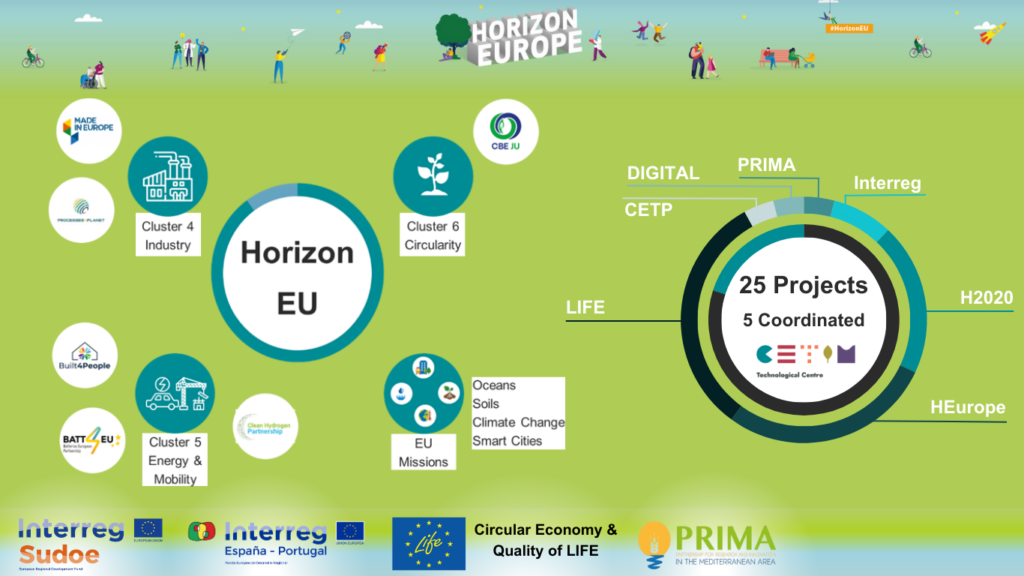
Learn about the value we will bring to your Horizon Europe 2025 proposals
Still don’t know the themes of Horizon Europe for this year? We tell you about them, along with all the value that CETIM can bring to the proposals.
Main programmes in which CETIM is involved and CETIM participacion in international calls 2015-2024.
Horizon Europe Cluster 4 Digital, Industry and Space
HORIZON-CL4-INDUSTRY-2025-01-TWIN-TRANSITION Achieving global leadership in climate-neutral, circular and digitised industrial and digital value chains
| DEADLINE: | 23rd September 2025 |
HORIZON-CL4-INDUSTRY-2025-01-TWIN-TRANSITION-01 Integrated approaches for remanufacturing (Made in Europe Partnership) (IA)
| 6 Projects | 5-7 M€ |
Topic Summary:
The call focuses on advancing remanufacturing capabilities in the EU by integrating cutting-edge technologies and methodologies to double the volume of remanufactured components. It aims to enhance industrial resilience, reduce resource consumption, and lower carbon emissions through innovative de-manufacturing, data sharing, AI, and quality assurance measures. Proposals should also address skills development and support the creation of remanufacturing standards. A complete business model and exploitation strategy should accompany each project, with potential synergies encouraged across related EU initiatives and international collaborations. Recycling technologies for the generation of secondary raw materials are excluded.
- Expected TRL: Start at TRL 5, ending at TRL 6-7.
CETIM Assets & Contribution Pathways:
- Tools for the reparation of materials and reincorporation to the manufacturing process in several sectors: incorporation of binders, adhesives, coatings in the remanufacturing value chain (bio-based lignocellulosic materials, thermoset, thermostable polymers from natural oils, etc.).
- Technologies for the recovery of resources from industrial waters to close the circular loop and increase the reuse of key substances. The portfolio of technologies that CETIM can offer includes: membrane technologies, biological treatments, electrochemical processes, and adsorption/absorption technologies.
- Development of design strategies for easy disassembly and material recovery at a building’s end-of-life, enhancing remanufacturing efficiency. Emphasis on selective deconstruction over demolition to preserve material integrity.
- Integration of advanced technologies such as robotics, AI, and sensors for material assessment, enabling more efficient and precise material recovery.
- Expertise in evaluating environmental, economic, and social sustainability using Life Cycle Assessment (LCA), economic impact analysis, and social impact analysis tools.
- Digital tools: virtual models (digital twins) of the production lines to optimise the new re-manufacturing processes, optimisation to reduce resource consumption.
HORIZON-CL4-INDUSTRY-2025-01-TWIN-TRANSITION-02 Physical and cognitive augmentation in advanced manufacturing (Made in Europe Partnership) (RIA)
| 7 Projects | 4-6 M€ |
Topic Summary:
The topic aims to develop breakthrough human-centric augmentation technologies to empower manufacturing workers by enhancing safety, inclusiveness, flexibility, and well-being. This includes developing perception and predictive technologies for human intention, innovative AI-driven methodologies for reasoning and control, and digital-twin models for assessment and validation. Social Sciences and Humanities contributions should guide the design, addressing human factors such as ergonomics and trust. Solutions should also foster a more attractive work environment by aligning with Industry 5.0 principles, with a focus on safety, inclusiveness, and adaptability.
- Target TRL: 5-6
CETIM Assets & Contribution Pathways:
- Digital Twins and AI Integration: Development of virtual models for production lines and plants to simulate, optimise, and control processes, integrating sensor networks with AI-driven simulation models.
- Artificial Vision and AI Applications: Implementation of AI-based vision systems for quality control, process monitoring, and automation, including OCR and object recognition technologies.
- IoT and Smart Sensors: Creation of advanced monitoring systems using photonic sensors, spectroscopy, and sensor networks, with custom firmware and multi-platform integration for real-time data collection.
HORIZON-CL4-INDUSTRY-2025-01-TWIN-TRANSITION-05 Advanced manufacturing technologies for leadership of EU manufacturers in products for the net-zero industry (Made in Europe Partnership) (IA)
| 6 Projects | 5-7 M€ |
Topic Summary:
This topic targets the advancement of discrete manufacturing processes to support strategic and high-value-added products within the net-zero industry, aiming to enhance the European Union’s production capabilities. Key objectives include reducing dependencies, increasing production capacity for clean technologies, and adhering to high environmental standards. Proposals should address manufacturing technologies that impact multiple net-zero technology sectors, particularly focusing on innovative applications like additive manufacturing, high-precision machining, and surface processing. Additionally, proposals should integrate metrology, flexible automation, digital twins, and circular manufacturing to boost productivity, reduce waste, and minimize CO₂ emissions. Battery/storage technologies is excluded from this topic and covered by CL5.
- Target TRL: 6-7 by project end.
CETIM Assets & Contribution Pathways:
- Binders, adhesives, and coatings for manufacturing processes increasing circularity (bio-based lignocellulosic materials, thermoset, thermostable polymers from natural oils, etc.).
- Design of virtual models (digital twins) for real-time process optimization, enabling scale-up and fast ramp-up of manufacturing processes.
- Optimisation of mechanical and physical processes in a pilot plant for industrial scaling, covering plastic waste conditioning, diagnostics, extrusion, injection, 3D printing, thermoforming, and performance evaluation for key sectors like automotive, packaging, and waste management.
- Expertise in evaluating environmental, economic, and social sustainability using Life Cycle Assessment (LCA), economic impact analysis, and social impact analysis tools.
HORIZON-CL4-INDUSTRY-2025-01-TWIN-TRANSITION-31 From heat-driven processes to the use of mechanical and electric forces (Processes4Planet partnership) (IA)
| 3 Projects | 8-10 M€ |
Topic Summary:
This topic focuses on transitioning from heat-driven to electrically or mechanically driven processes in energy-intensive industries. This transition aims to integrate renewable electricity, achieve significant energy savings, and reduce GHG emissions by replacing heat in separation and drying processes with electrified technologies such as membranes, power ultrasound, and electrochemical methods. Proposals must address scalability, process safety, and economic viability, contributing to decarbonization and industrial competitiveness.
- TRL at the end of the project 7
CETIM Assets & Contribution Pathways:
- Innovative separation technologies for aqueous media as an alternative to heat-driven processes based in electrochemistry and/or membranes, experience in brines, metal ion separation, separation of chemicals, etc.
- Expertise in evaluating environmental, economic, and social sustainability using Life Cycle Assessment (LCA), economic impact analysis, and social impact analysis tools.
- Virtual models (digital twins) and process simulations with advanced data analysis algorithms (AI) to optimise new electrified industrial processes, ensuring flexibility and scalability.
HORIZON-CL4-INDUSTRY-2025-01-TWIN-TRANSITION-32 Green and resilient flexible production processes (Processes4Planet partnership) (IA)
| 3 Projects | 8-10 M€ |
Topic Summary:
This call focuses on enhancing flexibility in energy-intensive industries by redesigning processes to adapt swiftly and efficiently to fluctuations in renewable energy inputs. The projects should innovate on existing production processes, allowing for rapid load adjustments without compromising equipment performance, energy efficiency, or resource efficiency. They are also expected to improve energy and material efficiency holistically across production plants, ultimately contributing to EU climate neutrality goals. The outcomes should demonstrate scalability, cost-efficiency, and include digital tools for advanced operational flexibility.
- Expected TRL: 6-7 at the end of the project.
CETIM Assets & Contribution Pathways:
- Virtual models (digital twins) for production lines and plants, simulation and optimization of processes, monitoring and control of processes by integrating with sensor networks and simulation models based on Artificial Intelligence. Development of predictive AI feed algorithms and decision support systems for advanced control systems to enhance operational flexibility
- Expertise in evaluating environmental, economic, and social sustainability using Life Cycle Assessment (LCA), economic impact analysis, and social impact analysis tools.
HORIZON-CL4-INDUSTRY-2025-01-TWIN-TRANSITION-33 Integrated use of renewable energy carriers in industrial sites (Processes4Planet partnership) (RIA)
| 3-4 Projects | 6-8 M€ |
Topic Summary:
This topic targets the integration of renewable energy carriers within energy-intensive industrial sites to enable robust, low-carbon energy solutions. It emphasizes strategic cooperation to manage energy fluctuations and achieve cost efficiency, supporting grid stability and operational flexibility through storage and renewable energy scheduling. The scope includes developing technologies for integrated industrial site design with advanced digital and AI-driven solutions, focusing on energy efficiency, carbon footprint reduction, and symbiosis with other energy systems. Demonstrations are encouraged to validate these solutions in real industrial sites.
- TRL 5-6 at project end
CETIM Assets & Contribution Pathways:
- Virtual models (digital twins) for production lines and plants, simulation and optimization of processes, monitoring and control of processes by integrating with sensor networks and simulation models based on Artificial Intelligence. Development of predictive AI feed algorithms and decision support systems for advanced control systems to enhance operational flexibility
- Expertise in evaluating environmental, economic, and social sustainability using Life Cycle Assessment (LCA), economic impact analysis, and social impact analysis tools.
HORIZON-CL4-INDUSTRY-2025-01-TWIN-TRANSITION-34 Smart integration of net-zero technologies into Energy Intensive industries (Processes4Planet and Made in Europe partnership) (IA)
| 3-5 Projects | 5-9 M€ |
Topic Summary:
The objective of this topic is to accelerate the deployment of net-zero technologies in energy-intensive industries through collaboration between technology manufacturers and industrial sectors. Proposals should foster partnerships to integrate net-zero solutions in specific industrial processes, optimizing energy usage and reducing emissions. Key areas include designing sustainable energy solutions tailored to industry needs, standardizing integration processes, and supporting skill development for adopting net-zero technologies. The project should include a business case, exploitation strategy, and GHG avoidance methodology for scalability and commercial feasibility.
- Target TRL by end of project: 6-7
CETIM Assets & Contribution Pathways:
- Virtual models (digital twins) for production lines and plants, simulation and optimization of processes, monitoring and control of processes by integrating with sensor networks and simulation models based on Artificial Intelligence. Development of predictive AI feed algorithms and decision support systems for advanced control systems to enhance operational flexibility
- Expertise in evaluating environmental, economic, and social sustainability using Life Cycle Assessment (LCA), economic impact analysis, and social impact analysis tools.
HORIZON-CL4-INDUSTRY-2025-01-TWIN-TRANSITION-36 Safe and clean processing technologies and products (Processes4Planet partnership) (RIA)
| 4 Projects | 6-8 M€ |
Topic Summary:
The topic targets reducing the release of hazardous substances in Energy Intensive Industries, aiming for safer, environmentally friendly processing technologies and materials. The focus is on minimizing pollutant emissions into air, water, and soil while enhancing methods for monitoring and handling emerging, less-known pollutants. Key outcomes include diminished occupational health risks and contributions to clean air and biodiversity objectives. Proposals are expected to incorporate techno-economic and life-cycle assessments, collaborate with stakeholders, and explore connections to existing projects for holistic impact.
- TRL 4-6 by project end
CETIM Assets & Contribution Pathways:
- Safer and sustainable materials: CETIM has experience exploring SSbD alternatives to substances that pose safety and sustainability concerns, including lignocellulosic materials (micro/nano lignin and nanocellulose) as coatings, binders, fillers, and barriers. CETIM also develops chemically modified lignin and cellulose to provide hydrophobic properties, offering a sustainable alternative to perfluorinated compounds (PFCs) used in textiles, paper, and packaging. Additionally, cellulose serves as a key component for bioplastics, contributing to reducing plastic dependency.
- Water treatment technologies and detection of emerging contaminants: CETIM develops molecularly imprinted polymers (MIPs) capable of selectively capturing and identifying pharmaceuticals, pesticides, and other pollutants in wastewater. A photonic sensor with MIP technology is proposed, enabling real-time detection of contaminants through optical property changes converted into electrical signals for precise monitoring.
- Virtual models (digital twins) for production lines and plants, simulation and optimisation of processes, and monitoring and control of substance release by integrating sensor networks and AI-driven simulation models. Development of predictive AI feed algorithms and decision support systems for advanced control systems, enhancing operational flexibility and sustainability.
- Expertise in evaluating environmental, economic, and social sustainability using Life Cycle Assessment (LCA), economic impact analysis, and social impact analysis tools, applying the Safe and Sustainable by Design (SSbD) framework.
HORIZON-CL4-INDUSTRY-2025-01-TWIN-TRANSITION-37 Solving issues in carbon‑neutral iron and steel making processes with diverse input materials of varying quality (Clean Steel Partnership) (RIA)
| 2 Projects | 14 M€ |
Topic Summary:
This topic focuses on advancing carbon-neutral technologies for iron and steel making, emphasizing system-level innovation to address issues such as material heterogeneity, process efficiency, and quality consistency. Proposed solutions should validate low-CO2 production techniques (e.g., direct reduction, electric smelting) and provide concepts for material or process modifications. The goal is to tackle critical variables in steel production (like feedstock and reductant composition) to maintain quality while using alternative, lower-grade materials, aiming for a NetZeroWaste steel value chain.
- Target TRL: 6
CETIM Assets & Contribution Pathways:
- Resource recovery from water streams to optimise process efficiency and reduce pollution: Membrane technologies, electrochemical processes, and adsorption/absorption technologies support water reuse and circular economy strategies.
- Valorisation of steel industry by-products: CETIM explores the repurposing of steel slags for new cement formulations, promoting sustainable construction materials and reducing industrial waste.
- Innovation in sustainable coatings: Development of bio-based coatings for technical process applications, enhancing surface treatments with environmentally friendly alternatives.
- Use of lignin as a sustainable reductant in iron and steel production: CETIM applies its expertise in lignin modification to develop biochar-based alternatives to traditional coke, lowering carbon emissions in metal production. Purified lignin undergoes pyrolysis, producing high-reactivity biochar that improves iron reduction efficiency. Additional activation techniques, metal impregnation for enhanced catalysis, and agglomeration with stabilising agents further optimise biochar properties for industrial applications.
- Study of pyrolytic processes as a tool to produce alternative carbon materials from abundant waste sources. CETIM’s expertise in nanolignin production enables the synthesis of biochar with a higher surface area and greater reactivity, enhancing overall process efficiency.
- Virtual models (digital twins) for production lines and plants, simulation and optimisation of processes, monitoring and control of operations by integrating sensor networks and AI-driven simulation models. Development of predictive AI feed algorithms and decision support systems to enhance operational flexibility.
- Expertise in evaluating environmental, economic, and social sustainability using Life Cycle Assessment (LCA), economic impact analysis, and social impact analysis tools.
HORIZON-CL4-INDUSTRY-2025-01-MATERIALS Achieving technological leadership for Europe’s open strategic autonomy in raw materials, chemicals and innovative materials
| DEADLINE: | 23rd September 2025 |
HORIZON-CL4-INDUSTRY-2025-01-MATERIALS-61 Technologies for critical raw materials and strategic raw materials from End of Life products (IA)
| 4 Projects | 8 M€ |
Topic Summary:
This topic aims to strengthen the EU’s resilience in raw materials supply chains by enhancing sustainable and responsible sourcing of critical and strategic raw materials from secondary sources. Projects should focus on the whole recycling chain, covering efficient collection, sorting, refining, and purification processes. The objective is to achieve high-quality functional re-use and recycling, avoiding downcycling and promoting the sustainable use of energy, resources, and water. The scope includes a multidisciplinary approach, covering standardization, market uptake, and financial analysis to ensure replication and sustainability of circular business models.
- Target TRL: 6-7 by project end
CETIM Assets & Contribution Pathways:
- Bio-Based Extraction Technologies
- Hydrometallurgy prototype integrated process, initially validated in the BIORECOVER project, which can be adapted to bioleaching processes tailored for the mobilisation of critical and strategic raw materials from waste streams of end-of-life products. CETIM has also experience working with recycled Waste Electronic and Electrical Equipment, mining waste and other industrial low value sources.
- This system includes bioreactors for bioleaching, capable of efficiently extracting metals under optimised conditions.
- Integrated electrochemical separation and purification technologies ensure high-quality recovery of metals suitable for reuse in industrial applications.
- Advanced Digitalisation Tools
- Blockchain for Traceability: CETIM designs and implements blockchain systems to ensure efficient and transparent traceability of secondary material streams, enhancing accountability and compliance across the recycling value chain.
- Digital Twin Solutions: Development of digital twins for recycling processes enables optimisation, monitoring, and simulation of operations, improving overall process efficiency and ensuring robust management of the value chain.
- Sustainability Expertise
- Life Cycle Assessment (LCA): CETIM applies LCA methodologies to evaluate and minimise the environmental footprint of recycling and recovery processes, ensuring alignment with EU sustainability goals.
- Economic and Social Impact Analysis: CETIM conducts detailed assessments to guarantee that recovery technologies meet economic and social sustainability criteria, promoting ethical and responsible material sourcing.
- Hydrometallurgy prototype integrated process, initially validated in the BIORECOVER project, which can be adapted to bioleaching processes tailored for the mobilisation of critical and strategic raw materials from waste streams of end-of-life products. CETIM has also experience working with recycled Waste Electronic and Electrical Equipment, mining waste and other industrial low value sources.
HORIZON-CL4-INDUSTRY-2025-01-MATERIALS-62 Strategic Partnerships for Raw Materials: Innovative Approaches for sustainable production of Critical Raw Materials (IA)
| 4 Projects | 7.5 M€ |
Topic Summary:
The topic seeks to develop and demonstrate innovative technologies for the extraction, processing, and refining of critical raw materials to enhance the EU’s supply security and sustainability in these resources, excluding sea mining. Key outcomes include improved environmental and social impacts, collaboration with Strategic Partnership countries (Argentina, Chile, Democratic Republic of the Congo, Namibia, Rwanda, Zambia, Kazakhstan, Uzbekistan, Australia, Greenland (and any country signing a strategic partnership for raw materials before the deadline)), and fostering market uptake through industry-driven consortia. The project must address EU-specific raw material requirements, align with sustainability principles, and explore financial viability for market replication.
- TRL at project completion: 6-7
CETIM Assets & Contribution Pathways:
- Technological Innovations for Sustainable Critical Raw Material Extraction
- Hydrometallurgy Prototype System: CETIM’s advanced hydrometallurgy prototype, initially validated in the BIORECOVER project, can be tailored to optimise the extraction of critical raw materials (e.g., rare earth elements, lithium, cobalt) from primary resources or industrial residues in the strategic partnership country.
- Includes bioleaching bioreactors for metal extraction with reduced environmental impact, ideal for aligning with UNFC/UNRMS sustainability frameworks.
- Integrated electrochemical separation and purification ensures high-quality recovery suitable for downstream applications, promoting industrial viability.
- Experience working with mining waste and other low-value streams for sustainable sourcing and secondary material recovery.
- Advanced Digitalisation for Process Optimisation and Traceability
- Digital Twin Solutions: Development of digital twins for extraction and processing facilities to simulate and optimise operations in real-time, ensuring TRL 6-7 readiness. These tools facilitate:
- Process efficiency improvement.
- Monitoring and reducing emissions (e.g., GHGs, air pollutants).
- Enhanced decision-making in line with EU Critical Raw Materials Act goals.
- Blockchain Traceability: Implementation of blockchain systems to ensure transparent and secure tracking of critical raw material flows from extraction to downstream users, meeting EU sustainability and accountability principles.
- Digital Twin Solutions: Development of digital twins for extraction and processing facilities to simulate and optimise operations in real-time, ensuring TRL 6-7 readiness. These tools facilitate:
- Sustainability and Impact Assessment
- Life Cycle Assessment (LCA): CETIM applies LCA to measure and minimise environmental footprints, including emissions, water use, and biodiversity impacts, ensuring that technologies comply with EU sustainability principles.
- Economic and Social Impact Analysis: CETIM conducts evaluations to ensure that proposed solutions align with ethical standards and promote equitable benefits across stakeholders. This ensures adherence to EU principles for responsible sourcing and processing.
HORIZON-CL4-INDUSTRY-2025-01-MATERIALS-63 Innovative solutions for the sustainable production for Semiconductor raw materials (IA)
| 3 Projects | 8 M€ |
Topic Summary:
This call seeks to enhance EU resilience in the supply of raw materials essential for strategic sectors like semiconductors, aerospace, and dual-use applications. It emphasizes sustainable sourcing of critical raw materials (such as antimony, arsenic, bismuth, boron, gallium, germanium, indium, selenium, silicon and tellurium.) within the EU to reduce dependency on imports. Projects are expected to develop and test innovative extraction, refining, and recycling processes, emphasizing sustainability, cost-effectiveness, and emission reduction. Collaborative efforts among industry, research, and technology providers are encouraged to foster standardization, competitiveness, and public awareness of sustainable raw materials production in the EU.
- Expected TRL: 6-7 by project end
CETIM Assets & Contribution Pathways:
Technological Innovations for Sustainable Critical Raw Material extraction
- Hydrometallurgy Prototype System: CETIM’s advanced hydrometallurgy prototype, initially validated in the BIORECOVER project, can be tailored to optimise the extraction of critical raw materials (bioleaching has been reported for arsenic, antimony, bismuth) from primary resources or industrial residues in the strategic partnership country.
- Includes bioleaching bioreactors for metal extraction with reduced environmental impact, ideal for aligning with UNFC/UNRMS sustainability frameworks.
- Integrated electrochemical separation and purification ensures high-quality recovery suitable for downstream applications, promoting industrial viability.
- Experience working with mining waste, WEEE, and other low-value streams for sustainable sourcing and secondary material recovery.
Advanced Digitalisation for Process Optimisation and Traceability
- Digital Twin Solutions: Development of digital twins for extraction and processing facilities to simulate and optimise operations in real-time, ensuring TRL 6-7 readiness. These tools facilitate:
- Process efficiency improvement.
- Monitoring and reducing emissions (e.g., GHGs, air pollutants).
- Enhanced decision-making in line with EU Critical Raw Materials Act goals.
- Blockchain Traceability: Implementation of blockchain systems to ensure transparent and secure tracking of critical raw material flows from extraction to downstream users, meeting EU sustainability and accountability principles.
Sustainability and Impact Assessment
- Life Cycle Assessment (LCA): CETIM applies LCA to measure and minimise environmental footprints, including emissions, water use, and biodiversity impacts, ensuring that technologies comply with EU sustainability principles.
- Economic and Social Impact Analysis: CETIM conducts evaluations to ensure that proposed solutions align with ethical standards and promote equitable benefits across stakeholders. This ensures adherence to EU principles for responsible sourcing and processing.
HORIZON-CL4-INDUSTRY-2025-01-MATERIALS-52 Accelerate the uptake of life-cycle assessment (LCA) for Safe and Sustainable by Design (SSbD) chemicals and materials (RIA)
| 3 Projects | 5 M€ |
Topic Summary:
This topic seeks to develop advanced, user-friendly Life Cycle Assessment (LCA) tools and methodologies to improve the environmental sustainability and efficiency of chemicals, materials, and products throughout their entire life cycle. Key goals include the reduction of LCA costs for companies, particularly SMEs, and the creation of reliable, predictive models that support decision-making for companies and policymakers. The projects should emphasize data-driven approaches, with new tools aligning with the Safe and Sustainable by Design (SSbD) framework and filling current gaps in LCA data and methods. Outcomes also include enhancing EU sustainability databases, supporting circularity scenarios, and ensuring a strong socio-economic focus in environmental impact assessments.
- Expected TRL at project end: TRL 5-6
CETIM Assets & Contribution Pathways:
- Sustainability analysis: CETIM has carried out comprehensive environmental, economic, and social sustainability assessments using tailored LCA methodologies adapted to various R&D projects across multiple sectors: mining (BIORECOVER), water circularity and nature based solutions (RESURGENCE, REWAISE, NICE), recycling (SUNRISE), construction products (HERIT4AGES), H2 production (SAHARA), textile value chains (TRUSTEX).
- Extensive experience in analysing substances of concern throughout the value chain and developing sustainable alternatives.
- Integration of Artificial Intelligence layers into sustainability analysis systems, featuring the development of advanced data analytics and machine learning algorithms.
HORIZON-CL4-INDUSTRY-2025-01-MATERIALS-31 Digitally enabled local-for-local textile and apparel production (Textiles for the Future Partnership) (IA)
| 2 Projects | 5 M€ |
Topic Summary:
This topic aims to foster local, on-demand production of fashion and textile products, addressing economic viability for both consumer and professional markets through advanced digital integration across the product lifecycle. Key goals include reducing GHG emissions, accelerating digital manufacturing adoption among SMEs, and boosting European production capacity for time-sensitive, environmentally responsible textile products. Proposals should showcase small-scale demonstrations of innovative textile manufacturing, data transparency for reduced waste, and localized production with renewable materials. Projects should also support service-driven business models to enhance consumer value, leveraging financial support for SMEs, including partnerships across EU countries.
- Target TRL: 6-7 by project end
CETIM Assets & Contribution Pathways:
- Blockchain: Blockchain solutions for EPR and digital platforms for textile value chains experience from TRUSTEX project.
- Sustainability Analysis: Life Cycle Assessment to demonstrate the sustainability of the proposed production processes compiling with the Ecodesign for Sustainable Products Regulation.
HORIZON-CL4-2025-03 Achieving technological leadership for Europe’s open strategic autonomy in raw materials, chemicals and innovative materials
| DEADLINE: | 2nd October 2025 |
HORIZON-CL4-2025-03-MATERIALS-47 Innovative Advanced Materials (IAMs) for conformable, flexible or stretchable electronics (RIA)
| 3 Projects | 5 M€ |
Topic Summary:
Development of conformable, flexible, or stretchable electronic devices that enhance user experience while minimizing environmental impact. The project focuses on discovering Innovative Advanced Materials (IAMs) for high-performance, reliable, and sustainable flexible electronics. These materials should support the adoption of eco-friendly manufacturing methods and improve device reparability and recyclability, particularly in wearable electronics, e-textiles, and IoWT applications. The topic addresses challenges related to durability, environmental impact, and the complex integration of flexible and rigid components. Projects are expected to begin at TRL 3 and reach TRL 6 by the project’s end.
- End TRL: 6
CETIM Assets & Contribution Pathways:
- Development of bio-based materials using lignocellulosic feedstocks and natural oils for advanced adhesives, coatings, and composites. These materials are designed to adhere or integrate with bulk materials, enabling functional properties such as magnetic behaviour, electrical conductivity, and more.
- Sustainability Analysis: LCA and carbon footprint analysis to contribute to assessing and improving the sustainability of electronics manufacturing while addressing recyclability.
HORIZON-CL4-2025-05-two-stage Achieving open strategic autonomy in digital and emerging enabling technologies
| DEADLINE: | 1st stage 23rd September 2025; 2nd stage 14th April 2026 |
HORIZON-CL4-2025-05-MATERIALS-42-two-stage Innovative Advanced Materials (IAMs) for product monitoring, smart maintenance and repair strategies in the construction sector (RIA)
| 5 Projects | 6 M€ |
Topic Summary:
This call aims to advance the development of innovative advanced materials (IAMs) for the construction sector, focusing on enhancing durability, longevity, and circularity. Projects should extend the lifespan of materials like cement, composites, and technical textiles, integrating smart functionalities such as self-repairing and self-monitoring features to reduce maintenance and environmental impact. Proposals should explore digital technologies for IAMs, addressing the entire lifecycle from material development to end-of-life and facilitating reuse or recycling. Additionally, safety and sustainability assessments following the SSbD framework are essential, along with strategies for industrial scalability and market acceptance.
- End of Project TRL: 5-6
CETIM Assets & Contribution Pathways:
- Smart construction materials with enhanced durability and functionality:
- Integration of self-healing and self-repairing materials in construction materials (concrete, cement, bio-based insulation boards, clay) using innovative additives.
- Development of nanocellulose-based self-healing concrete, improving crack resistance, hydration, and mineral crystallization. Encapsulation of repair compounds (epoxy resins, calcium silicates) enables controlled release for extended durability.
- Bio-based coatings made of nano-/micro lignin and cellulose for sustainable protection.
- Application of nanocellulose and nanolignin in geotextiles, enhancing mechanical strength, durability, and filtration performance through surface modifications (grafting, esterification, etherification, epoxidation).
- Use of CETIM’s analytical infrastructures for validating methodologies, testing durability, and verifying material lifespan.
- Circularity and recyclability:
- Development of recyclable wood-based composites, including WPC, WTC, wood-cement composites, and transparent wood.
- Advancement of low-carbon alkali-activated materials (AAMs) incorporating Phase Change Materials for thermal efficiency and 3D printing applications.
- Use of bio-based and recycled adhesives for material repair, extending product lifespan and promoting circular construction models.
- Development of vitrimer-based thermoset resins derived from vegetable oils (soybean, linseed, camelina) with recyclability and self-repairing properties.
- Digital integration for smart monitoring:
- Development of Digital Twins for real-time simulation and predictive maintenance, integrating AI-driven predictive models for customized repair strategies.
- Use of AI algorithms to analyze sensor data, improving material performance and maintenance planning.
- Adaptation and formulation of materials for additive manufacturing technologies:
- Expertise in moulding methodologies, including 3D printing, to support modular construction and advanced intelligent materials (IAMs).
- Exploration of innovative materials such as magnetic tiles, cooling bricks, and self-healing concrete and paints.
- Sustainability and SSbD framework implementation:
- SSbD-based material design, incorporating bio-based, upcycled, and non-toxic alternatives to replace substances of concern.
- Life Cycle Assessment (LCA), carbon footprint, and water footprint evaluations to ensure sustainability in advanced construction materials.
HORIZON-CL4-2025-05-MATERIALS-43-two-stage Innovative Advanced Materials (IAMs) for robust, fast curing sealants and coatings for manufacturing and final assembly (IA)
| 5 Projects | 6 M€ |
Topic Summary:
This call aims to develop innovative Advanced Materials (IAMs)-based coatings, functionalized surfaces, and sealants to extend the lifespan of products and components by enhancing resistance to environmental stressors. It focuses on combining multiple functionalities, such as fast curing, mechanical robustness, and enhanced recyclability, to meet industry needs across sectors like automotive, construction, and renewable energy. Proposals should also integrate digital technologies and data-driven approaches to improve material scalability, while aligning with the Safe and Sustainable by Design (SSbD) framework and promoting industrial uptake of IAMs.
- Target TRL: 6-7 by the end of the project
CETIM Assets & Contribution Pathways:
- Innovative Material Development:
- Expertise in bio-based, recycled, and thermoset polymers to create advanced coatings and sealants with fast curing, durability, and resistance to UV, corrosion, and extreme temperatures.
- Development of interactive coatings with antifungal, antimicrobial, and anti-corrosive properties to enhance material protection and longevity.
- Self-cleaning coatings incorporating hydrophobic and photocatalytic effects to reduce maintenance needs and extend material lifespan.
- Functionalised surfaces and low-VOC formulations that improve mechanical and thermal properties, aligning with Safe and Sustainable by Design (SSbD) principles.
- Colour-changing paints using bio-inspired photoresponsive colorants and semiconductor technology, enabling dynamic visual effects and functional adaptability.
- Circularity and Sustainability:
- Development of recyclable materials and circular solutions using renewable (bio-based) and recycled inputs.
- Life Cycle Assessment (LCA) and risk analyses for safety and environmental compliance with SSbD principles.
- Digitalisation and Automation:
- Digital Twins and AI-driven systems to optimise curing processes and enhance quality control.
- IoT-enabled monitoring of coating performance and integrity.
- Advanced Manufacturing:
- Application of coatings on complex geometries using 3D printing and automated processes for higher precision and energy efficiency.
HORIZON-CL4-2025-05-MATERIALS-51-two-stage Development of safe and sustainable by design alternatives to Perfluoroalkyl and Polyfluoroalkyl Substances (PFAS) (IA)
| 4 Projects | 7 M€ |
Topic Summary:
The topic focuses on developing safe and sustainable alternatives to per- and poly-fluoroalkyl substances (PFAS) across multiple industrial applications, such as electronics, construction, technical textiles, and automotive parts. It emphasizes aligning with the ‘Safe and Sustainable by Design’ (SSbD) framework to avoid regrettable substitutions while meeting the technical requirements of each application. The outcomes should offer regulatory and environmental benefits, supporting EU policies on sustainability and public health. The project will involve multidisciplinary research, including socio-economic analysis, to address adaptation challenges, stakeholder engagement, and production line modifications.
- Target TRL at project end: 6-7
CETIM Assets & Contribution Pathways:
- SSbD bio-based coatings as an alternative to PFAS:
- Innovative coatings based on lignin and cellulose, offering functionalities such as anti-fouling, anticorrosion, antimicrobial, and antifungal properties, targeting demanding applications in construction, textiles, and electronics.
- Tailored formulations to replicate key PFAS functions, such as thermal stability, chemical resistance, and repellence, ensuring technical performance.
- Upscaling lignocellulosic materials:
- Bioreactor capacity to upscale lignocellulosic materials and test their feasibility as PFAS alternatives in various applications.
- Expertise in process optimisation to enable efficient production of bio-based materials with comparable or superior performance.
- Digitalisation of production processes:
- Development of Digital Twins for monitoring and optimisation of PFAS-alternative production processes, enhancing efficiency and scalability.
- Implementation of Blockchain solutions to ensure transparent traceability of materials along the value chain, facilitating circular economy practices like recycling and reuse.
- Application of SSbD framework:
- Comprehensive application of the SSbD framework to the design, development, and assessment of PFAS alternatives.
- Sustainability assessment, including Life Cycle Analysis (LCA), hazard evaluation, environmental impact assessments, and socio-economic considerations to avoid regrettable substitutions.
HORIZON-CL4-2025-05-TWIN-TRANSITION-11-two-stage Enhanced logistics and operations of construction sites (IA)
| 2 Projects | 6.5 M€ |
Topic Summary:
This topic seeks innovations to enhance efficiency and safety in on-site construction operations, reducing time, waste, and errors. Proposed solutions should improve logistical and operational efficiency through technology-driven approaches, such as Digital Twins and Building Information Modelling (BIM), while integrating circular economy practices to manage waste effectively. Additional objectives include enhancing worker safety and integrating social science perspectives to improve the technology’s adoption. Successful projects should achieve TRL 6-7 by the end of the project.
- TRL Target: Achieve TRL 6-7 by the project’s end.
CETIM Assets & Contribution Pathways:
- Development of Digital Twins supported by predictive systems and decision support to avoid errors and optimise management of operations.
- Development of blockchain systems to be implemented as part of the digital solutions, ensuring traceability of materials and waste.
- Integration of prefabricated and modular construction elements to enhance efficiency, reduce waste, and improve quality control through automated techniques.
- Development of strategies for in situ management of construction and demolition waste (CDW) to ensure its recovery. Expertise in valorisation technologies for recycled wood and CDW, delivering green and recycled products.
- Implementation of sustainable materials into prefabricated components, promoting circularity in construction.
HORIZON-CL4-2025-05-TWIN-TRANSITION-21-two-stage: Demonstrators for clusters of social circular enterprises (IA)
| 2 Projects | 5 M€ |
Topic Summary:
This topic focuses on fostering Social Circular Enterprises (SCEs) in the circular economy, especially in waste streams like WEEE (Waste Electrical and Electronic Equipment) and construction materials. The project aims to create technology-driven demonstrators within SCE clusters that advance their triple impact model (economic, green, and social). Demonstrators will include collaborations across countries to design, test, and implement technologies to improve productivity and market positioning, particularly for secondary raw materials. Expected outcomes include new business opportunities, improved employment for vulnerable groups, and enhanced resource efficiency through waste-to-resource transformation.
- Target TRL: 6-7 by the end of the project
CETIM Assets & Contribution Pathways:
- Technologies for the valorisation of Construction and Demolition Waste (CDW): Development of innovative methods for recycling CDW in sustainable construction materials new alkaline/geopolymers binders, mortars, and concretes, enhancing circular economy practices in the construction sector.
- Solutions for metal recovery from Electronic Waste: Biotechnological processes for critical raw material extraction and low-energy electrochemical purification to improve efficiency and sustainability in the recycling of Electrical and Electronic Equipment (WEEE).
- Digitalisation of processes: Implementation of blockchain for CDW traceability, Digital Twins for virtual production optimization. Development of AI-powered tools such as artificial vision systems for quality control, predictive analytics, and decision support in industrial processes.
- Environmental, economic, and social sustainability expertise: Application of Life Cycle Assessment (LCA) and economic impact analyses to ensure alignment with green and social objectives, as highlighted in the topic requirements.
HORIZON-CL4-2025-05-TWIN-TRANSITION-35-two-stage Developing and embedding upcycling technologies into viable business (Processes4Planet partnership) (IA)
| 5 Projects | 8-12 M€ |
Topic Summary:
This topic targets upcycling end-of-life materials into secondary raw materials to replace primary resources, focusing on increasing resource and energy efficiency. Projects should develop integrated circular systems, incorporating technologies for improved separation, sorting, processing, and digital tools for monitoring, automation, and data sharing. Economic, environmental, and job creation impacts are to be assessed, with strong emphasis on cross-sector integration and possible reconstruction efforts in Ukraine (include at least one non-profit and an industrial partner from Ukraine). Proposals should align with circular economy objectives, featuring business models that enhance process industry competitiveness, especially for SMEs, and integrate the FAIR data principles.
- TRL 7 by the end of the project
CETIM Assets & Contribution Pathways:
- CETIM has experience in upcycling processes of several value chains, contributing to resource efficiency and circular economy objectives:
- Plastic waste to high-performance composites: Development of upcycling strategies to convert end-of-life plastic waste into reinforced composites for advanced applications. Capability to test in moulding and 3D printing. Development of bio-based nanofibers. Feedstocks include ocean plastic and other end-of-life urban waste materials, supporting cross-sector integration.
- Upcycling of wood-based materials: Enhancing circular production models by transforming construction materials, demolition wood, old furniture, and pruning residues into higher-value engineered wood products. CETIM contributes to collection, classification (by type, quality, and contamination level), conversion into engineered wood panels or functional composites, and detection of hazardous compounds like urea-formaldehyde adhesives and heavy metals through X-ray fluorescence and SEM analysis.
- Textile upcycling for advanced applications: Cellulose fibres from cotton and polycotton textiles can be upcycled into functionalised nanocellulose, enabling applications in bio-based coatings, packaging, and advanced materials. CETIM supports classification, size reduction, and material purification. Linked to the TRUSTEX project, ensuring cross-sectoral impact.
- Advanced insulation materials from secondary raw materials: Development of high-performance insulation panels derived from upcycled textile fibres and bio-based components, supporting energy efficiency improvements in buildings and infrastructure.
- Repurposing wind turbine blades: Development of technologies to process decommissioned wind turbine blades into high-value applications such as prefabricated construction elements, furniture, and composite panels, extending material lifecycles beyond traditional recycling.
- Prefabricated construction elements incorporating upcycled materials: Innovative design strategies integrating upcycled CDW-based components into modular and prefabricated structures, enhancing efficiency while reducing primary resource consumption.
- Integration of digital tools for process monitoring, automation, and data sharing:
- Development of virtual models (digital twins) for production lines and industrial plants, enabling real-time optimisation of upcycling processes.
- AI-driven decision support systems enhance process control, material flow tracking, and resource efficiency, ensuring FAIR data principles are applied.
- Environmental and socio-economic assessments: CETIM applies Life Cycle Assessment (LCA), economic impact analysis, and social impact analysis tools to evaluate circular business models and ensure competitiveness, particularly for SMEs.
HORIZON-CL4-INDUSTRY-2025-01-DIGITAL Achieving open strategic autonomy in digital and emerging enabling technologies
| DEADLINE: | 23rd September 2025 |
HORIZON-CL4-INDUSTRY-2025-01-DIGITAL-61 AI Foundation models in materials science (RIA)
| 2-3 Projects | 4-6 M€ |
Topic Summary:
This topic focuses on developing foundation AI models tailored to scientific needs, particularly for materials science. It aims to create adaptable models that, with fine-tuning, can address various specialized tasks, ultimately aiding in scientific discovery and innovation. The models should be open-source, with access provided to the scientific community to broaden AI tool availability. Multidisciplinary collaboration is encouraged, integrating domain-specific knowledge with AI methodologies to handle large datasets and complex analyses. Key deliverables include clear documentation, data standards, and computational resource strategies, along with at least four use cases for model application.
- End TRL: 4
CETIM Assets & Contribution Pathways:
- Experience in applying Artificial Intelligence and machine learning algorithms for data analysis across various research processes.
Horizon Europe Cluster 5 Climate, Energy and Mobility
HORIZON-CL5-2025-01-two-stage-D2 Cross-sectoral solutions for the climate transition
| DEADLINE: | 1st Stage 2nd September 2025
2nd Stage 31st March 2026 |
HORIZON-CL5-2025-01-two-stage-D2-02 Cost-effective next-generation batteries for long‑duration stationary storage (Batt4EU Partnership) (RIA)
| 3 Projects | 5 M€ |
Topic Summary:
This topic focuses on developing new materials for energy storage systems that are recyclable, low in environmental impact, safe, and suitable for large-scale manufacturing. Projects should aim for cost‑effectiveness (below 50 €/kWh), long lifespan (20 years), high efficiency (75% at the cell level), and reliable materials supply. Emphasis is on exploring innovative chemistries beyond commercialised technologies like lithium-ion or vanadium-based systems. The topic encourages the use of AI and computational models for materials discovery, with a strong focus on scalability and commercial viability, and aligns with the Batt4EU partnership.
CETIM Assets & Contribution Pathways:
- Potassium-Ion Batteries (PIBs/KIBs): Development of biomass-derived hard carbon anodes, Prussian Blue Analogues (PBAs) and organic cathodes, and ternary electrolytes for improved K-ion transport and stability. AI-driven material discovery optimises component selection. Capacity to test cells.
- Metal-Air & Multivalent Batteries: Exploration the synthesis of bifunctional OER/ORR catalysts from low-cost precursors (iron, manganese, biomass-derived carbon nanostructures). Research on aqueous electrolytes for zinc batteries, minimising anode reactivity and enhancing long-term stability. Capacity to test cells.
- Expertise in evaluating environmental, economic, and social sustainability using Life Cycle Assessment (LCA), economic impact analysis, and social impact analysis tools.
- Digital Twins: Digital simulation of battery manufacturing processes for optimisation and upscaling.
HORIZON-CL5-2025-02-D2 Cross-sectoral solutions for the climate transition
| DEADLINE: | 2nd September 2025 |
HORIZON-CL5-2025-02-D2-03 Sustainable processing and refining of raw materials to produce battery-grade Li-ion battery materials (Batt4EU Partnership) (IA)
| 2 Projects | 10 M€ |
Topic Summary:
This topic focuses on developing sustainable, cost-effective processes for producing battery-grade metals and electrode active materials using either primary sources (e.g., ores, brine) or secondary sources (e.g., mining waste, sludges, and end-of-life products). The processes must be suitable for large-scale adoption and align with the 2023/1542 battery regulation. Projects are expected to include strategies for scalability, commercialization, and social acceptance, ensuring that new materials can be validated for quality and performance. The topic emphasizes collaboration with the Batt4EU partnership and may involve the Joint Research Centre (JRC) for added support on sustainability aspects.
CETIM Assets & Contribution Pathways:
- Recovery of metals from primary and secondary raw materials, integrating bio-hydrometallurgical, electrochemical, adsorption, and membrane-based technologies for sustainable metal extraction and purification.
- Lithium recovery from brines using electrochemical technologies, leveraging expertise from REWAISE (link), and bio-hydrometallurgical metal extraction from ores based on the BIORECOVER (link) prototype, followed by concentration and purification via electrochemical, adsorption, and membrane processes.
- Recovery of critical metals (Li, Co, Ni, Mn, graphite) from black mass using bio-hydrometallurgical processes, with further purification via electrochemical and adsorption techniques, incorporating expertise from RELOAD into Future: Fast Forward (link) for reuse in new cathodes.
- Extraction of phosphorus, nickel, and copper from industrial wastewater using electrochemical technologies, based on experience from the RESURGENCE project (link). Phosphorus recovery from sludge via biological processes in Minethic. Cobalt and nickel recovery from ash and slags from organic waste using biological processing in SMMASH (link).
- Metal recovery from mining waste, tailings, and industrial waste, including platinum and cobalt from end-of-life batteries, using bio-hydrometallurgical and chemical purification processes, ensuring material reuse in advanced applications (BIOMAT RECOVER project, link).
- Validation of electrode active materials through:
- Lab-scale electrode preparation, optimising aqueous-based slurries for anodes and cathodes, avoiding NMP solvents.
- Cell assembly in Swagelok, coin, and pouch cell formats (<30Ah) under dry argon conditions to ensure performance stability.
- Electrochemical characterisation using impedance spectroscopy, cyclic voltammetry, and charge/discharge testing, assessing electrolyte properties, electrode performance, and full-cell synergy.
- Digital Twins for process simulation and optimisation, enabling scalability and process efficiency improvements in metal recovery and battery material validation.
- AI-driven predictive modelling for optimal material formulations and process configurations, reducing resource consumption and increasing research efficiency.
- Digital Product Passport using blockchain-based immutable certification to ensure traceability and verification of recovered materials.
- Sustainability assessment within the Safe and Sustainable by Design (SSbD) framework, applying Life Cycle Assessment (LCA), Life Cycle Costing (LCC), and Social Life Cycle Assessment (S-LCA) to evaluate economic, environmental, and social impacts.
HORIZON-CL5-2025-02-D2-08 Coordinated call with India on waste to renewable hydrogen (RIA)
| 2 Projects | 5 M€ |
Topic Summary:
This topic focuses on developing innovative technologies to produce renewable hydrogen from biogenic wastes with no recycling potential, such as agricultural, forestry, municipal, sewage sludge, and industrial wastewaters. Research should improve resource efficiency, reduce GHG emissions, and lower the environmental footprint while significantly reducing hydrogen production costs. Projects should explore advanced catalysts, process intensification methods, feedstock pre-treatment, and side-stream valorisation through biological, electrochemical, biochemical, or catalytic technologies.
Proposals should assess feedstock availability and cost at regional and local levels, improve mobilisation strategies using digitalisation, and evaluate the economic, social, and environmental sustainability of the developed processes through life-cycle analysis. Comparisons with state-of-the-art hydrogen production technologies should be made, aiming for cost reduction and improved efficiency. Advanced modelling techniques should be applied to optimise mass and energy flows in the conversion process.
Projects must address hydrogen safety planning, particularly concerning leakages and system components, and are encouraged to engage with the European Hydrogen Safety Panel (EHSP). The goal is to develop commercially viable and economically scalable Waste-to-Renewable Hydrogen (W2rH) pathways. Non-biogenic waste is excluded from this call.
- Final TRL 4-5
CETIM Assets & Contribution Pathways:
- Biochemical & Thermochemical Conversion: Valorisation of sewage sludge, agricultural residues, and industrial wastewater into renewable hydrogen.
- Electrochemical & Biochemical Valorisation: Use of bioelectrochemical systems and catalytic technologies for side-stream conversion.
- Digital Twins & Process Optimisation: Flowsheet modelling, mass/energy balances, and AI-driven optimisation for process efficiency.
- Life Cycle & Sustainability Assessment: LCA, GHG emissions, water footprint, and environmental/social impact evaluations.
- Validation & Scaling Up: Pilot testing and industrial integration to ensure market readiness.
- Circular Economy Integration: Utilisation of side streams, resource efficiency, and process waste reduction.
HORIZON-CL5-2026-01-D2 Cross-sectoral solutions for the climate transition
| DEADLINE: | 20th January 2026 |
HORIZON-CL5-2026-01-D2-01 Development of sustainable and design-to-cost batteries with energy-efficient manufacturing processes and advanced, safer materials (Batt4EU Partnership) (IA)
| 3 Projects | 8 M€ |
Topic Summary:
This topic aims to advance the development of cost-effective batteries for mobility, focusing on lithium-ion batteries with LMFP or HLM cathodes and sodium-ion batteries. It targets improved energy density, cycle life, and charging speed while minimizing reliance on critical raw materials (CRMs). Projects should demonstrate pilot-level cell prototypes and explore compatibility with innovative manufacturing processes, such as advanced electrode drying or dry processing. Additionally, proposals must include strategies for design improvements related to recycling and sensing technologies, with a focus on scalability and commercial viability. Collaboration with the European Partnership on Batteries (Batt4EU) is expected for monitoring and reporting.
CETIM Assets & Contribution Pathways:
- Development of advanced materials for energy storage:
- Sodium-Ion Batteries (SIBs): Optimisation of anodes, cathodes, and electrolytes to enhance energy density (180-200 Wh/kg), cycle life (4000-6000 cycles at 80% DoD), and fast charging (20 min, 20-80% SoC). Sustainable hard carbon doping, solid electrolytes based on nanocellulose, and flame retardant additives to improve safety and stability.
- Lithium Manganese Iron Phosphate (LMFP) Batteries: Optimisation to enhance energy density (at least 220 Wh/kg, 550 Wh/L), cycle life (>4000 cycles), and fast charging (20 min, 20-80% SoC), competitive cost at pack level (50-75 €/kWh). High-performance doped and carbon-coated cathodes using functionalised nanocellulose/lignin for conductivity improvement. Sustainable synthesis from biomass and recycled cathodes materials to lower costs.
- Integration of sustainable materials and circular economy principles:
- Development of anodes, cathodes, electrolytes (liquid/semi-solid/solid), and separators from bio-based, synthetic, and recovered materials for high-energy-density batteries.
- Application of Life Cycle Assessment (LCA), economic and social impact analysis to evaluate sustainability and cost-effectiveness.
- Digitalisation and industrial scalability:
- Digital Twins for battery materials and cell processing, enabling simulation, process optimisation, and upscaling.
- AI-driven predictive modelling for electrolyte and electrode design, accelerating material validation.
- Laboratory validation and industrial scale-up:
- Cell assembly and electrochemical characterisation at different scales (Swagelok, coin cells, pouch cells <5Ah), targeting full-scale 30Ah pouch cells (TRL7).
- Collaboration with battery manufacturers for industrial validation and safety testing to ensure sorting, dismantling, repair, and recycling compliance.
- This initiative advances cost-effective, high-performance, and sustainable battery technologies, supporting large-scale deployment.
HORIZON-CL5-2026-01-D2-04 Integrating advanced material, cell design, and manufacturing development for high-performance batteries aimed at mobility (Batt4EU Partnership) (RIA)
| 3 Projects | 10 M€ |
Topic Summary:
This topic focuses on enhancing specific manufacturing processes for solid-state and quasi-solid-state batteries (max 5% of liquid electrolyte), targeting technologies such as Generation 4a, 4b, and 4c. The goal is to adapt existing machinery for critical process improvements, such as the transition from liquid to solid-state electrolytes, using Si-C composite or lithium metal anodes. Projects should include pilot testing to validate enhancements, integrate advanced materials into cell design, and leverage digital technologies like AI and process simulation for optimization. A strong focus on feasibility, impact assessment, and a comprehensive exploitation strategy is required, with potential collaboration with the European Partnership on Batteries (Batt4EU) and the Joint Research Centre (JRC).
CETIM Assets & Contribution Pathways:
- Development of materials and integration on cells of synthetic origin, bio and/or recovered from secondary sources) for anodes, cathodes and electrolytes (liquid/semi-solid/solid) for high energy density electrochemical cells.
- Preparation of Si-C anodes with elastic bio-based coatings.
- Expertise in evaluating environmental, economic, and social sustainability using Life Cycle Assessment (LCA), economic impact analysis, and social impact analysis tools.
- Digital Twins: Digital simulation of material processing for optimisation and upscaling.
HORIZON-CL5-2026-04-D2-05: Accelerated multi-physical and virtual testing for battery aging, reliability, and safety evaluation (Batt4EU Partnership) (IA)
| 2 Projects | 7.5 M€ |
Topic Summary:
This topic aims to accelerate the development and reduce the costs of new battery systems through advanced multi-physical and virtual testing strategies. It focuses on improving the understanding of how various operational loads (electrical, thermal, mechanical), failure modes, and ageing impact battery safety and reliability. The call encourages the creation of novel X-in-the-Loop (XiL) environments and the use of data-driven methods for virtual testing. Proposals should explore synergies with other projects related to battery safety, second-life applications, and the development of a European safety classification system, emphasizing the importance of EU-produced batteries and digital integration in testing.
CETIM Assets & Contribution Pathways:
- Development of cell samples for testing key formulations in lithium-ion and sodium-ion chemistries, using liquid electrolytes for further specialised characterisation by external partners.
- Formulation and optimisation of electrode slurries at lab scale, ensuring proper homogenisation with a Thinky Mixer, followed by coating, vacuum drying, and electrode cutting.
- Assembly of lab-scale cells in different formats (Swagelok, coin, pouch <5Ah) under a dry argon atmosphere, adapting to electrochemical characterisation needs.
- Electrochemical and physical characterisation of cells, with potential collaborations for in-situ characterisation techniques.
- Integration of sensor systems leveraging internal expertise in digital industry for real-time monitoring and performance assessment.
HORIZON-CL5-2025-05-D3 Sustainable, secure and competitive energy supply
| DEADLINE: | 16th September 2025 |
HORIZON-CL5-2025-02-D3-04 Development of hydropower technologies and water management schemes allowing for win-win situation of flexible hydropower and biodiversity improvement (RIA)
| 3 Projects | 12 M€ |
Topic Summary:
This topic aims to develop innovative hydropower technologies or improved water management schemes that balance flexible energy generation with local ecosystem management. It focuses on optimizing existing run-of-river or reservoir hydropower plants, incorporating measures like hydropeaking, sediment transport, and river morphology restoration to enhance environmental performance without compromising energy output. The goal is to create win-win solutions for energy production and biodiversity, with a strong emphasis on local community engagement and addressing societal needs through interdisciplinary approaches. Pumped storage hydropower is excluded from this call.
CETIM Assets & Contribution Pathways:
- Development of nature-based solutions:
- Constructed wetlands to improve water quality, sediment retention and foster aquatic biodiversity. Bioaugmentation as a strategy to enhance water quality and nutrient cycling during storage and release. Sediment binding by microorganisms.
- Selection of riparian vegetation species for planting
- Integration of photocatalytic porous pavement in the hydropower infrastructure.
- Rainwater Infiltration: Enhances natural water percolation, reducing surface runoff and supporting groundwater recharge.
- Pollutant Degradation: Photocatalytic properties break down contaminants like PAHs, PCBs, and pesticides, minimizing environmental impact.
- Water Disinfection: Reduces microbiological contamination during infiltration, improving downstream water quality.
- Reduction of hydropeaking-related pollutants.
HORIZON-CL5-2025-02-D3 Sustainable, secure and competitive energy supply
| DEADLINE: | 2nd September 2025 |
HORIZON-CL5-2025-02-D3-06 Innovative manufacturing of wind energy technologies (IA)
| 4 Projects | 7 M€ |
Topic Summary:
This Horizon Europe topic focuses on developing and demonstrating innovative manufacturing technologies for the wind energy sector, aiming to improve health and safety conditions, increase circularity, reduce energy consumption, and enhance productivity. Proposals should address automation and semi-automation in manufacturing, ensuring high-quality output and the longevity of wind energy components. They should also explore sustainable logistics, environmental impacts, and integration with standardization efforts. A crucial part of the proposal is delivering engineering plans, techno-economic assessments, and permits before a go/no-go milestone for demonstration. Sustainability evaluations, including socio-economic and environmental aspects, are also required.
CETIM Assets & Contribution Pathways:
- Development of innovative epoxy formulations and tailoring for compatibility with manufacturing technologies: Incorporate bio-based alternatives and reduce substances of concern to enhance the sustainability and safety profile of wind turbine blades.
- Strategies to increase recyclability: Design recyclable thermoplastic resins and hybrid composite solutions to facilitate end-of-life blade recovery and reuse.
- Incorporation of recycled components: Integrate materials recovered from used wind turbine blades into new blade manufacturing, reducing waste and promoting circular economy practices.
- Lignocellulosic bio-based coatings: Develop coatings with anticorrosion, antifouling, and anti-aging properties, improving blade durability and sustainability without compromising performance.
- Expertise in evaluating environmental, economic, and social sustainability using Life Cycle Assessment (LCA), economic impact analysis, and social impact analysis tools.
- Digital Twins: Digital simulation of manufacturing processes for optimisation and upscaling.
HORIZON-CL5-2026-02-D3 Sustainable, secure and competitive energy supply
| DEADLINE: | 17th February 2026 |
HORIZON-CL5-2026-02-D3-01 Large-scale production of liquid advanced biofuels and renewable fuels of non-biological origin (IA)
| 3 Projects | 11 M€ |
Topic Summary:
This topic focuses on the large-scale production of advanced biofuels and renewable fuels of non-biological origin, targeting sectors like aviation, shipping, and energy-intensive industries. The projects will demonstrate production processes using various sustainable feedstocks, such as biogenic residues, renewable hydrogen, CO₂, and other renewable inputs. Proposals should address the technical and economic feasibility of these processes, including feedstock optimisation, plant design, and scalability. A strong focus is required on sustainability assessments, life cycle analysis (LCA), and creating a business case that includes funding strategies and local economic impacts.
- TRL 7-8 at the end of the project
CETIM Assets & Contribution Pathways:
- Supporting the upscaling of processes at the bioreactor scale development of biochemical, biological as well as electrochemical processes. Pyrolysis pilot plant for thermochemical testing. Expertise in working with diverse waste streams, including biomass and urban waste.
- Expertise in evaluating environmental, economic, and social sustainability using Life Cycle Assessment (LCA), economic impact analysis, and social impact analysis tools.
HORIZON-CL5-2026-02-D3-02 Competitiveness, energy security and integration aspects of advanced biofuels and renewable fuels of non-biological origin value chains (RIA)
| 2 Projects | 4 M€ |
Topic Summary:
The topic focuses on assessing the competitiveness, energy security, and integration aspects of value chains for advanced biofuels and renewable fuels of non-biological origin (RFNBOs). Proposals should address challenges related to energy security, industrial competitiveness, and stakeholder collaboration, while promoting innovation, climate resilience, and carbon removal maximization. The scope includes evaluating value chains closer to commercialization and developing strategies for long-term contributions to EU green transition targets. The topic explicitly excludes renewable hydrogen value chains.
- TRL: Activities are expected to achieve TRL 5 by the end of the project.
CETIM Assets & Contribution Pathways:
- Development of integrated systems for data acquisition at lab/pilot scale with small bioreactors, electrochemical equipment etc.
- Expertise in evaluating environmental, economic, and social sustainability using Life Cycle Assessment (LCA), economic impact analysis, and social impact analysis tools.
HORIZON-CL5-2026-02-D3-24 New CO2 capture technologies (RIA)
| 3 Projects | 6 M€ |
Topic Summary:
This call focuses on the development of innovative CO₂ capture technologies that can achieve significant cost reductions. The projects may target carbon capture from point sources or through direct air capture (DAC). Proposals should address key technical challenges such as enhancing absorption/adsorption, improving kinetics, reducing energy consumption, and ensuring long-term stability of materials. Considerations include modularisation, scalability, and flexibility in operations, as well as minimising environmental and health impacts for future scalability. The end goal is to produce CO₂ with low impurity levels, suitable for transport and storage.
CETIM Assets & Contribution Pathways:
- Thermochemical and biotechnological processes for novel methods for CO₂ utilisation or transformation to be integrated with capture technologies.
- Life Cycle Assessment (LCA) and environmental impact analysis to evaluate the environmental performance of new CO₂ capture technologies, ensuring minimal health and environmental impacts.
HORIZON-CL5-2026-02-D4 Efficient, sustainable and inclusive energy use
| DEADLINE: | 17th February 2026 |
HORIZON-CL5-2026-02-D4-01 On-site innovative robotics and automated solutions and techniques for more sustainable and less disruptive building renovation and construction (RIA)
| 3 Projects | 5 M€ |
Topic Summary:
The focus of this topic is on developing and testing innovative robotic and automated solutions for both the renovation and construction of buildings. These solutions aim to make construction processes more sustainable, efficient, and less disruptive, ultimately accelerating the rate of deep renovation in the building sector. Proposals should include the testing and validation of at least three prototypes, with a particular emphasis on 3D printing. Research should evaluate the effectiveness of these solutions compared to current best practices and explore aspects of worker safety and human-robot collaboration.
- TRL 4-5
CETIM Assets & Contribution Pathways:
- Development of novel, low-carbon binders and 3D printing methodologies to support the validation of automated building solutions, integrating bio-based materials for sustainable construction.
- Collaboration opportunities with 3D Printing companies for material testing and prototype development using in-situ 3D printing, and bio-based 3D printing solutions for sustainable housing.
- Advanced thermoplastic formulations to support the development of materials for 3D printing and other automated construction techniques, improving material performance and sustainability.
- Digital tools:
- Blockchain tools to ensure traceability of materials.
- AI algorithms for optimisation of robotic solutions and human-robot collaboration, enhancing safety and performance in construction environments.
HORIZON-CL5-2026-02-D4-03 Innovative pathways for low carbon and climate resilient building stock and built environment (Built4People Partnership) (RIA)
| 3 Projects | 5 M€ |
Topic Summary:
The topic focuses on accelerating the adoption of innovative building solutions that enhance decarbonization, climate resilience, and sustainability of buildings across the EU. It emphasizes the development of replicable and scalable planning methods that integrate nature-based solutions, innovative technical systems, and renewable energy for building and renovation projects. Proposals should validate these methods in diverse environments, focusing on whole-life carbon reduction, adaptability to user needs, and active stakeholder involvement. The aim is to align with the EU’s climate neutrality goals and support the objectives of the Built4People partnership.
TRL 4-5
CETIM Assets & Contribution Pathways:
- Development of new materials for energy-efficient construction, including bio-based insulation and innovative cement formulations, enhancing the environmental performance of building projects.
- Integration of lignocellulosic materials such as straw, nanocellulose, and lignin as thermal insulators, improving hydrophobicity and fire resistance through functionalisation processes to expand their applicability in sustainable construction.
- Use of bio-based and waste-based materials for insulation panels, recycled tiles, and high-performance mortar panels, optimised with Phase Change Materials (PCMs) and self-healing technologies to enhance thermal efficiency and durability.
- Nature-based solutions for water management integrated into building renovation, including photocatalytic pavements for rainwater treatment to improve environmental performance.
- Sustainability, economic, and social assessment of the proposed solutions to ensure long-term viability and circularity in construction projects.
HORIZON-CL5-2026-02-D4-05 Optimal combination of low embodied carbon construction products, technical building systems and circularity principles for climate neutral buildings (Built4People Partnership) (RIA)
| 3 Projects | 4 M€ |
Topic Summary:
This topic focuses on developing building and renovation solutions that minimize whole life cycle impacts, particularly global warming potential, by leveraging circular design principles. It aims to integrate materials and products that not only reduce carbon footprints but also contribute to carbon storage and facilitate future adaptability in buildings. The solutions should ensure a balance between environmental performance and other aspects like thermal and acoustic efficiency, durability, and deconstruction potential. Validation of these solutions is required across diverse climates, building types, and business models, with an emphasis on adaptive reuse and circularity to support the EU’s climate goals and contribute to the Built4People partnership.
- TRL 4-5
CETIM Assets & Contribution Pathways:
- Development of new materials for energy-efficient construction, including bio-based insulation, new cement formulations, and carbon-storing materials, enhancing the environmental performance of building projects.
- Integration of engineered wood products using underutilised wood sources (fast-growing species, logging residues, fire-damaged wood) combined with bio-based binders, supporting the development of PSL, LSL, and biochar-enhanced wood for sustainable construction.
- Advancement of carbon-storing materials, including carbonated concrete, biochar-enhanced concrete, carbon-storing bricks with biomass fibres, and carbon-storing asphalt with industrial waste, contributing to CO₂ sequestration and circular construction.
- Creation of hybrid prefabricated materials, combining Cross-Laminated Timber (CLT) with low-carbon concrete, as well as bio- or waste-based insulation panels integrated into composite prefabricated elements for enhanced sustainability and energy efficiency.
- Sustainability, economic, and social assessment of the proposed solutions to ensure long-term viability and environmental impact reduction in construction projects.
HORIZON-CL5-2025-01-D6 Safe, Resilient Transport and Smart Mobility services for passengers and goods
| DEADLINE: | 20th January 2026 |
HORIZON-CL5-2026-01-D6-07 Innovative construction and maintenance, with the use of new materials and techniques, for resilient and sustainable transport infrastructure (IA)
| 2 Projects | 11 M€ |
Topic Summary:
This topic addresses the European Green Deal goals by focusing on making transport infrastructure more sustainable and resilient to climate change. It aims to reduce emissions from transport infrastructure, improve climate resilience, and address environmental and biodiversity concerns. Proposals should develop new methods for construction, maintenance, and management that incorporate circularity and life cycle assessment (LCA). The use of innovative materials (e.g., green asphalt, green cement) and large-scale demonstrations across different transport modes (road, rail, waterborne) are key aspects. The research should also analyse EU standards, develop green procurement methods, and validate nature-based solutions for minimizing environmental impacts.
- TRL 7 at the end of the project
CETIM Assets & Contribution Pathways:
- Development of sustainable building materials for transport infrastructure, including low-carbon binders, geopolymers, and bio-based alternatives, enhancing environmental performance in construction.
- Bio-based binders from chemically optimised lignin for warm mix asphalt (WMA), and cellulose crystals and fibres as surfactants in bitumen emulsions for half-warm and cold mix asphalt, promoting greener road construction solutions.
- Implementation of porous asphalt and concrete pavements to enhance stormwater management, reducing flooding risks and improving water permeability, supporting insights from LIFE DRAIN RAIN in nature-based water treatment solutions.
- Integration of piezoelectric materials into pavements to convert mechanical stress from traffic into electrical energy, advancing smart and sustainable infrastructure.
- Application of sustainability analysis tools, such as Life Cycle Assessment (LCA) and economic evaluations, to assess the environmental and economic impact of innovative infrastructure solutions.
- Integration of smart sensor technologies, including optical fibre sensors, for monitoring infrastructure aging, applying insights from the FIBERSENSE project to improve infrastructure maintenance and durability.
Cluster 6 Food, Bioeconomy, Natural Resources, Agriculture and Environment
HORIZON-CL6-2025-01-BIODIV Biodiversity and ecosystem services
| DEADLINE: | 17th September 2025 |
HORIZON-CL6-2025-01-BIODIV-02 Strengthening the capacity of citizen science in biodiversity observation (CSA)
| 1 Projects | 4 M€ |
Topic Summary:
This topic focuses on enhancing citizen engagement in biodiversity observation by analysing available tools (e.g., taxonomy fiches, schoolkits, e-DNA kits, AI applications), identifying best practices, and developing new strategies with experts in taxonomy, genomics, IT, education, and communication. It aims to improve data quality, establish harmonised protocols for data collection and sharing, and implement incentive mechanisms to increase participation, particularly among vulnerable groups.
Projects should ensure collaboration with key European initiatives such as Biodiversa+, BioAgora, EBOCC, and national biodiversity monitoring hubs. Activities should cover terrestrial, freshwater, and marine ecosystems, aligning with the EU Nature Restoration Regulation and climate goals. AI use may support analytical efforts.
CETIM Assets & Contribution Pathways:
- Development of advanced forest resource management methods to support sustainable construction and bio-based materials, ensuring efficient utilisation of timber resources.
- Assessment of chemotaxonomic characteristics and spatial distribution of strategic timber species in Galicia (pine, oak, chestnut, eucalyptus) to track changes in forest plantations and optimise resource management.
- Evaluation of forest ecosystem impacts, including silvicultural treatments and fire disturbances, to enhance sustainable forestry practices.
- Integration of novel and existing monitoring tools to provide stakeholders with data-driven insights for informed decision-making.
HORIZON-CL6-2025-01-BIODIV-10 Supporting the implementation of nature restoration measures for sustainable farming systems (RIA)
| 2 Projects | 5.5 M€ |
Topic Summary:
This topic aims to support biodiversity-friendly agricultural practices by assessing demonstrated farming methods that enhance biodiversity while ensuring food security and economic viability. It focuses on quantifying the costs and benefits of restoration measures for farm productivity, evaluating their impact on ecosystem services (e.g., soil health, water retention, pollination), and analysing trade-offs between biodiversity restoration and agricultural output. Additionally, it seeks to develop and improve science-based targets for biodiversity restoration in agricultural ecosystems, aligning with Article 11 of the EU Nature Restoration Regulation.
Proposals should generate evidence to refine incentive schemes, incorporating reward mechanisms for nature restoration efforts while ensuring compliance with agricultural policies. They should compare different farming systems (conventional, organic, agroecological) to assess their potential contribution to ecosystem restoration. The topic requires a transdisciplinary and multi-actor approach, engaging researchers, policymakers, farmers, land managers, and social science experts.
Projects must ensure collaboration with initiatives such as Biodiversa+, Agroecology, the EC Knowledge Centre for Biodiversity, and BioAgora, as well as coordinate with other Horizon-funded projects, particularly those assessing socio-economic impacts of nature restoration. The research should contribute to practical, accessible knowledge and tools, supporting policymakers and farmers in achieving biodiversity and climate adaptation goals.
- Targeted TRL: Not specified, but involves high readiness for implementation across sectors (multi-actor approach).
CETIM Assets & Contribution Pathways:
- Water management, particularly in resource recovery and water reuse for optimisation of water resources in agricultural landscapes.
- The development of biopolymers and biochar aligns with sustainable agricultural practices, to offer alternative soil treatments.
- Sustainability, economic and social assessment of the solutions.
HORIZON-CL6-2025-01-BIODIV-two-stage Biodiversity and ecosystem services
| DEADLINE: | 1st Stage 4th September 2025
2nd Stage 18th February 2026 |
HORIZON-CL6-2025-01-BIODIV-01-two-stage: Living labs and lighthouses co-creating innovative solutions for forests and freshwater ecosystems restoration (RIA)
| 2 Projects | 7 M€ |
Topic Summary:
This topic aims to develop and deploy living labs for ecosystem restoration, focusing on forest and freshwater ecosystems to enhance climate adaptation, biodiversity, and carbon sequestration. It aligns with the EU Biodiversity Strategy for 2030, the EU Nature Restoration Regulation, and the European Climate Law, which set targets for large-scale ecosystem restoration and climate adaptation through nature-based solutions.
Successful proposals should establish at least three living labs across different EU Member States or Associated Countries, ensuring transdisciplinary collaboration and co-creation with end-users. These living labs should develop and implement innovative restoration solutions, addressing biodiversity loss drivers such as climate change and invasive species. They should assess the socio-economic and environmental viability of restoration strategies, including their scalability and transferability across different contexts. Monitoring and evaluation of restoration progress should ensure compliance with conservation targets from the Habitats and Water Framework Directives while tracking improvements in ecosystem health. Proposals should also examine the impact of forestry practices on freshwater ecosystems and propose sustainable forestry management strategies.
Stakeholder engagement is essential, involving local authorities, SMEs, investors, and communities to develop business models and co-funding mechanisms for long-term sustainability. Proposals should ensure broad dissemination of results, making innovative solutions accessible to practitioners and policymakers. Collaboration with the EC Knowledge Centre for Biodiversity and BioAgora is expected, and Social Sciences and Humanities should be integrated to enhance the societal impact of the research. Nature-based solutions are relevant when they contribute to ecosystem restoration efforts.
CETIM Assets & Contribution Pathways:
- Water management for ecosystem restoration: Optimising water reuse and improving freshwater ecosystem health in restored areas. Implementation of Nature Based Solutions for water management.
- Biopolymers and biochar for soil restoration: Enhancing carbon sequestration and soil fertility in agricultural and forest ecosystems.
- Sustainability, economic, and social assessment: Evaluating the cost-effectiveness and viability of restoration strategies to support policy recommendations and business models from environmental point of view, economic and social.
HORIZON-CL6-2025-02-FARM2FORK Fair, healthy and environment-friendly food systems from primary production to consumption
| DEADLINE: | 16th September 2025 |
HORIZON-CL6-2025-02-FARM2FORK-03 Overcoming the barriers for scaling up circular water management in agriculture (IA)
| 2 Projects | 6 M€ |
Topic Summary:
This topic seeks innovative solutions for sustainable water management in agriculture, focusing on expanding the use of alternative water sources like rainwater harvesting, water reuse, desalination, and aquifer recharge to address water scarcity and enhance climate resilience. Proposals should test and implement these solutions at scale, evaluating long-term impacts on soil health, crop productivity, food safety, and ecosystems, while tackling challenges related to water quality, financial models, and regulatory barriers.
Research should explore cost-effective monitoring and treatment methods for contaminants in reclaimed water, develop economic incentives and policy recommendations, and address social adoption barriers through multi-actor engagement (MAA), involving scientists, companies, farmers, and consumers. Social sciences will help understand behavioural factors influencing uptake, and dissemination activities should promote awareness using practice-oriented materials and training.
- TRL at the end of the project: 6-7
CETIM Assets & Contribution Pathways:
- Development of a pilot system integrating fog and dew harvesting, using a membrane-based water collection method to capture atmospheric moisture and address water scarcity in coastal, mountainous, and arid regions.
- Implementation of a Digital Twin (DT) for real-time monitoring and optimisation, enabling fog prediction, performance tracking, maintenance alerts, and scenario simulation to enhance water collection efficiency.
- Integration with irrigation systems, ensuring efficient water use based on available atmospheric moisture, and potential combination with traditional rainwater harvesting methods, such as solar panel collection.
- Portfolio of water solutions supporting water reuse and treatment, including membrane technologies, electrochemical processes, and nature-based solutions, improving resource efficiency and sustainability.
- Sustainability, economic, and social assessment of the proposed solutions, ensuring long-term viability and environmental impact reduction.
- Valorisation of fertilisers and production of biogas and hydrogen from water treatment, enhancing energy efficiency in integrated water management systems.
HORIZON-CL6-2025-02-FARM2FORK-04 Enhancing plant protein production to bolster the resilience of agricultural systems and EU self-sufficiency in plant protein feed (RIA)
| 2 Projects | 5.5 M€ |
Topic Summary:
This topic aims to enhance the EU’s autonomy in protein crop production for animal feed, reducing dependency on imported soy and aligning with climate and sustainability goals. Expanding the cultivation of grain and fodder legumes in local and mixed cropping systems can strengthen regional value chains, promote deforestation-free feed production, and improve soil quality, biodiversity, and farm resilience.
Proposals should assess local production and utilisation of protein crops, identify barriers and opportunities for scaling up their use in feed, and develop strategic roadmaps for optimising processing and trade. Research should test biodiversity-friendly and climate-resilient practices, evaluate socio-economic and environmental impacts across the feed value chain, and generate capacity-building materials tailored to regional needs. The multi-actor approach (MAA) should be applied to engage farmers, advisors, industry, and policymakers, ensuring co-creation and knowledge exchange.
Projects must develop practice-oriented dissemination tools and ensure synergies with Horizon Europe projects, Agroecology partnerships, and JRC research tools like iMAP for agro-economic modelling. Coordination with related Horizon-CL6-FARM2FORK topics is required, supporting broader EU agricultural and food system sustainability objectives.
- Target TRL at end of project: 3-5
CETIM Assets & Contribution Pathways:
- Biotechnological solutions for protein insulation to optimise processing and feed formulation for locally produced plant proteins.
- Soil amendments (fungi and biofertilisers) to increase soil fertility and increasing protein crop yields, improving farm sustainability.
- Sustainability, economic, and social assessment of the proposed solutions, ensuring long-term viability and environmental impact reduction.
HORIZON-CL6-2025-02-FARM2FORK-05 Developing innovative phytosanitary measures for plant health – focus on systems approach for pest risk management (RIA)
| 2 Projects | 6 M€ |
Topic Summary:
This Horizon Europe topic aims to improve plant health by developing innovative, climate-friendly pest risk management systems that integrate multiple measures across the entire agricultural value chain. The systems approach enhances pest management by ensuring cumulative, high-efficacy actions from pre-planting to post-harvest stages, meeting phytosanitary import requirements and safeguarding plant health in response to challenges such as climate change and global trade. The topic encourages proposals that provide scientific support for policy recommendations, strengthen global plant health policies, and promote international cooperation.
- Target Technology Readiness Level (TRL): 5-6 at the end of the project.
CETIM Assets & Contribution Pathways:
- Bio-based materials (lignocellulosic, natural oil derivatives) as plant pest control system carriers in biodegradable applications.
- Bioproducts, such as biochar and bioactive compounds that can be utilized to create pest control substances being safe for the environment and effective in diverse agricultural settings.
- Sustainability, economic and social assessment of the solutions.
HORIZON-CL6-2025-02-FARM2FORK-06 Improving grassland management in European livestock farming systems (RIA)
| 2 Projects | 8 M€ |
Topic Summary:
This topic focuses on sustainable grassland management to support climate-resilient, biodiversity-friendly, and economically viable farming systems across the EU and Associated Countries. Grasslands play a crucial role in carbon sequestration, water regulation, soil health, biodiversity conservation, and protein supply for animal feed, but they face threats from intensification, climate change, and land abandonment. Ensuring their long-term sustainability requires scientific evidence, innovative management strategies, and policy coherence.
Proposals should develop monitoring methodologies to assess grassland systems’ ecosystem services, productivity, and resilience while identifying trade-offs between environmental, economic, and social factors. Research should generate innovative, cost-effective solutions for maintaining and restoring grasslands, integrating decision-support tools for farmers and market-driven mechanisms such as standards and labelling. Proposals should also assess public policies, providing recommendations for coherence and impact, and explore financial incentives for sustainable management and habitat restoration.
- Target TRL: Activities expected to reach TRL 4-6 by the project’s end.
CETIM Assets & Contribution Pathways:
- Development of a digital platform integrating grassland and water resource management, supporting predictive AI models, risk mapping, and tailored recommendations for sustainable land use and biodiversity conservation.
- Implementation of Digital Twins to simulate grassland-livestock interactions, climate impacts, and resource use, enabling real-time decision-making for ecosystem resilience and conservation strategies.
- Water management module for monitoring water cycles, optimising irrigation, and promoting circular water practices, enhancing sustainability in grassland systems.
- Soil amendments and valorisation of agricultural by-products to assess grassland-derived biomass applications, contributing to circular economy objectives and sustainable resource use.
- Sustainability, economic, and social assessment of digital solutions for grassland management, ensuring long-term viability and sector-wide adaptability.
HORIZON-CL6-2025-02-FARM2FORK-08 Exploring the potential of controlled environment agriculture (CEA) (RIA)
| 1 Project | 6 M€ |
Topic Summary:
This topic focuses on Controlled Environment Agriculture (CEA), which optimises environmental conditions such as temperature, humidity, CO₂ levels, and nutrients to enhance resource efficiency, sustainability, and crop quality. CEA includes greenhouses, vertical farms, hydroponics, aquaponics, and aeroponics, offering a viable alternative to traditional agriculture, particularly in response to climate change and urbanisation. Proposals should assess state-of-the-art technologies, evaluate resource efficiency, economic feasibility, and environmental sustainability, and explore crop diversity and novel plant varieties. Research should also examine emerging trends and technological innovations such as AI, IoT, robotics, and biotechnology, while identifying key barriers and strategies for expanding best practices. The active involvement of SMEs is essential, with up to 30% of EU funding allocated for technology testing and validation.
- TRL 5-6
CETIM Assets & Contribution Pathways:
- Development of a Digital Twin (DT) for agricultural systems, integrating permaculture and agroecology principles to create a real-time virtual replica for sustainable and resilient farm management.
- Real-time monitoring of soil health, crop conditions, biodiversity, and resource availability (water, energy, nutrients), optimising resource use through predictive AI algorithms for irrigation, fertilisation, and pest control.
- Simulation and planning of agroecological practices, including crop rotation, terrace design, and animal integration, to evaluate long-term sustainability and climate resilience.
- Predictive maintenance for anomaly detection, monitoring soil nutrients, pests, and weather conditions to prevent agricultural losses.
- Integration of smart sensors and AI algorithms for plant disease monitoring, improving early detection and intervention strategies.
- Development of water treatment systems for water reuse, resource recovery, and biofertiliser production from wastewater, supporting circular economy principles in agriculture.
HORIZON-CL6-2025-02-FARM2FORK-10 Diversifying aquaculture production with emphasis on low-trophic species (IA)
| 2 Projects | 6 M€ |
Topic Summary:
This topic focuses on promoting sustainable diversification in EU aquaculture, with an emphasis on low-trophic species such as photosynthetic, herbivorous, or un-fed organisms, as well as integrated multi-trophic aquaculture (IMTA) and organic aquaculture. Given that over 60% of seafood consumed in the EU is imported, there is significant potential to expand regional production through innovative farming methods, sustainable feed ingredients, and circular practices such as using by-products and waste-derived feeds.
Proposals should address sustainability, circularity, and zero-waste approaches, applying life cycle assessment (LCA) and Environmental Footprint methods, while considering fair pricing and regional specificities. Research may explore feeding, breeding, health, welfare, economic viability, and consumer acceptance of diverse aquatic species. Additionally, projects should identify regulatory barriers related to novel feed ingredients and farm licensing to facilitate industry growth.
Collaboration with European research infrastructures such as EMBRC ERIC and accredited laboratories is encouraged. The objective is to support the development of a competitive, environmentally friendly EU aquaculture sector that enhances self-sufficiency, biodiversity conservation, and economic resilience.
- TRL 5-6
CETIM Assets & Contribution Pathways:
- Sustainability, economic and social assessment of the solutions.
- LCA for Low-Trophic & IMTA Systems – Full environmental impact assessment, benchmarking sustainability gains, and identifying process optimisations.
- Circular Aquaculture & By-Product Valorisation – LCA of waste-derived feeds, IMTA nutrient recapture, and resource efficiency analysis.
- Environmental Footprint & Regulatory Support – EF-based assessments, regulatory benchmarking for novel feeds, and policy compliance tools.
- Techno-Environmental & Economic Viability – Life Cycle Costing (LCC), Social LCA (S-LCA), and market-driven sustainability insights.
- Digital & AI-Enhanced LCA – Digital twins, AI-driven scenario analysis, and custom models for aquaculture optimisation.
- Development of processes for the zero-waste approach enhancing the valorisation of aquaculture waste and biomass in the obtention of biogas, biopolymers. Biotechnological processes for the extraction of proteins.
- Technologies for water treatment and water reuse, valorisation of waste water and obtention of fertilisers.
HORIZON-CL6-2025-02-FARM2FORK-14 Nutrients produced by microbes capturing CO2 from the air, with the support of biotechnology (IA)
| 2 Projects | 6 M€ |
Topic Summary:
This topic focuses on advancing precision fermentation using genetically engineered microbes to produce proteins and other valuable compounds efficiently while capturing CO₂ from the air or industrial emissions. Proposals should assess investment and scaling costs, develop open-access business models and pre-commercialisation testing platforms, and evaluate sustainability, efficiency, and climate impact. Research should include feasibility studies for upscaling biotechnologies and ensure strong industry participation, particularly SMEs and start-ups. Collaboration with Regional Innovation Valleys (RIV4BFS), the European Open Science Cloud (EOSC), and research infrastructures like IBISBA is encouraged to enhance deployment and data integration across EU regions.
- TRL 5-7
CETIM Assets & Contribution Pathways:
- Sustainability of Processes & Products – LCA covering environmental, economic (LCC), and social (S-LCA) impacts of fermentation-based production.
- Bioreactor Capabilities for Precision Fermentation: Expertise in developing new biotechnological processes using 5-20 L bioreactors, supporting industrial partners in the optimisation of key fermentation parameters (e.g., pH, temperature, nutrient supply, and oxygenation). This capability enhances process efficiency, scalability, and yield in the production of proteins and enzymes, facilitating the creation of new value chains in biomanufacturing.
- Digital twin technologies to assist scalability and reactor plant set up and operations.
HORIZON-CL6-2025-02-FARM2FORK-two-stages Fair, healthy and environment-friendly food systems from primary production to consumption
| DEADLINE: | 1st Stage 4th September 2025
2nd Stage 18th February 2026 |
HORIZON-CL6-2025-02-FARM2FORK-02-two-stage Open topic: Innovating for on-farm post-harvest operations, storage and transformation of crops into food and non-food products (IA)
| 2 Projects | 6 M€ |
Topic Summary:
The topic aims to support the European Green Deal’s objectives for resilient, sustainable, and low-emission agri-food systems, enhancing farmers’ ability to add value to their products, reduce food losses, and engage in climate change mitigation. Proposals should develop small-scale, on-farm innovations for processing, transforming, and storing agricultural outputs, tailored to farmers’ needs. These solutions should demonstrate climate benefits and contribute to organic and various farming systems. Projects should foster SME involvement, perform sustainability assessments, explore new business models, and develop open-access dissemination resources.
- Target TRL: Activities expected to reach TRL 6-7 by the project’s end.
CETIM Assets & Contribution Pathways:
- Valorisation of lignocellulosic fractions through extraction and chemical modification to develop bio-based, climate-positive products, including coatings and plasticisers for post-harvest technologies.
- Development of micro cellulose and chitosan-based coatings to post-harvest preservation: Development of biodegradable chitosan treatments to reduce rot, minimise CO₂ and ethylene synthesis, delay firmness loss, retain total soluble solids (SST), and extend the storage life of fruits and vegetables in a sustainable manner.
- Expertise in biochar and bioactive compounds to create value-added products from waste agricultural biomass, supporting circular economy objectives and sustainable agricultural practices.
- Sustainability, economic, and social assessment of the proposed biorefinery-based solutions, ensuring long-term viability and market impact.
HORIZON-CL6-2025-02-FARM2FORK-04-two-stage Research and innovation for food waste prevention and reduction at household level through harmonised measurement and monitoring (RIA)
| 2 Projects | 4 M€ |
Topic Summary:
This topic focuses on developing and validating tools and methods to measure, estimate, and prevent food waste at the household level, particularly addressing both edible and inedible food waste fractions. The objective includes leveraging AI and technological innovations to simplify data collection, ensuring that metadata standards allow integration with the European Open Science Cloud (EOSC). Projects are expected to investigate factors influencing food disposal behaviours and promote strategies to reduce food waste in households, considering eco-friendly solutions to prevent product degradation. The multi-actor approach and citizen science are integral to project activities.
- Target TRL: 5-6 by project end.
CETIM Assets & Contribution Pathways:
- Life Cycle Assessment (LCA), Life Cycle Costing (LCC), and Social LCA (s-LCA) to evaluate the environmental, economic, and social impacts of AI-driven food waste monitoring and prevention strategies, including carbon and water footprint reductions.
- Packaging materials and coatings bio-based from natural oils and lignocellulosic materials helping to prevent product degradation and extending shelf life.
HORIZON-CL6-2025-01-CIRCBIO Circular economy and bioeconomy sectors
| DEADLINE: | 17th September 2025 |
HORIZON-CL6-2025-01-CIRCBIO-01 Novel circular business models to enable the just transition to a sustainable and circular economy (IA)
| 2 Projects | 5 M€ |
Topic Summary:
Proposals should assess and monetise, where possible, the environmental, social, and economic impacts of circular business models on stakeholders, ensuring a lifecycle approach aligned with Environmental Footprint methods. They should analyse consumer behaviour drivers, ecodesign regulations, and green claims verification while fostering innovative business models, including social enterprises, to advance circular economy strategies such as reuse, repair, and remanufacturing. Projects should explore behavioural insights, social innovation, and regenerative practices, considering governance, financing, and scalability. Addressing social inclusion, gender equality, and job creation, proposals should also examine fair pricing, regulatory barriers, and potential rebound effects to ensure a just transition to climate neutrality.
- Target TRL: 6-8 by project end
CETIM Assets & Contribution Pathways:
- Development of circular construction materials, including bio-based insulation panels made from wood industry and agricultural waste fibres, sheep wool, and mycelium, promoting sustainability and energy efficiency in building applications.
- Creation of lightweight insulation panels integrating cellulose, textiles, chitosan, lignin, proteins, and bio-based binders, enhancing durability and circularity for repairable and refurbishable materials within R-strategies.
- Integration of recycled and bio-based polymers, including those derived from natural oils and recycled cooking oil, to support material innovations for circular product design.
- Sustainability, economic, and social assessment of bio-based insulation solutions, ensuring environmental impact reduction and long-term feasibility.
- Digital Twins for process simulation and optimisation, enabling scaling, monitoring, and enhancing circular operations to support new business models in sustainable construction.
HORIZON-CL6-2025-01-CIRCBIO-02 Improving ecodesign of products and development of testing methods for products prioritised under the Ecodesign for Sustainable Products Regulation (RIA)
| 2 Projects | 4 M€ |
Topic Summary:
Projects should assess and improve circularity parameters for specific product groups, following or expanding on ESPR methods. Key aspects include durability, reliability, reparability, upgradability, resource efficiency, recycled content, and the presence of substances of concern. Products targeted include detergents, paints, chemicals, non-ferrous metals, home/interior textiles, footwear or toys. Projects should develop and validate testing methods, analyse material flows across value chains, and propose incentives such as extended guarantees or VAT reductions to encourage circular design. Additionally, they should generate data on consumer behaviour and evaluate trade-offs to enhance sustainability and resource efficiency across industries.
- TRL at Project Completion: TRL 5-6
CETIM Assets & Contribution Pathways:
- Integration of underutilised forest resources and recycled wood waste into high-value engineered materials, enhancing circularity in furniture production, construction, and wood manufacturing sectors.
- Development of bio-based additives and reinforcements, including biodegradable coatings with properties comparable to fossil-based counterparts, improving durability and sustainability of wood and non-wood products.
- Alternatives to petrochemical-based adhesives and coatings with lignocellulosic alternatives, supporting eco-friendly and non-toxic material innovations.
- Raw material optimisation through multivariate characterisation and selection methodologies, ensuring efficient use of local wood and non-wood resources.
- Sustainability, economic, and social assessment of forest-based engineered materials, fostering resource efficiency and innovation in circular product development.
HORIZON-CL6-2025-01-CIRCBIO-03 Product Environmental Footprint (PEF) of policy and market-relevant product groups (RIA)
| 2 Projects | 4 M€ |
Topic Summary:
This topic aims to support the EU Green Deal and Circular Economy Action Plan (CEAP) by developing sector-specific tools, data, and guidance documents to assess, communicate, and compare environmental impacts of products using the Product Environmental Footprint (PEF) methodology. Key outcomes include increased knowledge on the environmental impact of specific products, tools to enable PEF-based assessment, and stakeholder engagement to ensure broad adoption and consistency across industries. Proposals should address a targeted product group, such as home/interior textiles; final products made of metals, or plastics; detergents; lubricants, paints and varnishes; polymers; selected groups of other chemicals; ICT products, with a comprehensive approach covering the entire product life cycle.
- Target TRL: 5-6
CETIM Assets & Contribution Pathways:
- Expertise in bio-based and recycled polymers for the PEF assessment of polymers and plastics, especially relevant for environmental impact reduction in product design.
- Alternative materials, including bio-based binders, aligns with the objectives for assessing eco-friendly product designs in targeted materials, such as furniture or construction.
- Sustainability assessment through data generation for various product groups, based on life cycle analysis of environmental, social, and economic parameters.
HORIZON-CL6-2025-01-CIRCBIO-04 Development and testing of Extended Producer Responsibility schemes (EPR) within the priority Circular Economy Action Plan value chains (IA)
| 2 Projects | 5 M€ |
Topic Summary:
This topic aims to enhance circularity in specific product value chains—construction products, ICT products, furniture, mattresses, and carpets—through innovative and scalable Extended Producer Responsibility (EPR) schemes. Projects should focus on developing, testing, and demonstrating operational EPR solutions, circular business models, and digital tracking applications to improve eco-design and waste management. The goal is to optimize EPR schemes to promote sustainability, reduce greenhouse gas emissions, and lessen pressure on biodiversity and ecosystems.
- Target TRL: 6-7 by project end.
CETIM Assets & Contribution Pathways:
- Blockchain: Tools for EPR scheme traceability development of digital product passport, CETIM has experience in TRUSTEX project.
- Sustainability assessment of the product value chain from the environmental, economic and social perspective through life cycle assessment methodologies.
HORIZON-CL6-2025-01-CIRCBIO-06: Indicators for the transition to sustainable and circular economy (RIA)
| 2 Projects | 4 M€ |
Topic Summary:
The EU Circular Economy Monitoring Framework tracks macroeconomic progress in circularity, but no formal system exists at the microeconomic level for companies, households, cities, or regions. While various economic agents and organisations have developed circularity indicators, there is no universally accepted standard, leading to inconsistencies and low-quality metrics. The European Commission, supported by the Joint Research Centre and the European Environment Agency, is working to harmonise circularity indicators and has initiated research and stocktaking exercises under Horizon Europe. Financial institutions, such as the European Investment Bank, are also seeking standardised indicators to support decision-making.
Projects should develop and test simple yet meaningful indicators for monitoring circular economy progress at the microeconomic level, including cities, regions, households, and businesses. These indicators should support decision-making for public administration, financial institutions, and investors while ensuring compatibility across different user groups. Proposals should evaluate the practical application of these indicators in governance and investment contexts, integrating a lifecycle perspective and existing tools such as the consumption footprint indicator. Projects should also collaborate with the Circular Cities and Regions Initiative (CCRI) to maximise synergies and contribute to a standardised circularity monitoring approach.
CETIM Assets & Contribution Pathways:
- Comprehensive Life Cycle Assessment (LCA) approach integrating sustainability, social, and economic dimensions applied to Horizon projects (BIORECOVER, HERIT4AGES, SUNRISE…) and national initiatives in automotive, biorefinery, fibre manufacturing, and battery sectors.
- Experience developing indicators for the environmental, economic, and social impact assessments conducted to evaluate carbon and water footprints, circular economy potential, and socioeconomic benefits, supporting decision-making for sustainable industrial transitions.
HORIZON-CL6-2025-01-CIRCBIO-07 Demonstration, deployment and upscaling of circular systemic solutions in cities and regions (Circular Cities and Regions Initiative) (IA)
| 2 Projects | 9 M€ |
Topic Summary:
This topic focuses on implementing and demonstrating large-scale circular systemic solutions in cities and regions to advance the circular economy, particularly through social innovation, new technologies, and innovative governance models. It emphasizes a systemic approach that involves diverse stakeholders, such as policymakers, academia, the private sector, and civil society, targeting multiple sectors and value chains. Proposals should analyse local circular economy potentials, monitor the socio-economic and environmental impacts, and facilitate knowledge transfer for replicating solutions in other regions. The initiative is part of the European Commission’s Circular Cities and Regions Initiative (CCRI), requiring coordination with the CCRI Coordination and Support Office and collaboration with related projects.
CETIM Assets & Contribution Pathways:
- Valorisation of lignocellulosic fractions from diverse sources (agricultural waste, food industry waste, urban gardens, etc.) into products and new value chains.
- Chemical recycling technologies and valorisation of recycled materials testing extrusion and moulding applications. Development of bio-based components for polymers from urban waste (cooking waste and natural oils).
- Sustainability, economic and social assessment of the solutions.
- Thermochemical processes and pyrolysis for the recycling and valorisation of different waste sources (agro waste, urban waste…).
- Water treatment and nature-based solutions to support urban circular economy projects that include water management as part of the systemic solutions.
HORIZON-CL6-2025-01-CIRCBIO-08 Bioprospecting and optimized production of terrestrial natural products: new opportunities for bio-based sectors (IA)
| 2 Projects | 5.5 M€ |
Topic Summary:
This topic focuses on modern biodiscovery methods to identify, and upscale bioactive natural compounds derived from terrestrial organisms for high-value applications in sectors such as pharmaceuticals, nutraceuticals, cosmetics, food/feed additives, and agrochemicals. It emphasizes integrating digital tools, bioinformatics, and biotechnological approaches like synthetic biology for faster, cost-effective development of novel products. The scope covers land-based organisms, including plants, fungi, and microorganisms, and aims to expand natural product libraries, optimize production processes, and ensure sustainability. Projects must address biodiversity preservation, assess safety, conduct life-cycle assessments, and align with EU and international biodiversity regulations.
- TRL 6-7
CETIM Assets & Contribution Pathways:
- Development of bioprocesses for the extraction and purification of chitosan from non-animal sources, such as fungi and mushrooms, offering a sustainable and cruelty-free alternative for cosmetics and pharmaceuticals.
- Valorisation of lignocellulosic fractions to enhance process sustainability and profitability, supporting the controlled production of fungal-derived chitosan with consistent quality and functionality.
- Development of antimicrobial and active materials, including thermoplastic formulations, coatings, and active ingredient encapsulation, for pharmaceutical and cosmetic applications.
- Implementation of the Safe and Sustainable by Design (SSbD) methodology, leading sustainability assessments encompassing environmental, health, and safety aspects.
- Comprehensive life cycle analysis, integrating environmental impact assessment with economic cost and social dimensions.
- Development of AI models
- Data Analysis: AI processes chemical and biological data to identify bioactives.
- Optimisation: AI predicts activity and improves compound selection.
HORIZON-CL6-2025-01-CIRCBIO-09 Unleashing the potential and advancing the impact of the digitalization/ Artificial Intelligence of the bio-based value chains (IA)
| 2 Projects | 5 M€ |
Topic Summary:
This topic aims to leverage big data, AI, and digital technologies to drive innovation and sustainability in the bio-based sector. It focuses on developing new AI-driven tools and algorithms to optimize biological feedstocks, automate processes, and enhance productivity in biorefineries. The scope includes exploring AI’s potential to streamline bioprocesses, improve resource efficiency, and reduce production costs. The topic emphasizes multi-actor engagement and societal inclusivity, aiming to align AI applications with European initiatives while minimizing environmental impacts through sustainable practices and risk assessment.
- TRL 7
CETIM Assets & Contribution Pathways:
- Development of digital twins of processes to monitor and improve the use of resources while minimising the production costs.
- Artificial Intelligence: design of advanced data analysis and machine learning algorithms. Implementation of code and integration in applications for image recognition, predictive systems, decision support systems, etc.
HORIZON-CL6-2025-01-CIRCBIO-11 Demonstration of reduced energy use and optimised flexible energy supply for industrial bio-based systems
| 2 Projects | 5 M€ |
Topic Summary:
This topic aims to support a clean, competitive, and circular bioeconomy by fostering innovative, climate-neutral bio-based processes. Proposals should focus on enhancing energy and resource efficiency within bio-based industrial systems (excluding food/feed, biofuels, bioenergy, and cultural/recreation sectors). Key objectives include implementing energy-saving technologies (e.g., membrane distillation, drying processes), optimizing water-energy integration, enabling flexible energy consumption to adapt to fluctuating supply and costs, and incorporating renewable energy sources. Selected solutions will be demonstrated on industrial case studies, with the application of digital tools and AI to support optimization.
- Target TRL: 7 by project end
CETIM Assets & Contribution Pathways:
- Optimisation of drying technologies for lignocellulosic materials.
- Optimisation of membranes distillation processes, development of pilot plant for distillation.
- Sustainability assessment to analyse the environmental, social and economic impact of the innovations.
HORIZON-CL6-2025-01-CIRCBIO-13 Reconstructing areas affected by conflicts: the role of bio-based solutions
| 2 Projects | 4 M€ |
Topic Summary:
This topic seeks innovative bio-based solutions to address the environmental and ecological damage resulting from conflicts, particularly near EU borders and in regions with prolonged crises. The focus is on practical strategies for rebuilding and “renaturing” destroyed areas using bio-based innovation, digital solutions, and nature-based approaches. The project aims to enhance policy and community co-creation to promote sustainable reconstruction that values biodiversity and circular resource use.
- TRL expected at the end of the project: 3-5.
CETIM Assets & Contribution Pathways:
- Design of pilot nature-based solutions and development of mobile pilots for water treatment, integrating functionalised lignocellulosic materials for advanced filtration and purification applications.
- Evaluation and design of technologies to treat contaminants such as heavy metals and oils, leveraging modified lignin and lignocellulosic materials for enhanced adsorption and environmental benefits.
- Application of biorefining processes to extract cellulose, hemicellulose, lignin, and building blocks from lignocellulosic biomass, ensuring sustainable resource utilisation across multiple sectors.
- Exploration of modified lignin as a soil fertiliser to support biodiversity recovery, promoting circular economy principles in agriculture and land restoration.
HORIZON-CL6-2025-01-CIRCBIO-14 Bioprospecting and optimised production of marine/aquatic natural products in the omics & artificial intelligence era (IA)
| 2 Projects | 6 M€ |
Topic Summary:
This topic focuses on leveraging marine biodiversity through biodiscovery to identify and produce bioactive natural compounds (biologically active products such as secondary metabolites as well as enzymes derived from marine/aquatic organisms) for high-value applications across sectors such as pharmaceuticals, nutraceuticals, cosmetics, and agrochemicals. It aims to explore the potential of marine microorganisms and communities using advanced digital tools, including AI and bioinformatics, to optimize bioprospecting processes. The projects should demonstrate the technical and economic viability of marine-derived compounds and ensure compliance with EU regulations for biodiversity preservation and sustainable use. A life-cycle assessment is required to evaluate the overall impact of the developed solutions.
- TRL 6-7
CETIM Assets & Contribution Pathways:
- Biotechnological processes and bio-based production of marine-derived compounds, including bioreactor-based production.
- Knowledge in advanced oxidation and biological treatment processes to develop sustainable bioprocessing methods, especially in managing effluents or residues from biomanufacturing activities.
- Sustainability assessment of the products and processes developed within the project, it includes environmental, social and economic dimensions.
HORIZON-CL6-2025-01-CIRCBIO-two-stage Circular economy and bioeconomy sectors
| DEADLINE: | 1st Stage 4th September 2025
2nd Stage 18th February 2026 |
HORIZON-CL6-2025-01-CIRCBIO-01-two-stage Open Topic: Innovative solutions for the sustainable and circular transformation of SMEs (IA)
| 2 Projects | 5 M€ |
Topic Summary:
This Horizon Europe topic supports the green transition of SMEs by addressing common, emerging, or unforeseen challenges through innovative, sustainable, and disruptive solutions. Proposals should analyse barriers to SMEs’ sustainable and circular transition, building on existing Horizon Europe efforts to ensure complementarity. Activities may include the development and demonstration of innovative solutions such as regenerative business models, tailored transformation plans, collaborative governance approaches, environmental management tools, and the application of digital technologies like digital product passports (DPP) and AI.
Key objectives include demonstrating solutions’ feasibility (economic, technical), environmental performance, and transferability across territorial, sectoral, or value chain contexts. Proposals should promote skills development for SME employees and ensure the solutions align with EU green transition policies (e.g., CSRD, ESPR, Green Claims Directive). Solutions must reduce administrative burdens on SMEs while advancing commitments from business partners and EU regulatory goals.
Proposals should leverage prior findings from national or EU projects, collaborate with public organizations (e.g., Enterprise Europe Network, INCITE, EU pact for skills), and involve SMEs or SME associations to ensure practical application and broad dissemination. The expected outcomes include large-scale demonstrations in operational environments, policy recommendations for regulatory adoption, and scalable solutions that contribute to climate change mitigation, biodiversity, and environmental remediation goals.
Target TRL: 6-8 by the end of the project
CETIM Assets & Contribution Pathways:
- Applications for circular product designs using bio-based and recyclable components for construction and furniture.
- Expertise in developing recyclable polymers with circularity goals, especially for ICT and furniture products.
- Low-carbon binders and bio-based/recycled materials for construction including insulation boards and alternative cements.
- Sustainability, economic and social assessment of the solutions.
- Blockchain: Traceability in EPR and digital product passport applications, leveraging experience from the textile sector through tool development in the TRUSTEX.
HORIZON-CL6-2025-01-ZEROPOLLUTION Clean environment and zero pollution
| DEADLINE: | 17th September 2025 |
HORIZON-CL6-2025-01-ZEROPOLLUTION-03 Environmental biotechnology applications in service of remediation of polluted ecosystems
| 2 Projects | 4 M€ |
Topic Summary:
This Horizon Europe topic seeks to address pollution remediation in degraded ecosystems, focusing on bio-based and nature-based solutions for soil, sediment, and water contaminated by pollutants, hazardous chemicals, and plastic waste. Projects should integrate biotechnology-driven and nature-based approaches, addressing ecosystems’ resilience to climate change while developing AI-enabled digital tools to enhance remediation methods, including in emergency situations. The project outcomes will support the EU’s zero pollution action plan, targeting sustainable environmental restoration with broad engagement from public authorities and scientific communities.
- Target TRL at project end: TRL 5
CETIM Assets & Contribution Pathways:
- Biodegradable materials as coatings, carriers of active principles etc.
- Expertise in molecular imprinted polymers for environmental remediation being applied to treat contaminated sites, particularly in capturing pollutants.
- Study of biodegradation of microplastics.
- Sustainability, economic and social assessment of the solutions.
- Development of biochar-based solutions for decontaminating terrestrial and aquatic ecosystems.
- Application of magnetic biochar, biochar-microorganism combinations, and technosols for pollutant removal and soil improvement.
- Implementation of reactive wetlands with biochar for water treatment in eutrophic and contaminated areas.
- Integration of digital monitoring tools to track decontamination progress and anticipate system saturation.
- Scaling biochar production and valorising by-products for sustainable agricultural and industrial applications.
HORIZON-CL6-2025-01-ZEROPOLLUTION-05 Towards a comprehensive European strategy to assess and monitor aquatic litter including plastic and microplastic pollution
| 1 Project | 6 M€ |
Topic Summary:
This Horizon Europe topic aims to enhance the monitoring and assessment of plastic and microplastic pollution across European freshwater and marine environments. It targets harmonised and coordinated approaches, with a focus on the creation of reliable, EU-wide methodologies to monitor and evaluate the sources, pathways, and accumulation of aquatic litter. The project also seeks to develop advanced analytical tools, including imaging techniques, for improved data acquisition and pollution assessment. The ultimate goal is to provide actionable insights that support EU policies, such as the Marine Strategy Framework Directive, and contribute to global efforts on plastic pollution.
- Target TRL at project end: TRL 4-5
CETIM Assets & Contribution Pathways:
- Innovative methods for sampling and treating plastic pollution in aquatic environments.
- Biodegradation technologies for environmental remediation.
HORIZON-CL6-2025-01-ZEROPOLLUTION-06 Provide digital solutions tailored to small and medium-sized farms to monitor and sustainably manage agricultural inputs and natural resources
| 1 Project | 8 M€ |
Topic Summary:
This topic aims to empower small- and medium-sized farms by providing tailored digital tools, based on data technologies and generative AI, to manage water, nutrients, and other resources sustainably. It seeks to bridge the digital divide by enabling farmers to access monitoring and decision-support systems that are adapted to local conditions. Proposals should address practical and commercial adoption challenges, set up a digital support network, and provide a structured catalogue of past R&I results. The project will also establish a brokerage point for innovation, promote a community of practice, and ensure dissemination and exploitation of results.
- TRL at the end of the project: 7-8
CETIM Assets & Contribution Pathways:
- Blockchain: Traceability solutions for farm-to-market supply chains, improving transparency and product authentication as well as waste management.
HORIZON-CL6-2025-01-ZEROPOLLUTION-07 Reducing pollution from the food and drink industries (IA)
| 2 Projects | 6 M€ |
Topic Summary:
This topic addresses the pollution challenges in the food and drink industries, focusing on emerging pollutants and their interactions, which are not sufficiently covered in current Best Available Techniques (BAT). It aims to develop new analytical methods for monitoring these pollutants, including microplastics and persistent chemicals, and to propose effective pollution reduction strategies in various industry processes. The scope also includes empowering consumers and fostering collaboration among industry stakeholders, researchers, and national agencies. The ultimate goal is to reduce environmental pollution linked to the food and drink industry, enhancing food safety and protecting biodiversity and human health.
- TRL 6-7
CETIM Assets & Contribution Pathways:
- Expertise in advanced oxidation processes and adsorption technologies to design solutions for reducing water and air pollution from food industry emissions.
- Valorisation of waste streams from the food industry, turning them into valuable bio-based products, thus reducing environmental impact.
- Sustainability, economic and social assessment of the solutions.
HORIZON-CL6-2025-01-ZEROPOLLUTION-two-stage Clean environment and zero pollution
| DEADLINE: | 1st Stage 4th September 2025
2nd Stage 18th February 2026 |
HORIZON-CL6-2025-01-ZEROPOLLUTION-01-two-stage Substances of concern and emerging pollutants from bio-based industries and products: mapping and replacement
| 2 Projects | 5 M€ |
Topic Summary:
This topic supports the deployment of bio-based, safe, and sustainable solutions aimed at reducing pollution from industrial processes in line with the zero-pollution action plan and the chemical strategy for sustainability. It specifically targets the prevention of hazardous emissions, focusing on substances of concern, persistent pollutants, and emerging substances. Projects should identify, track, and replace hazardous substances with sustainable alternatives across various bio-based materials and products, excluding food, feed, biofuels, and bioenergy. Activities also include performing risk assessments and promoting knowledge transfer of best practices for bio-based alternatives in reducing pollution.
- TRL 6-7 by project end
CETIM Assets & Contribution Pathways:
- Lignocellulosic components as alternatives to hazardous substances in industrial applications.
- Bio-derived and recycled polymers to develop bio‑based substitutes for hazardous substances in industrial products.
- Sustainability, economic and social assessment of the solutions.
HORIZON-CL6-2025-02-CLIMATE-two-stage Land, ocean and water for climate action
| DEADLINE: | 1st Stage 4th September 2025
2nd Stage 18th February 2026 |
HORIZON-CL6-2025-02-CLIMATE-01-two-stage Strengthening the resilience of water systems and water sector to climate and global socio-economic change impacts (IA)
| 3 Projects | 6 M€ |
Topic Summary:
This topic aims to strengthen the resilience of water systems and the water sector in Europe, addressing climate change impacts and socio-economic pressures. The project will develop and test tools for forecasting water availability, improve water use efficiency across sectors, and support resilient water management policies. By focusing on cross-sectoral and transboundary cooperation, the project will enhance water infrastructure management, integrate data sources for comprehensive monitoring, and support biodiversity protection, ultimately fostering a water-resilient Europe.
- TRL: n/a
CETIM Assets & Contribution Pathways:
- Development of Nature Based Solutions for water treatment and biodiversity protection.
- Sustainability, economic and social assessment of the solutions.
HORIZON-CL6-2025-02-COMMUNITIES Resilient, inclusive, healthy and green rural, coastal and urban communities
| DEADLINE: | 16th September 2025 |
HORIZON-CL6-2025-02-COMMUNITIES-01 Adapting to and mitigating demographic trends in rural areas through evidence-based planning and innovative solutions (RIA)
| 2 Projects | 6.5 M€ |
Topic Summary:
This topic aims to address demographic shifts in rural areas through evidence-based planning and innovative solutions. Projects will analyse demographic trends, identify their socio-economic and environmental impacts, and develop adaptive strategies to make rural areas more resilient and attractive. The topic prioritizes sustainable, inclusive solutions that improve quality of life, support job creation, and enhance community well-being, ensuring long-term viability of rural populations in alignment with green transition goals.
- Target TRL: 5 by the end of the project.
CETIM Assets & Contribution Pathways:
- Development of low-carbon and geopolymers to contribute to sustainable infrastructure solutions for rural communities, addressing population fluctuations and environmental challenges.
- Sustainability, economic and social assessment of the solutions.
- Approaches for sustainable water management and pollution control to contribute to infrastructure resilience, especially in areas affected by seasonal population changes and climate risks.
- Digital Twin for Rural Demographic Planning: Develop a data-driven digital twin to analyse demographic trends, model future scenarios, and support evidence-based policy decisions for resilient rural communities.
HORIZON-CL6-2025-02-COMMUNITIES-02 Exploring and improving access to housing in rural areas and developing the houses and villages of the future (RIA)
| 1 Project | 6 M€ |
Topic Summary:
This topic addresses housing challenges in rural areas, focusing on affordable, quality, and climate-smart housing. The project will analyse real estate and rental markets, assess housing quality, and propose sustainable, affordable solutions for rural housing, considering social and economic impacts. The aim is to empower rural communities to transform and adapt in line with the Green Deal objectives, ensuring quality housing and resilient communities that attract a labour workforce essential for rural economic growth.
- Target TRL: 5 by the end of the project.
CETIM Assets & Contribution Pathways:
- Low-carbon geopolymers, recycled materials for insulation, and alternative bituminous mixes with the goal of creating sustainable and replicable housing solutions for rural areas.
- Advanced water treatment and pollution reduction could support the development of eco-friendly housing solutions, including water efficiency measures and air quality improvements in rural homes.
- Sustainability, economic and social assessment of the solutions.
- Digital Twin for Rural Housing Planning: Develop a data-driven digital twin to assess housing quality, model climate-smart renovations, and support sustainable investment decisions.
HORIZON-CL6-2025-02-COMMUNITIES-03 Research and Innovation solutions for resilient and climate-adapted coastal communities in the Atlantic (IA)
| 1 Project | 6 M€ |
Topic Summary:
This topic aims to develop and test innovative tools and solutions to bolster the resilience of Atlantic coastal communities against climate-related risks, including extreme weather, rising sea levels, and biodiversity loss. Projects will engage local communities to co-create solutions grounded in scientific knowledge and traditional practices, incorporating digital tools, a user-friendly platform, and living labs. These projects will enable communities to make evidence-based decisions to protect and adapt their coastal areas, ultimately supporting EU climate strategies and enhancing local capacities for long-term adaptation.
- Target TRL: 5 by the end of the project.
CETIM Assets & Contribution Pathways:
- Development of nature based solutions as a response to climate change risks like extreme rain and floods and droughts to manage and reuse the water cycle.
- Sustainability, economic and social assessment of the solutions.
- Digital Twin for Coastal Resilience Planning: Develop a real-time, AI-enhanced digital twin of Atlantic coastal communities to simulate climate-related risks, such as storm surges, sea-level rise, and biodiversity shifts. This tool would integrate remote sensing, IoT data, and historical climate models to provide scenario-based decision support for local authorities and stakeholders.
- Community-Driven Digital Twin Platform: Implement an interactive digital twin platform that incorporates citizen science and traditional ecological knowledge. This system would allow communities to visualise local climate impacts, test adaptation strategies, and optimise resource allocation, fostering engagement through an intuitive, user-friendly interface linked to living labs and real-time environmental monitoring.
HORIZON-CL6-2025-03-GOVERNANCE Innovative governance, environmental observations and digital solutions in support of the Green Deal
| DEADLINE: | 24th September 2025 |
HORIZON-CL6-2025-03-GOVERNANCE-03: Boosting the attractiveness of agriculture and the connection between the farming community and society
| 1 Project | 6 M€ |
Topic Summary:
Understand the socioeconomic factors influencing the attractiveness of farming jobs, including income, labour conditions, mental health, social wellbeing, gender inequalities, and generational renewal. Analyse how climate change, demographic shifts, legal certainty, and societal challenges impact farmers’ well-being and decision-making. Examine farmers’ interactions within their communities and society across different historical, sectorial, territorial, and demographic perspectives. Assess how farming is perceived by society through key stakeholders such as consumers, media, and cultural networks, and explore how farmers envision their future, encouraging participatory foresight methods. Improve the societal perception of farming through collaboration with cultural and creative industries and civil society organisations. Promote good practices and innovative initiatives, including new partnerships, community-supported farming, women-led and urban farming, leveraging digital media, arts, and marketing to address challenges in the sector.
CETIM Assets & Contribution Pathways:
- AI-powered decision support tools for data-driven farming, optimising resource management, climate adaptation, and pest control.
- Development of Digital Twins for agricultural systems, enabling real-time simulations to improve resilience and sustainability.
- Interactive learning and gamification to attract young talent to agriculture, modernising the sector and enhancing engagement.
- Digital solutions for farm management, including a jobs and services marketplace for resource-sharing and workforce connections.
- Implementation of QR code-based traceability systems to ensure farm-to-table transparency in sustainability practices.
- Development of interactive tools like the “Find Your Farmer” map, connecting consumers with local producers and sustainability initiatives.
HORIZON-CL6-2025-03-GOVERNANCE-05 Exploring options to resolve land and sea use competition (RIA)
| 2 Projects | 4.5 M€ |
Topic Summary:
This topic addresses the need for integrated bioeconomy land and sea management tools to assess and balance biomass use across regions while maintaining ecosystem health and biodiversity. It seeks to close the sustainable biomass gap in Europe by developing methodologies and tools for policymakers to evaluate trade-offs in land and sea use, considering environmental, economic, and social objectives. By improving deliberation tools and methodologies for regional contexts, the project will support better policy decisions aligned with the European Green Deal, enhancing food security, biodiversity, and circular biomass use.
- Target TRL: 5 by the end of the project.
CETIM Assets & Contribution Pathways:
- Sustainability, economic and social assessment of the solutions.
- Study of potential valorisation of biomass from lignocellulosic fractions for materials
- Study of potential valorisation of non-lignocellulosic fractions for the obtention of chemicals, materials and energy.
HORIZON-CL6-2025-03-GOVERNANCE-11 Enhancing sustainability and resilience of agriculture, forestry and rural development through digital twins (RIA)
| 2 Projects | 6 M€ |
Topic Summary:
The topic HORIZON-CL6-2025-03-GOVERNANCE-11 focuses on enhancing sustainability and resilience in agriculture, forestry, and rural development by applying digital twins. Projects under this call aim to empower rural communities by using digital twins for better sustainability, climate adaptation, and economic resilience, strengthening rural governance and innovation ecosystems. Key activities include designing digital twin prototypes, developing 3D village maps, creating web-based platforms with immersive technologies, and exploring the collaborative governance potential. Projects should also assess implementation costs, benefits, and barriers, while supporting capacity-building and creating a sustainable innovation ecosystem.
- Expected TRL at the end of the project: 5-6
CETIM Assets & Contribution Pathways:
- Digital tools:
- Development of digital twins to optimise services and logistic in rural.
- Development of AI tools to optimise data acquisition and management.
Circular Bio-Based Europe
HORIZON-JU-CBE-2025
| DEADLINE: | 17th September 2025 |
HORIZON-JU-CBE-2025-IAFlag-01 Urban-industrial symbiosis for biowaste valorisation (IA – TRL8)
| 1 Project | 18 M€ |
Topic Summary:
This topic focuses on the industrial-scale valorisation of separately collected urban bio-waste into high-value bio-based products through biorefinery approaches. It aims to go beyond current anaerobic and aerobic digestion methods, exploring innovative conversion routes that maximize resource use and minimize waste generation. Proposals should integrate urban-industrial symbiosis, addressing logistical, regulatory, and economic aspects, including the social benefits and acceptance of such processes. The project should implement the Safe and Sustainable by Design (SSbD) framework and establish knowledge transfer to regions with lower bio-waste management efficiency.
CETIM Assets & Contribution Pathways:
- Feedstock Variability Tools: Pilot bioreactors for diverse pre-treatments for optimisation.
- Modular Pilot Plants: Expertise in developing modular bio-polymer and water treatment pilot plants adaptable to existing infrastructures.
- Bio-Based Product Diversification: Development of high-value materials (coatings, binders, composites), platform chemicals (fatty acids, alcohols,…) and biochar from lignocellulosic and non-lignocellulosic fractions.
- Sustainability Analysis: Creation of metrics and KPIs to align with SSbD principles and ensure process sustainability.
- Digital Tools: Use of blockchain for traceability and digital twins for real-time process optimization.
HORIZON-JU-CBE-2025-IAFlag-02 Bio-based drop-ins/smart drop-in platform chemicals, via cost-effective, sustainable and resource-efficient conversion of biomass (IA – TRL 8)
| 1 Project | 20 M€ |
Topic Summary:
This topic aims to demonstrate large-scale, cost-effective, and sustainable production processes for bio-based drop-in platform chemicals, achieving a Technology Readiness Level (TRL) of 8. These chemicals, compatible with existing downstream value chains, serve as alternatives to fossil-based counterparts, requiring efficient use of resources and energy, and minimizing process waste. The scope includes upstream and downstream processes, cascading valorisation of biomass, and integration into end products at TRL 6 or higher. Proposals should apply the Safe and Sustainable by Design (SSbD) framework to ensure process safety and environmental compliance.
CETIM Assets & Contribution Pathways:
- Optimization of Fermentation Pathways: Expertise in optimisation of bioreactor fermentation for the production of BTX from sugars, succinic acid from sugars and glycerol, furfural from agricultural residues, and versatile drop-in chemicals like levulinic acid and 3-HP, ensuring process efficiency and yield enhancement.
- Sustainability Assessment: Development and application of robust metrics and KPIs aligned with SSbD principles to evaluate and improve the environmental, social, and economic sustainability of production processes.
- Integration of Digital Tools: Implementation of digital twins for predictive modelling and real-time optimisation of biotechnological and thermochemical processes, enhancing process control and decision-making.
HORIZON-JU-CBE-2025-IAFlag-03 Circular-by-design fibre-based packaging with improved properties
| 1 Project | 18 M€ |
Topic Summary:
This topic aims to scale up production technologies for fibre-based packaging materials, emphasizing their potential to replace fossil-based plastics in various packaging applications. It focuses on developing fibre-based packaging with improved or novel properties to meet market demands while maintaining cost competitiveness. The scope includes the use of bio-based additives like coatings and adhesives, ensuring these do not hinder the recyclability or end-of-life (EoL) options of the products. Proposals should also design packaging for circularity, validate sustainable EoL processes at TRL 6 or higher, and consider consumer behaviour and regulatory compliance, applying the Safe and Sustainable by Design (SSbD) framework.
CETIM Assets & Contribution Pathways:
- Pilot scale nanocellulose obtention processes tailored for several applications
- Sustainability Assessment: Development and application of robust metrics and KPIs aligned with SSbD principles to evaluate and improve the environmental, social, and economic sustainability of production processes.
- Integration of Digital Tools: Implementation of digital twins for predictive modelling and real-time optimisation of biotechnological and thermochemical processes, enhancing process control and decision-making.
HORIZON-JU-CBE-2025-IAFlag-04 Retrofitting of (bio)refineries towards higher-value bio-based products
| 1 Project | 20 M€ |
Topic Summary:
The topic focuses on retrofitting existing fossil-based or bio-based industrial facilities into biorefineries, leveraging existing infrastructure to promote the European bioeconomy. This approach aims to reduce capital expenditure (CAPEX), shorten project timelines, and mitigate risks compared to building new facilities. Proposals should demonstrate biomass conversion processes that yield high-value bio-based chemicals and materials, reaching TRL 8, with end products validated at TRL 6 or higher. Key aspects include cascading valorisation of residual streams, upskilling or reskilling the workforce, and improving environmental sustainability by reducing hazardous substances and emissions.
CETIM Assets & Contribution Pathways:
- Experience in cascade valorisation of pulp&paper industry for the obtention of added value products from Kraft lignin and obtention of nanocellulose products.
- Sustainability Assessment: Development and application of robust metrics and KPIs aligned with SSbD principles to evaluate and improve the environmental, social, and economic sustainability of production processes.
- Integration of Digital Tools: Implementation of digital twins for predictive modelling and real-time optimisation of biotechnological and thermochemical processes, enhancing process control and decision-making.
HORIZON-JU-CBE-2025-IA-01 Sustainable macroalgae systems for innovative, added-value applications: cultivation and optimised production systems
| 2 Projects | 14 M€ |
Topic Summary:
This topic focuses on advancing sustainable cultivation, harvesting, and biorefinery processes for macroalgae to support the bioeconomy. It aims to optimize scalable cultivation systems, integrating renewable energy sources, and ensuring positive or neutral impacts on marine ecosystems. The scope includes developing high-yield cultivation methods, optimizing production parameters, and converting harvested biomass into high-value bio-based products. Proposals should emphasize environmental safety, biodiversity protection, and demonstrate cost-effective, sustainable processes in line with the EU Algae Initiative, excluding wild harvesting of algae.
CETIM Assets & Contribution Pathways:
- Experience developing thermochemical and biotechnological processes for the valorisation of biomass adaptable to different feedstocks, scenarios and algal species. Capacity to validate biotech tools at bioreactors and to study pyrolytic processes for the obtention of carbonaceous materials such as biochar. Experience in the obtention of volatile organic acids like acetic acid, propionic acid, and butyric acid, biopolymers such as polyhydroxyalkanoates (PHAs) and polylactic acid (PLA), and in the isolation of proteins for applications in animal feed, functional foods, and biostimulants through biotechnological pathways. Experience developing pilot plants (REWAISE) and capability to adapt current facilities to similar projects.
- Experience working with the cellulosic fraction of algae towards obtention of products from this source that does not require land use for harvesting. Products include nanocellulose for coatings, edible films.
- Sustainability Assessment: Development and application of robust metrics and KPIs aligned with SSbD principles to evaluate and improve the environmental, social, and economic sustainability of production processes. Examples include LCA metrics to assess reductions in greenhouse gas emissions and resource depletion, social sustainability indicators for community impact, and economic viability metrics for cost-benefit analyses.
- Integration of Digital Tools: Implementation of digital twins for predictive modelling and real-time optimisation of biotechnological and thermochemical processes, enhancing process control and decision-making. Applications include predictive modelling for feedstock variability, real-time monitoring to maximize yields of biochemicals and biopolymers, and optimization of critical parameters like temperature and pH to improve production efficiencies.
HORIZON-JU-CBE-2025-IA-02 SSbD bio-based solutions to replace hazardous conventional chemicals for textiles production
| 2 Projects | 13.5 M€ |
Topic Summary:
The topic aims to promote sustainability and circularity in the textiles industry by demonstrating and scaling bio-based, Safe and Sustainable by Design (SSbD) solutions to replace hazardous chemicals in textile production processes and end-products. It includes both bio-based and fossil-based textiles in scope, with a focus on replacing harmful chemicals (organic or inorganic compounds) or introducing innovative processing routes that eliminate the need for chemical-to-chemical substitution. Proposals should ensure that these solutions are compatible with existing textile manufacturing equipment and practices, and assess their technical performance, human safety, and environmental impact based on established standards.
The evaluation should cover the entire lifecycle, including production, use, and end-of-life scenarios such as recycling and remanufacturing. Applications can target garments, technical textiles, footwear, and non-woven textiles, ensuring the alternatives meet technical benchmarks and safety requirements for diverse end uses. This initiative also supports the broader application of the SSbD framework, aiming to advance its implementation and develop recommendations for safer and more sustainable chemicals and processes across the textiles value chain.
TRL 6-7 at the end of the project
CETIM Assets & Contribution Pathways:
- Development of SSbD Bio-Based Chemicals: Extraction and modification of lignocellulosic materials to develop bio-based surfactants, coatings, and adhesives as alternatives to hazardous chemicals used in textile production, ensuring compatibility with existing processes.
- Bio-Based Polymers for Coated Textiles: Development of polymeric materials to create sustainable polymeric formulations (e.g., lignin-derived biopolymers) for coatings and finishing agents, reducing reliance on fossil-based polymers like PVC and PU.
- Enzymatic processes applied to textile industries to replace hazardous chemicals in different stages (e.g. bleaching, desizing, finishing, stonewashing…)
- Environmental Remediation and Recycling Integration: Biorefinery and biodegradation technologies to enable the recycling and reuse of textiles, addressing challenges in textiles-to-textiles recycling and hazardous chemical recovery.
- Life Cycle Assessment (LCA) and Sustainability Analysis: Sustainability analysis tools to evaluate the environmental, social, and economic impact of proposed bio-based solutions, considering benchmarks across production, use, and end-of-life scenarios. Implementation of the SSbD framework.
- Digital Tools for Process Optimization: Development of Digital Twins and AI capabilities to simulate and optimise manufacturing processes, ensuring seamless integration of new bio-based chemicals and improved process efficiency. CETIM is developing a Digital Product Passport for textiles in TRUSTEX project.
HORIZON-JU-CBE-2025-IA-03 Scaling-up nutritional proteins from alternative sources
| 2 Projects | 13.5 M€ |
Topic Summary:
The topic focuses on scaling up innovative processes for the extraction and production of alternative proteins for human and animal nutrition, aiming to enhance food system resilience and reduce dependency on imports. It targets diverse sources like plants, invertebrates, fungi, aquatic biomass, and proteins from fermentation. Key aspects include efficient downstream processing, ensuring regulatory compliance, testing nutritional properties, and addressing resource efficiency and circularity. The topic emphasizes consumer acceptance, involving end-users to ensure market readiness, and aims for a comprehensive approach that integrates food safety, quality, and sustainability.
CETIM Assets & Contribution Pathways:
- Protein Extraction and Production Processes: Development and scaling of innovative processes for protein extraction and production from alternative sources such as plants, aquatic biomass, and fermentation by-products.
- Development of Bio-Based Co-Products: Apply the biorefinery to cascading approach to co-produce bio-based products (e.g., bioactive compounds, biopolymers, oils, methane, H2…) alongside protein extraction, maximizing resource efficiency and economic value.
- Safety and Sustainability Analysis: assessment of environmental, social, and economic impacts of protein production processes. Application of SSbD framework.
- Consumer-Centric Innovation and Market Acceptance: Application of Digital Twins and AI to simulate production processes, assess consumer preferences, and enhance the acceptability of protein-based formulations.
HORIZON-JU-CBE-2025-IA-04 Cost-effective and robust continuous biotech bio-based processes
| 2 Projects | 14 M€ |
Topic Summary:
Many bio-based chemicals and products are produced using batch or fed-batch biotech processes, which are easier to control and scale but often lead to lower productivity, higher downtime, and increased costs. Continuous biotech processes offer a promising alternative, with potential for higher productivity and reduced costs. However, scaling up these processes presents challenges such as contamination risks, genetic instability, maintaining production efficiency, and aligning downstream processing with upstream variations. Proposals should focus on addressing these bottlenecks, demonstrating sustainable continuous production methods, integrating advanced downstream processing, and enhancing resource efficiency and circularity while valorising side-streams.
CETIM Assets & Contribution Pathways:
- Development of continuous production processes to produce biopolymers derived from lignocellulosic, natural oils and polymers obtained from residues through chemical and biotechnological processes. Develop continuous biohydrometallurgy processes for recovering strategic raw materials from wastes.
- Digital tools for Process Optimization: Apply digital models to simulate, monitor, and optimise continuous production, reducing risks like contamination and flow inconsistencies. Implement AI-based monitoring and IoT-enabled smart sensors for real-time control, ensuring consistent yields and reducing contamination risks.
- Process Intensification and Circularity: Valorisation of upstream and downstream residues through biorefineries.
- Membrane and adsorption technologies to achieve high product purity and compatibility with continuous upstream operations as downstream tools.
- SSbD Analysis: assessment of environmental, social, and economic impacts of protein production processes. Application of SSbD framework.
HORIZON-JU-CBE-2025-IA-05 SSbD bio-based polymers/copolymers unlocking new market applications
| 2 Projects | 13.5 M€ |
Topic Summary:
The topic focuses on scaling up innovative solutions for the sustainable, cost-competitive, and circular production of bio-based polymers/copolymers with high bio-based content. The goal is to produce polymers with functional properties that meet or exceed those of fossil-based alternatives and bio-based benchmarks. Key aspects include resource efficiency, validation of polymers/copolymers at TRL 5, and the application of the Safe and Sustainable by Design (SSbD) framework. The proposals should address end-of-life (EoL) solutions through eco-design, excluding landfilling and incineration, and target at least two market sectors where bio-based polymers are underrepresented.
- Production processes must reach TRL 6-7; product validation must be at least at TRL 5.
CETIM Assets & Contribution Pathways:
- Bio-based Polymer Development: Advanced formulations using renewable feedstocks, including vegetable oils for thermoset resins (epoxy, acrylic, PU, polyester), enhancing sustainability in adhesives, coatings, paints, and sealants across construction, naval, wind energy, and energy storage sectors.
- Resource Efficiency: Development of bio-based thermoset matrices and additives with enhanced performance properties, such as antimicrobial and flame retardancy, optimising side-stream valorisation, energy savings, and water recycling in polymer processing.
- Eco-design Expertise: Integration of recyclable and biodegradable polymers into adhesives, coatings, and sealants, ensuring compatibility with End-of-Life (EoL) frameworks and circular economy principles.
- Sustainability and SSbD: Application of Life Cycle Assessment (LCA) methodologies to minimise environmental impact and contribute to the advancement of the Safe and Sustainable by Design (SSbD) framework.
- Pilot Demonstrations: Scale-up and industrial validation of bio-based polymer technologies, supporting the transition from lab-scale research to market-ready applications.
- Digital Twins and AI models for production process optimisation, improving efficiency, resource management, and quality control in bio-based polymer manufacturing.
HORIZON-JU-CBE-2025-RIA-01 Supporting climate-resilient forest management via untapped biomass
| 2 Projects | 7 M€ |
Topic Summary:
This topic focuses on building a climate-smart forest economy to adapt and manage European forests sustainably while adding value to forest resources. It aims to address the challenges of low-value biomass (e.g., small wood, damaged wood, shrubs) through innovative technologies and processes for harvesting, storage, and conversion into bio-based products. The proposals should pilot new concepts and technologies for managing underutilized biomass, optimize local value chains, and support the development of new business models. It also emphasizes the involvement of local actors and the implementation of carbon farming certification methods while ensuring the sustainable management of forest resources.
CETIM Assets & Contribution Pathways:
- Innovative tools and technologies for biomass harvesting, storage, and pre-treatment:
- Lignocellulosic materials expertise: Extraction and modification of lignocellulosic components (lignin, cellulose, hemicellulose) to enhance biomass usability.
- Digital Twins for process optimisation: Simulating and optimising harvesting, storage, and pre-treatment processes to improve efficiency and sustainability.
- Smart sensors and IoT systems: Advanced monitoring of biomass quality, location, and storage conditions.
- Decentralised, mobile, and containerised unit solutions:
- Modular technology design: Development of small-scale, portable units for chemical and biological pre-treatments tailored to less homogeneous biomass.
- Conversion to bio-based chemicals, compounds, and materials:
- Bio-based polymer formulations: Creating sustainable materials and coatings derived from forest biomass.
- Biobased chemicals through enzymatic and biological conversion
- Pilot-scale testing: Using CETIM’s facilities to demonstrate and validate biomass conversion processes.
- Optimising logistics and local value chains:
- Blockchain for traceability: Enhancing logistics transparency and cost-efficiency with blockchain solutions.
- Sustainability assessments: Conducting Life Cycle Assessments (LCA) and carbon footprint analyses to optimise value chain operations.
HORIZON-JU-CBE-2025-RIA-02 Biodegradable delivery systems for fertilising products to reduce microplastics pollution & promote soil health
| 2 Projects | 6 M€ |
Topic Summary:
The topic aims to develop circular and sustainable processes for creating bio-based and biodegradable delivery systems for fertilizing products. These systems should offer alternatives to conventional polymer-coated fertilizers (PCF), reducing microplastics release into the environment. Research focuses on validating these biodegradable systems through lab and small-scale field trials, ensuring safety, efficiency, and scalability while meeting biodegradability criteria. Proposals must apply the Safe and Sustainable by Design (SSbD) framework and involve stakeholders like farmers for testing on demo farms, analysing impacts on plant growth, soil health, and water.
CETIM Assets & Contribution Pathways:
- Development of bio-based and biodegradable polymers for delivery systems using lignin, cellulose, and natural oils.
- Creation of sustainable coatings with controlled release properties for fertilisers.
- Use of recycled and waste-derived materials to ensure circularity in production processes.
- Validation of delivery systems through lab-scale and small-scale field trials to ensure agronomic efficiency and safety.
- Assessment of biodegradability in natural soils, marine, and freshwater environments using standardised tests. Assessment of nutrient release in controlled-delivery fertilisers.
- Application of Safe and Sustainable by Design (SSbD) principles to ensure environmental and health safety throughout the lifecycle.
- Integration of Digital Twins to optimise production processes and scalability.
HORIZON-JU-CBE-2025-RIA-03 Alternative biomanufacturing routes for natural and synthetic rubber
| 2 Projects | 6 M€ |
Topic Summary:
The topic focuses on diversifying sustainable natural rubber sources and alternatives to fossil-based synthetic rubber to address the EU’s reliance on imports. This includes identifying and optimizing new rubber-bearing genetic backgrounds and developing bio-based solutions with high yields of isoprenoids and elastomers. The aim is to advance EU-based production and processing methods to achieve high-quality, sustainable alternatives. Proposals should also address environmental impact, such as reducing microplastic release, and consider alignment with EU regulations on deforestation-free products.
CETIM Assets & Contribution Pathways:
- Development of biological and thermochemical technologies for efficient extraction and valorisation of bio-based raw materials, including microbial hosts and plant-based sources.
- Circular economy approaches to resource recovery and valorisation, ensuring sustainable sourcing practices with minimal environmental impact.
- Application of biotechnological tools and biomanufacturing approaches, such as fermentation and metabolic engineering, to optimise the yield and properties of bio-based elastomers.
- Integration of digital tools, such as AI-based quality control systems, to optimise processing and end-product performance.
- Sustainability Analysis: Sustainability, economic and social assessment of the solutions implementation of the SSbD framework.
EIC
EIC Pathfinder Challenges
| DEADLINE: | 29th October 2025 |
II.2.1 Biotech for Climate Resilient Crops and Plant-Based Biomanufacturing
Topic Summary:
This topic aims to enhance agricultural resilience to climate change and develop alternative production pathways for high-value, nutritious ingredients. Projects will focus on increasing crop growth, yield, and resistance to multiple stress factors such as drought, heat, salinity, and pollutant exposure. Additionally, they will work on improving nutrient profiles in crops through both native and non-native plant ingredients, using innovative approaches like multi-omics, artificial intelligence, and nanoparticle technology. Expected outcomes include the advancement of climate-smart crops and bio-manufactured ingredients, supporting EU policies on sustainability, food security, and biodiversity.
- TRL at the end of the project: TRL 4 (validation in a laboratory environment)
CETIM Assets & Contribution Pathways:
- Development of biodegradable carriers made of lignin, cellulose, natural oils and/or other biopolymers.
II.2.4 Waste-to-value devices: Circular production of renewable fuels, chemicals and materials
Topic Summary:
The Waste-to-Value Devices: Circular Production of Renewable Fuels, Chemicals, and Materials topic aims to develop innovative technologies to convert difficult-to-recycle waste streams into valuable products such as renewable fuels, chemicals, and materials. Projects should address waste types like synthetic polymers, flue gases, and desalination brines, targeting fully integrated and scalable waste conversion devices. These devices must employ sustainable, resource-efficient processes, prioritize renewable energy sources, and create economically valuable products while minimizing environmental impacts. Solutions should reach a TRL of 4, with a strong focus on solar reforming, microbial and photocatalytic remediation, and integrated capture and conversion technologies.
- TRL at the end of the project: TRL 4 (validation in a laboratory environment)
CETIM Assets & Contribution Pathways:
- Expertise in advanced oxidation processes, membrane technologies, and biological treatments can support wastewater and flue gas remediation.
- Biological processes for the obtention of fuels like H2 by dark fermentation, biopolymers and platform chemicals.
EU MISSIONS
MISSION CLIMA
| DEADLINE: | 24th September 2025 |
HORIZON-MISS-2025-01-CLIMA-03 Demonstrating solutions to help hotspots in coastal regions to adapt to climate change (IA)
| 3 Projects | 30 M€ |
Topic Summary:
This call aims to demonstrate innovative solutions to enhance climate resilience in coastal regions identified as climate change hotspots, such as Southern Europe, low-lying coastal areas, and EU outermost regions. These areas face critical risks, including sea level rise, coastal erosion, saltwater intrusion, and extreme weather events, necessitating urgent adaptation measures. The projects should develop, test, and upscale adaptation solutions—encompassing social, governance, nature-based, and digital approaches—while ensuring they avoid maladaptation, are socially inclusive, and address long-term impacts.
Key areas of focus include the implementation of nature-based solutions (NbS), blue-green infrastructure, ecosystem-based adaptation, and digital tools linked to early-warning systems. The solutions should be co-designed with local stakeholders, considering socio-economic impacts, social acceptability, and vulnerable groups. The demonstration activities must take place in at least three different coastal regional/local authorities in different EU Member States or Associated Countries, with at least one located in a climate hotspot. Additionally, at least three other regional/local authorities should be involved as “replicating” partners to support future knowledge transfer and upscaling.
Projects should build on previous EU-funded initiatives (e.g., Horizon 2020, Horizon Europe, LIFE, Interreg) and establish synergies with the Mission Implementation Platform and Climate-ADAPT. Close collaboration with regional and national funding sources is encouraged to facilitate the widespread deployment of demonstrated solutions.
- Final TRL: 6-8
CETIM Assets & Contribution Pathways:
Nature-based solutions and sustainable materials for coastal protection
- Aquifer recharge: Strategies to manage saltwater intrusion and enhance CO₂ capture in coastal areas.
- Floodable gardens: Designed for stormwater management, integrating nature-based infrastructure to reduce flood risks and improve urban resilience.
- Bio-based coatings and materials: Development of sustainable coatings for coastal infrastructure, enhancing resistance to erosion and saline environments.
Sustainability and impact assessment
- Environmental, economic, and social sustainability assessment of adaptation solutions through:
- Life Cycle Assessment (LCA), Life Cycle Costing (LCC), and Social Life Cycle Assessment (s-LCA) to evaluate long-term feasibility and impact.
- Carbon Footprint, Water Footprint, and Environmental Product Declarations to measure and improve sustainability performance.
Building on previous results
- CETIM’s expertise is reinforced by knowledge from NICE-H2020, which provided key methodologies and insights on nature-based solutions, LCA, LCC, and s-LCA, ensuring a strong foundation for assessing and implementing climate adaptation strategies.
HORIZON-MISS-2025-01-CLIMA-04 Testing and demonstrating innovative solutions to improve resilience to extreme heat, including addressing health impacts (IA)
| 3 Projects | 30 M€ |
Topic Summary:
This call seeks to test and demonstrate innovative solutions that enhance resilience to extreme heat, particularly in the built environment, to mitigate health and well-being risks for European citizens. Extreme heat is recognized as the most urgent climate hazard for human health, with heatwaves becoming more frequent and intense, disproportionately affecting vulnerable populations and urban areas. The solutions must focus on systemic measures that reduce and manage heat stress in public and private spaces while avoiding maladaptation.
Key areas include redesigning urban spaces, retrofitting buildings, implementing nature-based solutions (NbS), and developing emergency response strategies for extreme heat events. Projects should also explore funding mechanisms to support regional and local authorities in deploying adaptation measures beyond Horizon Europe.
Demonstration activities must take place in at least three different regional/local authorities across different EU Member States or Associated Countries, with an additional three “replicating” regions involved in knowledge transfer. Projects should align with EU climate adaptation policies, leverage existing initiatives (Horizon Europe, LIFE, Interreg), and collaborate with the Mission Implementation Platform, Climate-ADAPT, and the European Climate and Health Observatory.
- Final TRL: 6-8
CETIM Assets & Contribution Pathways:
Nature-based solutions and materials for urban heat mitigation
- Vertical gardens and green roofs: Applied to buildings to reduce the urban heat island effect, capture CO₂, and filter pollutants from rainwater. CETIM can design these systems, select suitable plant species, and integrate them with low-carbon cement-based structural elements.
- Aquifer recharge and water retention systems: Integration of rainwater harvesting and evaporative cooling to mitigate extreme heat impacts. CETIM can design nature-based solutions (NbS) to store rainwater, which can be used for evaporative cooling systems, enhancing urban thermal comfort.
Sustainability and impact assessment
- Environmental, economic, and social sustainability assessment of heat adaptation solutions using:
- Life Cycle Assessment (LCA), Life Cycle Costing (LCC), and Social Life Cycle Assessment (s-LCA) to evaluate long-term feasibility and impact.
- Carbon Footprint, Water Footprint, and Environmental Product Declarations to assess and optimize material choices and urban interventions.
Building on previous results
- CETIM’s expertise is supported by insights from NICE-H2020, which provided methodologies and best practices for assessing NbS, LCA, LCC, and s-LCA, ensuring a robust evaluation framework for heat resilience strategies.
MISSION OCEAN
| DEADLINE: | 24th September 2025 |
HORIZON-MISS-2025-03-OCEAN-03 A toolbox for public authorities to address marine plastics and litter from river-to-ocean (IA)
| 4 Projects | 22 M€ |
Topic Summary:
This call aims to demonstrate and deploy digital technologies that improve energy efficiency and sustainability in fisheries and aquaculture, including algae production. These industries are heavily dependent on fuel consumption, which impacts economic viability, CO₂ emissions, and underwater noise pollution. With rising energy costs, innovative solutions are needed to transition towards low-carbon and more resilient operations.
The projects should focus on reducing energy consumption and operational costs by integrating advanced digital solutions, such as remote sensing, IoT, artificial intelligence, automation, and robotics. The expected outcomes include real-time data-driven decision-making, enhanced operational efficiency, and improved energy management.
Each project must focus on one of the four EU Mission basins (Atlantic and Arctic, Mediterranean, Baltic and North Sea, or Danube and Black Sea) and conduct demonstration activities in at least three Member States/Associated Countries of the selected basin. Demonstrations should cover key segments of the fisheries and aquaculture value chain, such as vessel operations, farming techniques, processing, and logistics. Projects should also address policy, regulatory, and social barriers to technology adoption and include training and knowledge transfer for industry stakeholders.
Collaboration with SMEs, fishers, aquaculture operators, and sea farmers is essential to tailor solutions to real-world needs. The projects should also explore advisory services, digital security, and safety concerns while ensuring the demonstrated technologies do not harm ecosystems or biodiversity.
- Final TRL: 6-8
CETIM Assets & Contribution Pathways:
Smart Monitoring & AI-Driven Digital Twins:
- Development of digital twins to simulate and optimise processes and energy use in aquaculture farms and fishing vessels.
- Use of AI-powered predictive models within digital twins to analyse operational data and optimize energy consumption dynamically.
- Expertise in cross-sectoral digital twin applications, ensuring tailored solutions for fisheries and aquaculture based on proven methodologies in industry, environmental monitoring, and manufacturing.
Sustainability & Lifecycle Assessment:
- Life Cycle Assessment (LCA) and Carbon Footprint Analysis to evaluate the environmental impact of digitalized fisheries and aquaculture operations.
- Life Cycle Costing (LCC) analysis to assess the economic sustainability of digital energy management solutions.
- Social sustainability analysis, considering workforce impact, sector attractiveness, and regulatory implications for digital adoption in fisheries and aquaculture.
HORIZON-MISS-2025-03-OCEAN-04 Restoring Ocean and Waters in Regions (IA)
| 1 Project | 15 M€ |
Topic Summary:
This topic aims to support regional authorities in demonstrating and accelerating transitions to restore coastal and riparian areas, contributing to the objectives of the EU Mission “Restore our Ocean and Waters by 2030.” It focuses on protecting and restoring marine and freshwater ecosystems, preventing pollution, and promoting a carbon-neutral and circular blue economy. Projects should implement systemic, place-based, and people-centred solutions, integrating nature-based approaches and transboundary cooperation across at least eight regions within the four basin-scale lighthouses (Atlantic and Arctic, Baltic and North Sea, Danube and Black Sea, Mediterranean).
Activities should address resilience to climate-related extreme events and sea-level rise while fostering sustainable blue economy practices. Proposals must involve regional authorities and encourage replication, leveraging other funding sources to ensure long-term implementation. They should also build on previous EU-funded initiatives and link with ongoing projects under the Climate Change Adaptation Mission. The final outcomes must provide measurable progress towards the Mission’s objectives, increase regional investment in ecosystem restoration, and improve community resilience.
- Final TRL: 6-8
CETIM Assets & Contribution Pathways:
Nature-based solutions and ecosystem restoration
- Artificial wetlands: Design and testing of closed-loop systems (lake- or pond-like) for water purification before discharge, including species selection.
- Green swales: Development of solutions to remove contaminants from runoff water.
- Floodable gardens: Design and implementation for managing torrential rain events and enhancing urban resilience.
- Experience in Nature-Based Solutions (NBS) through participation in the NICE H2020 project.
Permeable pavements: Development of drainage pavements with pollutant removal capacity, leveraging experience from the LIFE DRAIN project in coastal areas.
Bio-based coatings for marine infrastructure: Anticorrosion and antifouling solutions that eliminate the need for PFAS and other substances of high concern.
Sustainability analysis and funding models
- Life Cycle Assessment (LCA) and sustainability impact assessments of restoration interventions.
HORIZON-MISS-2025-03-OCEAN-05 Restoring Ocean and Waters in waterfront Cities and their Ports (IA)
| 1 Project | 15 M€ |
Topic Summary:
This topic focuses on supporting waterfront cities and their ports in implementing systemic, place-based, and people-centred transitions to achieve the objectives of the EU Mission “Restore our Ocean and Waters by 2030.” The initiative aims to enhance the resilience of urban waterfront ecosystems, restore marine and freshwater biodiversity, and promote pollution reduction and climate neutrality within the blue economy.
Projects should provide innovative solutions to:
- Protect and restore marine and freshwater ecosystems in alignment with the EU Biodiversity Strategy 2030.
- Prevent and eliminate pollution in accordance with the EU Action Plan Towards Zero Pollution.
- Support a carbon-neutral and circular blue economy in line with the European Climate Law and the Sustainable Blue Economy Strategy.
These projects must involve at least eight waterfront cities and ports, ensuring balanced representation across the four Mission lighthouse basins (Atlantic-Arctic, Baltic-North Sea, Danube-Black Sea, and Mediterranean). Solutions should integrate nature-based approaches, transboundary cooperation, and land-sea interactions, fostering local and regional engagement. The initiative also encourages leveraging public and private investments and aligning with EU-funded projects such as Horizon Europe, EMFAF, INTERREG, and LIFE programmes.
- Expected final Technology Readiness Level (TRL): 6-8.
CETIM Assets & Contribution Pathways:
Nature-based solutions and ecosystem restoration
- Artificial wetlands: Design and testing of closed-loop systems (lake- or pond-like) for water purification before discharge, including species selection.
- Green swales: Development of solutions to remove contaminants from runoff water.
- Floodable gardens: Design and implementation for managing torrential rain events and enhancing urban resilience.
- Experience in Nature-Based Solutions (NBS) through participation in the NICE H2020 project.
Permeable pavements: Development of drainage pavements with pollutant removal capacity, leveraging experience from the LIFE DRAIN project in coastal areas.
Bio-based coatings for marine infrastructure: Anticorrosion and antifouling solutions that eliminate the need for PFAS and other substances of high concern.
Sustainability analysis and funding models
- Life Cycle Assessment (LCA) and sustainability impact assessments of restoration interventions.
HORIZON-MISS-2025-03-OCEAN-06 Restoring Ocean and Waters on Islands (IA)
| 1 Project | 15 M€ |
Topic Summary:
This topic aims to support islands and their public authorities in accelerating the transitions necessary to achieve the objectives of the Mission “Restore our Ocean and Waters by 2030.” The initiative focuses on testing and demonstrating innovative solutions to restore marine and freshwater ecosystems, eliminate pollution, and promote a carbon-neutral and circular blue economy while enhancing climate resilience. Special attention is given to islands with limited resources, small but growing populations, remoteness, and vulnerability to environmental and economic challenges, positioning them as ideal models and living labs for systemic transformations.
Projects will be implemented across at least six islands, with a balanced representation among the Baltic/North Sea, Atlantic/Arctic, and Mediterranean basin lighthouses. Solutions should integrate nature-based approaches, land-sea interactions, and transboundary cooperation while fostering citizen engagement through living labs and participatory science initiatives. The initiative also encourages leveraging public and private investment and aligning with EU-funded programmes, including Horizon Europe, EMFAF, INTERREG, and LIFE. By addressing environmental restoration, energy and water security, and sustainable economic transitions, these projects will help strengthen the resilience of island communities while serving as replicable models for broader application across Europe.
- Final Technology Readiness Level (TRL): 6-8.
CETIM Assets & Contribution Pathways:
Nature-based solutions and ecosystem restoration
- Artificial wetlands: Design and testing of closed-loop systems (lake- or pond-like) for water purification before discharge, including species selection.
- Green swales: Development of solutions to remove contaminants from runoff water.
- Floodable gardens: Design and implementation for managing torrential rain events and enhancing urban resilience.
- Experience in Nature-Based Solutions (NBS) through participation in the NICE H2020 project.
Permeable pavements: Development of drainage pavements with pollutant removal capacity, leveraging experience from the LIFE DRAIN project in coastal areas.
Bio-based coatings for marine infrastructure: Anticorrosion and antifouling solutions that eliminate the need for PFAS and other substances of high concern.
Sustainability analysis and funding models
- Life Cycle Assessment (LCA) and sustainability impact assessments of restoration interventions.
MISSION CITIES
| DEADLINE: | 24th September 2025 |
HORIZON-MISS-2025-04-CIT-01: Coupling circularity and climate mitigation in industrial sites and their cities and regions (IA)
| 2 Projects | 17 M€ |
Topic Summary:
This topic aims to integrate circularity and climate mitigation in industrial ecosystems at urban and peri-urban scales. It addresses the lack of coordination between industries, local authorities, and circular economy actors to optimize resource use, reduce emissions, and generate value from waste and by-products. The project must include at least three demonstration sites and three replication sites across different EU Member States or associated countries, ensuring a multi-sector and multi-stakeholder approach. Solutions should incorporate innovative business models, collaborative governance, industrial-urban symbiosis, and sustainable spatial planning. The project is expected to reach TRL 6-8.
- Final TRL: 6-8
CETIM Assets & Contribution Pathways:
Resource Optimization and Waste Valorization
- Development of methodologies for waste valorization into high-value products and materials, including:
- Construction and demolition waste (CDW) for the production of alternative cementitious materials.
- Urban and industrial waste for bio-based materials, such as bioplastics, coatings, and biocomposites.
- Mining, metallurgical waste, WEEs recovering strategic metals and mineral-based materials.
Water Efficiency and Wastewater Treatment
- Advanced technologies for water recovery and reuse in industrial ecosystems, including membranes, advanced oxidation processes, and biofiltration.
- Recovery of valuable products from industrial water streams, leveraging CETIM’s expertise in Horizon projects such as:
- RESURGENCE (HEu): Recovery of cellulose from the paper industry, metals from the steel sector and chemical components from chemical sector.
- REWAISE (H2020): Recovery of lithium from brines and development of biopolymers from wastewater treatment.
Industrial Symbiosis and Digitalization for Circularity
- Application of Digital Twins to model and optimize industrial processes with efficiency and circularity criteria.
- Blockchain-based traceability systems for secondary materials to ensure their integration into circular supply chains.
Sustainability Analysis and Data-Driven Decision-Making
- Life Cycle Assessment (LCA), Life Cycle Costing (LCC), and Social Life Cycle Assessment (sLCA) to evaluate environmental, economic, and social performance.
MISSION SOIL
| DEADLINE: | 24th September 2025 |
HORIZON-MISS-2025-05-SOIL-01 Co-creating solutions for soil health in Living Labs (RIA)
| 3 Projects | 36 M€ |
Topic Summary:
This topic aims to expand and complement the network of living labs and lighthouses established under the Mission ‘A Soil Deal for Europe’ (Mission Soil), supporting the transition to healthy soils by 2030. It focuses on creating new living labs in at least three EU Member States or Associated Countries, fostering systemic, transdisciplinary, and multi-stakeholder approaches to co-create, test, and validate solutions for improving soil health. These living labs will operate in real-life settings, addressing soil health challenges across different land use types, such as agriculture, urban areas, forests, and industrial sites, excluding projects that focus solely on brownfields.
Projects should establish at least four to five living labs, ensuring a strong interdisciplinary research approach that integrates land managers, scientists, and other stakeholders to develop locally adapted strategies. These solutions must consider environmental, socio-economic, and cultural factors, leveraging existing knowledge and data from national and European soil monitoring initiatives. Proposals should describe the rationale for cooperation across the living labs, defining key variables such as the number of soil health challenges addressed, the pedoclimatic conditions, and the specific Mission Soil objectives targeted.
A key requirement is the establishment of baseline soil health indicators for monitoring progress, using frameworks such as those proposed in the Soil Monitoring and Resilience Directive. Proposals must also define real-life sites that can serve as lighthouses, demonstrating best practices and offering training and outreach activities. Ensuring the long-term sustainability of the living labs beyond Horizon Europe funding is a critical aspect, requiring the identification of viable business models, financial strategies, and collaborations with local authorities, businesses, and investors. Additionally, projects must align with existing European initiatives, including SOILL, the European Union Soil Observatory (EUSO), and SoilWise, ensuring interoperability, open access, and knowledge transfer.
- Final TRL: 5-7
CETIM Assets & Contribution Pathways:
- Research on bio-based soil amendments (biochar, compost, microbial inoculants) and their role in soil regeneration and carbon sequestration.
- Development of nature-based remediation techniques, including microbial and plant-assisted solutions for soil health improvement.
- Application of digital twins and AI-driven models for soil monitoring and predictive analysis in living labs.
- Integration of Life Cycle Assessment (LCA) methodologies to evaluate the environmental and economic sustainability of soil health interventions and social aspects through s-LCA.
- Capability to develop a living lab in Atlantic Coastal area involving regional agriculture and forest associations. Potential transnational cooperation with Portugal.
HORIZON-MISS-2025-05-SOIL-02 Living Labs for soil remediation and green redevelopment of brownfields (IA)
| 1 Project | 12 M€ |
Topic Summary:
This topic focuses on the remediation and green redevelopment of brownfields through the establishment of living labs, expanding the network of the Mission ‘A Soil Deal for Europe’. Brownfields, which include abandoned industrial, commercial, and military sites, pose environmental, economic, and social challenges but also present opportunities for sustainable urban regeneration. Projects must set up at least four to five living labs in three or more EU Member States or Associated Countries, developing and testing innovative soil remediation and redevelopment strategies adapted to the specific environmental, socio-economic, and cultural contexts of these sites.
The living labs will apply interdisciplinary approaches to co-create and validate solutions for restoring soil health, improving ecosystem services, and ensuring sustainable land use. Proposals must define baseline soil health indicators, aligned with the Soil Monitoring and Resilience Directive, to monitor progress and assess the impact of interventions. They should also identify exemplary sites that can be converted into lighthouses, serving as references for best practices, training, and knowledge transfer.
Projects are required to propose long-term sustainability strategies, integrating business models and financial mechanisms that ensure continuity beyond the project’s Horizon Europe funding. The multi-actor approach must be implemented, involving stakeholders such as landowners, industry, SMEs, public administrations, and civil society. Collaboration with SOILL, the European Union Soil Observatory (EUSO), and SoilWise is essential to ensure open access to data and alignment with European soil monitoring and governance frameworks.
- Final TRL: 5-7
CETIM Assets & Contribution Pathways:
Research on bio-based soil amendments, such as biochar, compost, and microbial inoculants, to support soil regeneration and carbon sequestration.
Development of nature-based remediation techniques, including microbial and plant-assisted strategies for soil health improvement.
Application of digital twins and AI-driven models for soil monitoring, predictive analysis, and decision-making support within living labs.
Integration of Life Cycle Assessment (LCA) methodologies, evaluating the environmental and economic sustainability of soil health interventions, as well as their social impact through s-LCA.
Experience in post-disturbance land regeneration, with access to contaminated areas from former mining activities, burned forests, and other degraded landscapes. CETIM has specific expertise in soil restoration from the LIFE REFOREST project, which focused on rehabilitation of fire-affected forest areas.
New European Bauhaus
Destination – Connecting the green transformation, social inclusion and local democracy
| DEADLINE: | 12th November 2025 |
HORIZON-NEB-2025-01-PARTICIPATION-03: Beautiful, sustainable and inclusive street furniture for the transformation of neighbourhoods (IA)
| 2 Projects | 10.4 M€ |
Topic Summary:
This topic seeks to develop and demonstrate innovative designs for street furniture that enhance the functionality, inclusiveness, and environmental sustainability of public spaces. The proposed solutions should ensure year-round usability, with a focus on resilience to vandalism, climate conditions, and adaptation to specific local contexts such as coastal environments. The materials used should prioritise environmental performance, integrating nature-based solutions, sustainable, bio-based, recycled, or upcycled components, while incorporating digital functionalities where relevant.
Additionally, proposals are expected to ensure the aesthetic and cultural coherence of the spaces, respecting their historical and social significance, and addressing the diverse needs of all population groups. This includes ensuring comfort, safety, accessibility, and fostering social interaction through modular and adaptive designs that consider aspects such as age, gender, and mobility. The design process must actively involve citizens and stakeholders through participatory co-design and prototyping approaches. Based on these activities, the projects should produce knowledge and insights applicable to broader urban furniture strategies.
This topic includes Financial Support to Third Parties.
CETIM Assets & Contribution Pathways:
- Production of recycled and secondary bio-based materials, including panels derived from recovered wood and other post-consumer or industrial elements, contributing to circular and low-carbon design strategies.
- Development of bio-based materials with Safe and Sustainable by Design (SSbD) coatings to enhance the durability and protection of street furniture against weathering, vandalism, and environmental degradation.
- Design and manufacture of recycled pavements and tiles, incorporating green cement and aggregates sourced from construction and industrial waste, supporting climate-resilient and aesthetically integrated urban spaces.
- Integration of nature-based solutions (NBS) for rainwater collection and reuse, facilitating sustainable water management for the maintenance of urban green areas and contributing to biodiversity-friendly public spaces.
- Experience and contact with industries working in bio-based materials and civil construction.
Circular and regenerative approaches for the built environment
| DEADLINE: | 12th November 2025 |
HORIZON-NEB-2025-01-REGEN-01: Applying regenerative design to the built environment in neighbourhoods (IA)
| 2 Projects | 16 M€ |
Topic Summary:
This topic aims to critically analyse and assess at least ten diverse examples of regenerative design applied to constructed or renovated buildings, examining their success factors, challenges, and environmental, social, and economic impacts. The assessment must include measurements of environmental restoration and sustainability performance using recognised tools such as Level(s), the Living Community Challenge, Carbon Removal and Carbon Farming (CRCF) certification, and other relevant schemes. The selected cases should cover a wide range of contexts (geographical, climatic, social, and economic), demonstrate renewable energy generation capabilities, integrate nature-based and water-efficient solutions, promote cleaner air and carbon-storing architectures, and involve inclusive community engagement approaches.
Furthermore, proposals should develop and demonstrate at least one innovative solution, such as a tool or technology, that facilitates the systemic application of regenerative design throughout the construction and renovation lifecycle, from design to demolition. This solution should promote the use of sustainable materials and processes, incorporating local or indigenous knowledge where appropriate. The developed innovation must be validated in at least three neighbourhoods representing urban, peri-urban, and rural areas, located across at least three different EU Member States or Associated Countries, to ensure replicability and adaptability across diverse European contexts.
This topic includes Financial Support to Third Parties.
CETIM Assets & Contribution Pathways:
- Extensive experience in regenerative and renovation construction solutions, including recycled concrete pavements and tiles, as well as wood, fibre, and clay-based panels for acoustic and thermal insulation, all developed from bio-based and secondary raw materials.
- Application of these solutions in European projects such as HERIT4AGES and RISE-IN, supporting sustainable renovation of heritage and urban buildings.
- Strong expertise in sustainability assessment methodologies, integrating environmental (LCA), economic (LCC), and social (s-LCA) impact analysis across the lifecycle of construction solutions.
- Development of tailored sustainability assessment methods within the HERIT4AGES project to evaluate and benchmark regenerative materials and processes in building renovation.
- Established connections with construction industry clusters and companies, facilitating collaboration and stakeholder engagement for demonstration activities.
- Capacity to develop and implement demonstration pilots under Atlantic climate conditions, ensuring relevance and adaptability of solutions to coastal and ocean-influenced environments.
HORIZON-NEB-2025-01-REGEN-02: Bio-fabricated materials for sustainable and beautiful construction (RIA)
| 2 Projects | 5 M€ |
Topic Summary:
This topic focuses on the development and testing of at least two innovative sustainable bio-fabricated construction materials with advanced functionalities compared to existing market solutions. These may include self-repairing properties, adaptability to environmental changes, carbon storage capabilities, passive heating or cooling, or enhanced durability. The materials should be suitable for interior, exterior, or structural applications and comply with all relevant EU standards and regulations.
For each material, proposals are expected to assess its technical performance and benefits, considering properties such as structural integrity, mechanical strength, thermal and acoustic performance, durability, health impacts, and aesthetics, also accounting for variability under changing environmental conditions. Additionally, the feasibility of scaling up production processes must be explored, leveraging advanced manufacturing technologies like 3D printing, robotics, BIM, parametric design, or AI. Proposals must also carry out a comprehensive sustainability assessment, including environmental footprint analysis (LCA), and social and economic impacts throughout the material lifecycle using tools such as s-LCA and LCC, ensuring that the solutions contribute to the decarbonisation and sustainability of the built environment.
- Expected TRL 5 at the end of the project
CETIM Assets & Contribution Pathways:
- Development and Testing of Bio-Fabricated Materials: Expertise in formulating innovative bio-based and bio-fabricated materials (wood, algae, mycelium), including panel production and 3D-printed elements for interior, exterior, and structural applications. Enhancement of mechanical, thermal, and durability properties through the use of natural binders (alginate, chitosan, bio-cements), aggregates (mussel shells, recycled materials), and additives (Phase Change Materials, natural fibres).
- Advanced Manufacturing and Scaling-Up: Capability to optimise large-scale production through 3D printing, robotics, and AI, ensuring process efficiency, quality control, and complex designs. Use of digital tools such as blockchain and digital twins for traceability and process monitoring. Validation of pilot-scale production following circular economy principles, addressing cost-competitiveness and mass production feasibility.
- Performance and Sustainability Assessment: Full testing capabilities for mechanical, thermal, acoustic, and durability properties, as well as environmental (LCA), social (s-LCA), and economic (LCC) assessments throughout the lifecycle. Proven experience in regulatory compliance and validation using EU standards and frameworks.
- Relevant Project Background and Know-How: Proven track record in HERIT4AGES (Horizon Europe) and SUSPENSE (CBE/Horizon Europe), providing validated know-how in developing bio-based panels, LCA/LCC methodologies, and adapting production systems for recycled and bio-fabricated materials.
- Infrastructure and Pilot Capability: Access to comprehensive infrastructure for material pretreatment, formulation, panel production (up to 400×400 mm), and complex 3D printing, enabling pilot demonstrations in relevant environments, including Atlantic climate conditions.
HORIZON-NEB-2025-01-REGEN-03: Sufficiency measures in the built environment (RIA)
| 2 Projects | 8 M€ |
Topic Summary:
This topic aims to explore, validate, and demonstrate sufficiency measures in the built environment, defined as strategies that enable an absolute reduction in resource and space demand by optimising, repurposing, and adapting under-utilised buildings, infrastructures, and spaces. The objective is to advance towards a more sustainable, inclusive, and equitable urban model, avoiding unnecessary new constructions, reducing land and resource consumption, and contributing to decarbonisation and lower environmental and social costs. Proposals should develop methods to map and quantify under-utilised spaces, validate at least two innovative sufficiency measures, and implement them in three neighbourhoods located in different urban, peri-urban, and rural settings across at least three Member States or Associated Countries.
Additionally, proposals must quantify the environmental, social, and economic impacts of the implemented measures, identify and overcome non-technical barriers (e.g., regulatory, acceptance), and actively engage local stakeholders, public authorities, civil society, and disciplines such as architecture, urban planning, and social sciences. The expected outcomes include prolonging the lifecycle of existing buildings and infrastructures, reducing the whole life carbon footprint of the built environment, and providing practical knowledge for integrating sufficiency approaches into European urban policies, aligned with the principles of the New European Bauhaus. Activities are expected to reach at least TRL 5, with solutions validated in real-life environments.
CETIM Assets & Contribution Pathways:
- Development of smart infrastructure solutions integrating fibre optic sensors in concrete structures, enabling long-term structural health monitoring to extend service life, enhance safety, and reduce maintenance and operational costs.
- Contribution to sufficiency measures by enabling data-driven decisions for the safe reuse, optimisation, and life extension of existing infrastructures, avoiding premature demolition and unnecessary new construction.
HORIZON-NEB-2025-01-REGEN-04: Innovative approaches for sustainable, inclusive and beautiful social and affordable housing (IA)
| 2 Projects | 16 M€ |
Topic Summary:
This topic focuses on developing innovative approaches for the construction, renovation, and retrofitting of social and affordable housing, addressing challenges linked to high initial investment costs, despite the availability of sustainable building technologies. The objective is to optimise the use of existing market-ready technologies and methods to reduce carbon emissions, energy consumption, and resource use, while delivering housing that is affordable, inclusive, aesthetically integrated, and improves residents’ well-being, fully aligned with the European Commission’s Affordable Housing Initiative.
Proposals must demonstrate two ambitious packages of measures, applying them respectively to a new construction and a renovation project in the social and affordable housing sector. These should integrate solutions such as off-site construction, modular systems, smart meters, nature-based solutions, and carbon-storing materials, ensuring environmental sustainability, adaptability to climate change, and minimal disruption for inhabitants. Projects should adopt a participatory, transdisciplinary approach, involving social sciences and humanities (SSH), local stakeholders, authorities, and civil society. Financial support to SMEs and housing actors via FSTP (up to EUR 60,000 per third party) may also be foreseen to support cross-cutting innovations.
CETIM Assets & Contribution Pathways:
- Extensive experience in sustainable construction and renovation solutions for residential buildings, including recycled concrete pavements and tiles, and bio-based wood, fibre, and clay-based panels for thermal and acoustic insulation, supporting affordable and low-carbon housing developments.
- Application of these solutions in European projects such as HERIT4AGES and RISE-IN, contributing to sustainable renovation of heritage and urban housing while integrating socio-cultural and architectural heritage considerations.
- Proven expertise in sustainability assessment methodologies, including environmental (LCA), economic (LCC), and social (s-LCA) impact evaluations, ensuring alignment with the lifecycle approach required for social and affordable housing projects.
- Development of customised sustainability assessment methods within HERIT4AGES to benchmark low-carbon, cost-effective and socially inclusive materials and processes applicable to both new constructions and retrofitting of housing.
- Established collaboration networks with construction industry clusters, SMEs, and social housing actors, facilitating stakeholder engagement, co-design approaches, and the deployment of demonstration pilots in real-life housing environments.
- Capability to implement demonstration pilots in Atlantic climate conditions, ensuring that housing solutions address the specific challenges of coastal and climate-exposed areas, improving resilience and comfort for residents.
Innovative funding and new business models for the transformation of neighbourhoods
| DEADLINE: | 12th November 2025 |
HORIZON-NEB-2025-01-BUSINESS-01: Renovating the built environment through design for adaptability and disassembly (RIA)
| 3 Projects | 12 M€ |
Topic Summary:
This topic aims to develop and demonstrate innovative approaches for the construction and renovation of social and affordable housing, using existing market-ready building technologies and methods. The objective is to deliver affordable, inclusive, and high-quality housing that reduces energy consumption, carbon footprint, and resource use, while improving resilience, adaptability, and well-being for residents. Proposals must apply two ambitious packages of measures—one for new construction and one for renovation/retrofitting—in real social and affordable housing projects.
The measures should integrate solutions such as off-site construction, modular systems, smart technologies, and nature-based or carbon-storing materials, ensuring minimal disruption for residents and enhancing the aesthetics and integration of the buildings in their local context. The approach must be participatory and transdisciplinary, involving stakeholders from the housing sector, local communities, and integrating social sciences and humanities (SSH) expertise to maximise societal impact. The topic also allows for financial support to SMEs and social housing actors through FSTP, up to EUR 60,000 per third party.
CETIM Assets & Contribution Pathways:
- Proven experience in sustainable construction and renovation solutions for residential buildings, including recycled concrete pavements and tiles, and bio-based panels (wood, fibre, clay) for insulation, supporting affordable, low-carbon, and climate-resilient housing.
- Application of these solutions in European projects such as HERIT4AGES and RISE-IN, where CETIM contributed technical solutions supporting the scalability and bankability of climate-positive building strategies, with direct relevance for the social and affordable housing sector.
- Expertise in environmental, economic, and social sustainability assessment methodologies (LCA, LCC, s-LCA), ensuring a lifecycle approach for the evaluation of construction and renovation solutions.
- Development of tailored assessment tools within HERIT4AGES for benchmarking regenerative materials and renovation processes applicable to affordable housing.
- Integration of nature-based solutions (NBS) for rainwater collection and reuse, enabling sustainable water management in housing areas while enhancing biodiversity and residents’ well-being.
- Strong links with construction clusters, SMEs, and social housing actors, facilitating stakeholder engagement, co-design processes, and demonstration pilots in diverse environments, including Atlantic climate zones.
HORIZON-NEB-2025-01-BUSINESS-03: Reverse local construction supply chains for the beautiful re-assembly of reclaimed construction products (RIA)
| 3 Projects | 12 M€ |
Topic Summary:
This topic aims to develop and validate innovative approaches, methods, or techniques for the re-assembly of reclaimed construction products, addressing a critical yet underexplored stage of the circular economy in the built environment. Proposals are expected to explore how these products—including both structural components and auxiliary elements such as insulation, cladding, tiles, or decorative parts—can be safely and creatively reassembled, enhancing their economic, environmental, aesthetic, and cultural value, and contributing to the sustainability, inclusiveness, and beauty objectives of the New European Bauhaus.
The proposed solutions should take into account the environmental footprint, traceability, and local or regional availability of reclaimed construction materials, leveraging existing platforms, pooling networks, reverse logistics hubs, and informal markets. Proposals must also demonstrate how the solutions can generate new business models, revenue streams, and economic value, building upon existing research in the field. All activities must follow a participatory and transdisciplinary approach, involving local stakeholders, public authorities, material suppliers, civil society, and disciplines such as architecture, urban design, engineering, business, and the arts. Additionally, projects are required to allocate at least 0.2% of their total budget to share results with the New European Bauhaus hub for results and impact.
CETIM Assets & Contribution Pathways:
- Expertise in the development of recycled construction materials, including concrete from CDW and industrial by-products, reclaimed wood and fibres, and recycled polymer-based insulation materials, enabling the re-assembly and revalorisation of diverse reclaimed components in line with circular and sufficiency principles.
- In-house capabilities for processing, conditioning, and surface modification of reclaimed materials, ensuring compatibility with low-carbon binders (such as green cement), bio-based adhesives and compliance with technical and aesthetic requirements.
- Proven experience in LCA, LCC, and s-LCA methodologies, supporting the validation of environmental, social, and economic benefits of recycled and reassembled materials.
- Active participation in European projects such as HERIT4AGES, SUSPENSE and RISE-IN, bringing validated knowledge in technical solutions for circular renovation and reuse of construction products.
PRIMA Section 1
Water management in the NEXUS
| DEADLINE: | 15th July 2025 |
1.1.1-2025 (IA) Upscaling Nature Based Solutions for sustainable water management to address extreme events in the Mediterranean (IA)
| 4 Projects | 2,725 M€ |
Topic Summary:
Proposals should align with the European Green Deal, the EU Biodiversity Strategy for 2030, and climate goals for 2030 and 2050, focusing on scaling up Nature-Based Solutions (NBS). These solutions aim to enhance water security and manage climate-related water risks through green, blue, and circular approaches such as Natural Water Retention Measures. Projects are expected to strengthen climate resilience and adaptive capacity of ecosystems and communities, promote stakeholder knowledge sharing, and improve monitoring systems for better integration of NBS into environmental and land-use policies.
The scope emphasizes the need to demonstrate the effectiveness and cost-efficiency of NBS, particularly in addressing challenges like extreme weather events, diffuse pollution (e.g., from agriculture), and salinisation in the Mediterranean context. Proposals should aim to test, assess, and scale NBS in urban and rural areas, identify context-specific barriers, and explore combined NBS and hybrid solutions. Developing new business models, governance frameworks, and decision-support tools tailored to regional conditions is also encouraged.
Proposals must adopt a Multi-Actor Approach (MAA), involving researchers, policymakers, practitioners, and end-users throughout the project lifecycle. The development of policy briefs is encouraged to translate findings into actionable recommendations. Projects should also allocate resources for collaboration and joint activities with other PRIMA and EU-funded initiatives, including the EU Mission on Adaptation to Climate Change and European partnerships like Water4All, ensuring broader impact and dissemination.
- TRL 6-8
CETIM Assets & Contribution Pathways:
- Solid experience, access, and established contacts in the Mediterranean area.
- Coordination of the NICE NBs project (https://nice-nbs.eu/project), exploring strategies for bioaugmentation and the use of nature-based solutions such as constructed wetlands, vertical gardens, and rain gardens.
- Proven expertise in assessing environmental, economic, and social impacts through Life Cycle Assessment (LCA), with tailored methodologies developed under the NICE project.
- Constructed wetlands: Closed systems (e.g., pond or lagoon type) used for water treatment before discharge.
- Green ditches: Effective for removing pollutants from runoff water.
- Vertical gardens: Installed on buildings to remove rain pollutants, reduce the urban heat island effect, and capture CO₂. These urban applications offer added environmental benefits.
- Hydroponic applications: Treatment and reuse of cultivation water in agricultural settings.
- Aquifer recharge: Useful for managing saline intrusion and enhancing CO₂
- Floodable gardens: Designed for managing heavy rainfall and stormwater.
- Solutions are aligned with EU regulations, which mandate the inclusion of tertiary treatment in water purification systems.
- Capability to develop prototypes for testing technologies, including bioaugmentation strategies and alternative substrates.
- Agricultural applications:
- Use of constructed wetlands for water treatment and reuse in irrigation.
- Removal of emerging pollutants such as antibiotics and pesticides.
Farming systems in the Nexus
| DEADLINE: | 15th July 2025 |
1.2.1-2025 (IA) Enhancement of Sustainable Farming Systems within Mediterranean Wetlands for Conservation and Coexistence (IA)
| 4 Projects | 2,7 M€ |
Topic Summary:
This call aligns with the European Green Deal, the EU Nature Restoration Law, and the upcoming European Water Resilience Strategy, aiming to restore and enhance Mediterranean wetlands as key ecosystems for climate adaptation and regional development. Wetlands provide critical ecosystem services such as flood and drought regulation, biodiversity support, and food production. Successful proposals should focus on sustainably managing wetland agroecosystems, expanding knowledge on their condition and restoration potential, and generating evidence-based policy recommendations that promote coexistence between agriculture and wetland conservation.
Projects should adopt a holistic Water-Ecosystems-Food Nexus approach to address the complex interactions between wetlands, agriculture, and water resources. This includes developing sustainable and regenerative agricultural practices tailored to Mediterranean conditions—particularly those enhancing resilience to drought and preserving biodiversity. Activities may include assessing greenhouse gas emissions and carbon sequestration, evaluating trade-offs between restoration and food production, integrating traditional knowledge, and promoting drought-resilient crops like salt-tolerant barley or native legumes. Solutions must be validated using appropriate indicators and translated into policies for broader adoption.
A strong Multi-Actor Approach (MAA) is essential, involving stakeholders from research, government, local communities, NGOs, and the private sector throughout the project. Policy briefs are encouraged to ensure scientific findings inform decision-making. Projects may also align with EU Missions such as Adaptation to Climate Change and A Soil Deal for Europe, contributing data to the European Soil Observatory, and collaborating with initiatives like LIFE, Horizon Europe, and the European Partnership on Agroecology to maximize impact and support sustainable wetland and soil management across the Mediterranean.
- TRL 6-8
CETIM Assets & Contribution Pathways:
- Strong expertise in water recovery and reuse, combining advanced technologies such as membrane filtration systems with nature-based solutions when appropriate. Involvement in projects like LIFE GREEN SEWER and NICE NBs, addressing urban and agricultural wastewater treatment under Mediterranean conditions.
- Development of integrated strategies for nutrient recovery from treated water, supporting circularity in agroecosystems.
- Experience with soil regeneration technologies, including biochar, technosoils, and organic amendments, with field validation in post-fire restoration under the LIFE REFOREST project (www.lifereforest.eu). The technologies and lessons learned are adaptable to other contexts of soil degradation, erosion, or landscape restoration needs in Mediterranean agroecosystems.
- Proven application of Life Cycle Assessment (LCA) and Life Cycle Costing (LCC) to evaluate environmental and economic trade-offs in water and soil restoration practices.
- Capability to design, prototype, and test adaptive solutions for climate-resilient water and soil management, tailored to Mediterranean wetland-agriculture systems.
- Complementary knowledge of nature-based solutions such as constructed wetlands, rain gardens, and vertical gardens, used where relevant to enhance biodiversity, manage runoff, and promote ecosystem services.
Food value chain in the Nexus
| DEADLINE: | 15th July 2025 |
1.3.1-2025 (IA) Transforming Mediterranean Food Systems: Empowering Consumers for Sustainable Diets (IA)
| 4 Projects | 2,7 M€ |
This call supports the European Green Deal, Farm-to-Fork Strategy, and the EU’s climate goals by promoting the Mediterranean diet and organic food in schools and communities. It aims to instill healthy, sustainable eating habits from an early age through innovative education, digital tools, and social engagement strategies. Projects should leverage existing initiatives and focus on participatory methods like living labs to foster consumer awareness, policy dialogue, and partnerships between consumers, researchers, and food system actors.
Proposals are expected to implement tailored programs for different demographic groups—children, adults, and the elderly—using interactive tools such as gamification and virtual reality to promote the Mediterranean diet. Activities should support personalized dietary solutions, enhance food literacy, and strengthen links between local producers and consumers. Policy innovation is also key, especially through public food procurement initiatives that integrate Mediterranean diet principles to support local economies and sustainable food systems.
A Multi-Actor Approach (MAA) is required, engaging consumers, farmers, researchers, and policymakers throughout the project. Proposals should deliver policy recommendations, monitoring mechanisms, and evidence-based outcomes to guide adoption at EU, national, and regional levels. Collaboration with PRIMA, Horizon Europe, and related partnerships such as FutureFoodS and Agroecology is encouraged to enhance impact and accelerate the transformation toward sustainable and culturally rooted food practices in the Mediterranean.
- TRL 6-8
CETIM Assets & Contribution Pathways:
Sustainability assessment of dietary patterns: We could apply a cradle-to-grave Life Cycle Assessment (LCA) approach to evaluate the actual sustainability of different dietary options. This could also include the development of a sustainability scoring system for food products or diet scenarios, supporting informed consumer choices.
Data-driven analysis using AI models: We have experience in the application of artificial intelligence to large datasets. If other partners can provide relevant data on food consumption, dietary behaviours, or nutritional content, we could generate insights by linking this information with sustainability indicators (environmental impacts, resource efficiency, etc.).
Development of visualisation tools: Although we would need to confirm internally, we have previously developed web-based scripts and applications to visualise sustainability data for small-scale users. We would be happy to explore whether we could support the design of a user-facing app or dashboard, depending on the complexity and scale foreseen for the project (e.g., whether mobile platforms such as Android/iOS are required).
| This document aims to highlight CETIM’s capabilities and the information is based on the Horizon Europe Work Programmes published by the European Commission (https://research-and-innovation.ec.europa.eu/funding/funding-opportunities/funding-programmes-and-open-calls/horizon-europe/horizon-europe-work-programmes_en). Please, refer to official sources for the most up-to-date information. |
Contact us for more information!