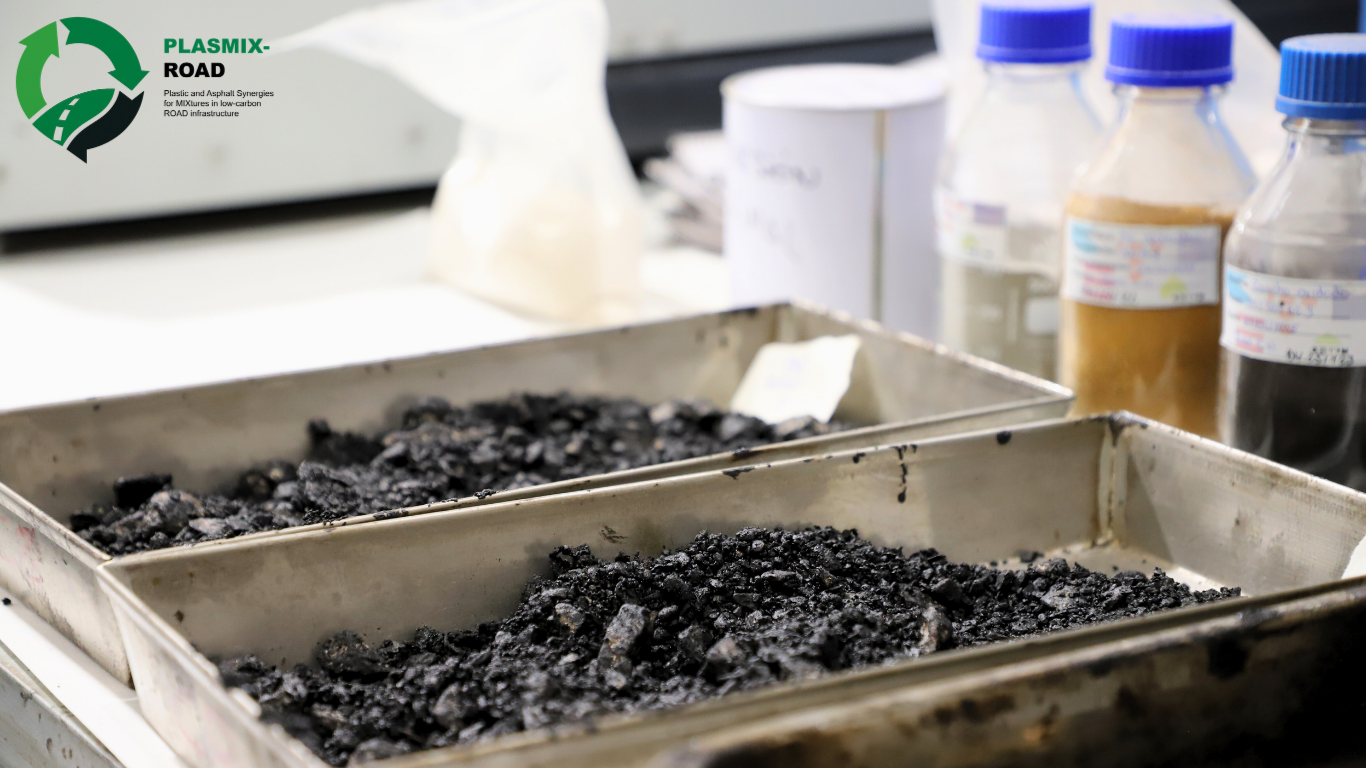
At PLASMIX-ROAD, we will transform plastic waste into new sustainable roads
At CETIM, we are contributing to the creation of a circular and digitally integrated value chain that transforms plastic waste into functional additives for more sustainable asphalt mixtures.
Sustainable Building Materials Laboratory at CETIM.
The production of conventional bituminous mixtures, used to build roads, depends on petroleum products, such as bitumen, and the intensive use of primary resources, with significant implications for both CO₂ emissions and the generation of plastic waste. Replacing elements with a high environmental impact with more sustainable materials contributes to the transition towards a circular and decarbonized economy in the sector.
This is the context for PLASMIX-Road, a European project supported by the Horizon Europe program within the CIRCULOOS consortium, in which we are researching how to convert industrial plastic waste, especially low-density polyethylene (LDPE), into functional resources for the construction of low-carbon roads.
The initiative has a consortium led by GENEPOL, in which CETIM is participating alongside Extraco and Dihgigal to innovate in the use of recycled materials, transforming plastic waste into new, more sustainable, traceable, and efficient roads. It will also serve as a pilot case within the CIRCULOOS project, validating its digital tools in a real-life circular economy case.
Main objectives of PLASMIX-ROAD
PLASMIX-ROAD combines industrial capabilities in polymer recycling and asphalt manufacturing with technical testing, life cycle analysis, and digital traceability tools with the following objectives:
- Demonstrate the real-world application of CIRCULOOS digital tools.
- Optimize asphalt mixes with recycled materials while maintaining technical performance.
- Maximize the circularity of waste, ensuring traceability, compatibility, and reuse within a closed and digitized supply chain.
- Reduce environmental impact by demonstrating a decrease in CO2 emissions and energy consumption.
- Prove the economic viability of the model: circular mixes can be cost-competitive and sustainable in the long term, generating new business opportunities.
CETIM’s expertise
At CETIM, we are the main technical arm for research and development. At our Technological Centre, we will characterize and pre-treat plastic waste, optimize the process of functionalizing plastics to improve their integration into bitumen, and carry out the design and technical characterization of the new modified asphalt mixtures to ensure that they meet road performance standards.
We are currently researching the incorporation of post-consumer plastic waste as bitumen modifiers and as recycled aggregate, evaluating the maximum replacement percentage, both in bitumen and bituminous mixtures, without compromising the technical requirements of the material.
HEU CIRCULOOS is offering, through PLASMIX-ROAD, a transformative cascade financing opportunity for SMEs to move towards a circular economy model, leveraging the power of data and digital tools to create dynamic, sustainable, and connected supply chains from start to finish.
PLASMIX-ROAD has received funding from the European Union’s Horizon Europe program under Grant Agreement 101092295.