Through SUSPENSE, CETIM contributes its expertise in the production of epoxidised compounds to investigate bio-based, recyclable and safe solutions with the potential to replace fossil-based adhesives in applications such as wood panels, insulation materials and furniture.

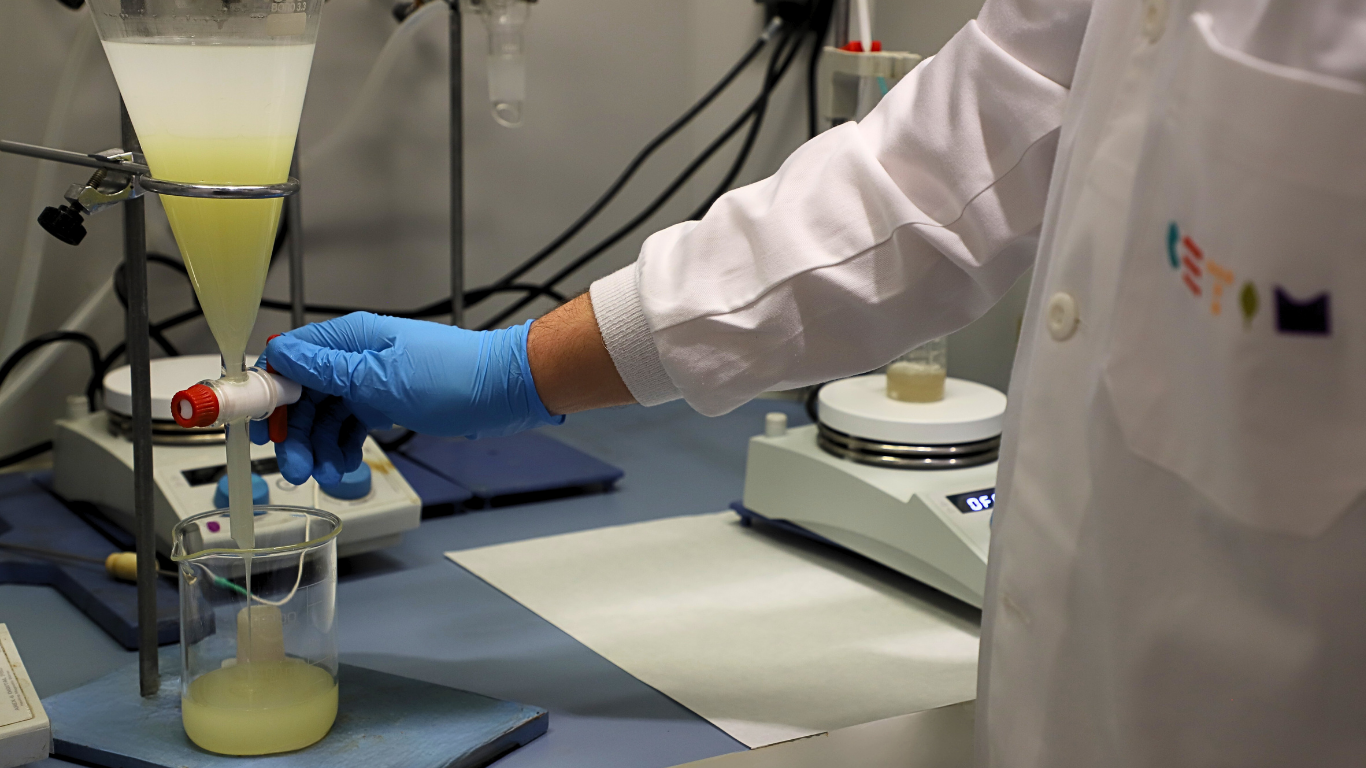
SUSPENSE chemical testing at CETIM.
At present, there are still significant limitations to the reuse of waste vegetable oils, which often end up being discarded. According to data from Spain’s Ministry for Ecological Transition and Demographic Challenge, around 850,000 tonnes of edible oils are consumed annually in Spain, while approximately 150 million litres of used vegetable oil are generated each year from households, hospitality businesses and the food service sector.
For this reason, CETIM promotes waste valorisation and end-of-waste technologies, transforming materials that would otherwise be discarded into new value-added products. One example is SUSPENSE, a project funded by the Circular Bio-based Europe Joint Undertaking (CBE JU), in which we are researching, optimising and validating bio-based wood adhesives that are both technically and economically viable at industrial scale and capable of replacing fossil-based adhesives.
To achieve this, we collaborate within an international consortium led by CHIMAR and composed of CETIM and 13 other European partners. Last month, the consortium met to review progress in the synthesis and formulation of new solutions based on renewable raw materials, their validation through pilot-scale testing, and their application in wood panels and insulation materials. We are also helping to ensure that the resulting products will be safe and compliant with health and environmental standards by integrating the Safe and Sustainable by Design (SSbD) approach and establishing a recycling framework for the final products. During the meeting, the consortium also defined the next steps required to complete the research phase, including a final product demonstration and an assessment of market readiness.

Representatives of the SUSPENSE consortium.
CETIM’s Expertise
Within the project, CETIM contributes its expertise in the chemical modification of lignins and vegetable oils for incorporation into bio-based resins and adhesives. We are currently working on the production of epoxidised compounds as a functionalisation route to improve their reactivity.
Regarding the production of epoxy materials from lignin, we are investigating the use of new dispersible crosslinking agents capable of replacing epichlorohydrin, a substance widely used in epoxidation processes. This approach contributes to more environmentally sustainable industrial processes. In parallel, we are evaluating the suitability of lignins derived from both hardwood species and other softwood varieties for these sustainable epoxidation processes.
In the field of vegetable oils, we are researching the epoxidation of linseed and camelina oils. To date, we have achieved highly satisfactory preliminary results and significant development progress. In addition, we have begun the valorisation of used oils in collaboration with PMA NUTRIGRAS, which supplies waste streams from the HORECA sector and the canning industry for conversion into new raw materials.
SUSPENSE will enhance the competitiveness of the European adhesives and wood products industry through bio-based, recyclable and safe solutions capable of replacing fossil-based adhesives in applications such as wood panels, insulation materials and furniture. The project aims to reduce the carbon footprint by 30%, cut volatile organic compound (VOC) emissions by 50%, and achieve a 90% debonding efficiency, supporting the development of more circular, healthier products aligned with European market demands.
Launched in 2025, the project is part of the European Union’s Horizon Europe programme and is supported by the Circular Bio-based Europe Joint Undertaking (CBE JU), which promotes sustainable industrial solutions.