Lignin and cellulose micro- and nanoparticles for manufacturing food packaging with hydrophobic and antimicrobial properties
NEWPOWER reaches its final phase, demonstrating that innovation can help turn waste into resources, develop sustainable materials and contribute to a circular bioeconomy that generates environmental, social and economic value.
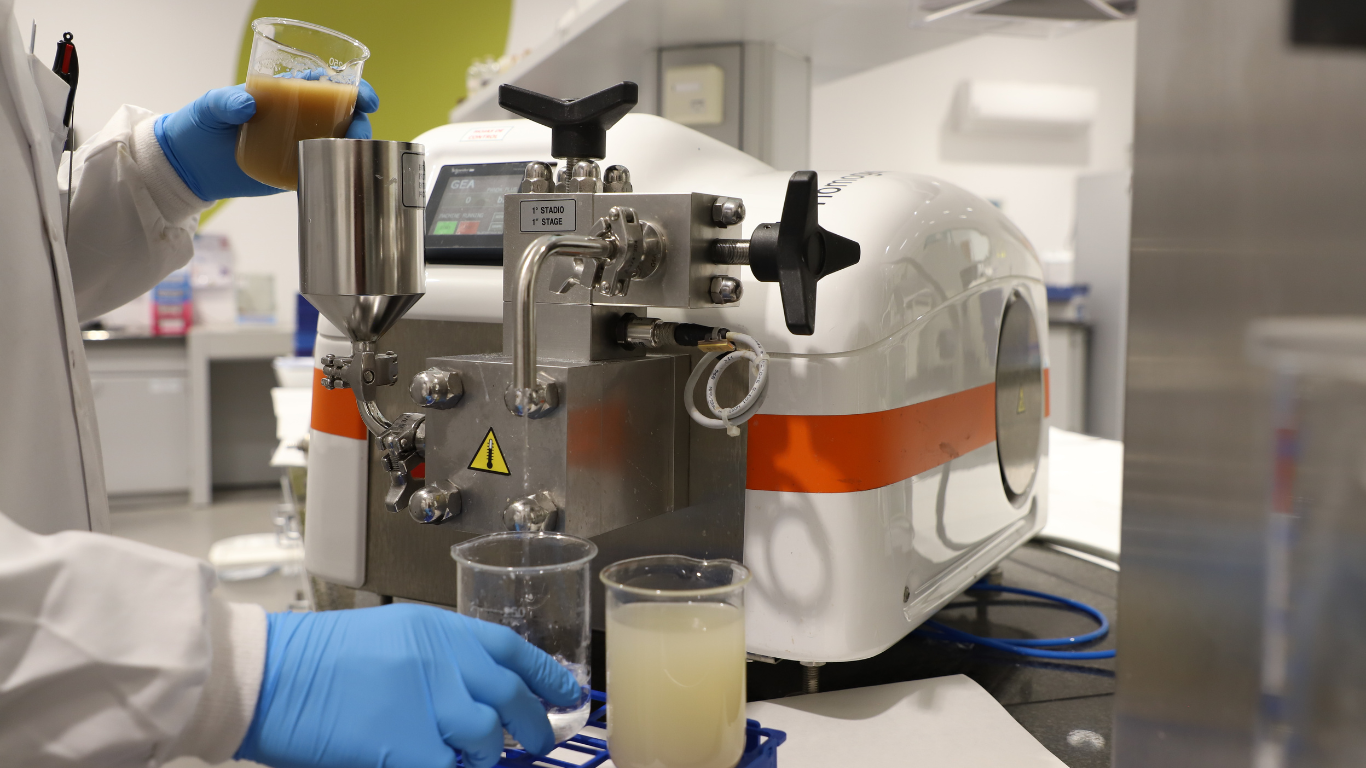
Lignin and cellulose extraction process at CETIM.
As part of the European project NEWPOWER, funded by the Interreg Sudoe programme, we have worked to address one of the major challenges facing rural areas of south-western Europe: the management of agricultural and forestry waste, the accumulation of which can increase the risk of fires and worsen the effects of rural abandonment. At the same time, this waste is a source of renewable resources with significant potential for developing new products and industrial applications.
To turn this challenge into an opportunity, NEWPOWER has driven the development of a multi-product biorefinery based on circular economy principles, aimed at transforming residual biomass into biofuels, bioplastics, functional ingredients, natural plant protection products, bioactive compounds and other added-value products. These solutions open up new opportunities for sectors such as food, pharmaceuticals, biotechnology and agriculture, encouraging more efficient use of available resources.
At CETIM, we have contributed to this goal by developing technologies to valorise the lignocellulosic streams generated during biorefinery processes. Our research has focused on obtaining lignin and cellulose microparticles and nanoparticles, as well as on their chemical modification to incorporate specific properties, such as hydrophobicity and antimicrobial activity.
In addition, we have researched the development of new biomaterials, coatings and sustainable films for packaging applications, exploring renewable alternatives to conventional materials. These advances broaden the possibilities for using residual biomass and contribute to the development of innovative solutions with potential for industrial application and a lower environmental impact.
Bringing innovation closer to the region
Beyond technological research, NEWPOWER has promoted knowledge exchange between companies, the scientific community and the public, bringing the project’s results closer to rural areas and showing the potential of the circular bioeconomy as an engine of development.
As part of this, we organised the seminar ‘From Forest to Packaging: Agroforestry Biomass for Sustainable Packaging’, in which we presented to industry the opportunities offered by valorising agroforestry waste to develop more sustainable materials and packaging solutions.
In collaboration with the University of Vigo, we also held a rural open day in Riós, where we shared the project’s progress with the local population and carried out a reforestation activity in an area affected by wildfires. This event made it possible to connect innovation with the needs of the region and highlight the importance of sustainable management of forest resources.
Scientific outreach also had its place in a colloquium held at the Interdisciplinary Centre for Chemistry and Biology – Universidade da Coruña, where we presented the results of transforming agroforestry waste into new biomaterials and sustainable coatings, sharing the progress made and the opportunities these technologies offer.
This week we took part in the project’s final event in Lleida, held as part of the Agrobiotech Innovation Forum 2026. At the Transnational Forum, the whole consortium and experts in the revalorisation of agroforestry waste are coming together to bring the project’s results closer to the productive sector of the Sudoe area.
NEWPOWER has made it possible to explore new ways of turning underused agroforestry resources into raw materials and added-value products. The project shows how innovation can help turn waste into resources, develop sustainable materials and contribute to a circular bioeconomy that generates environmental, social and economic value.